
Job scams that pretend to be from the Red Cross seem to becoming more common. As with many other job scams that we’ve seen before, the scammer tempts people with a generous salary for a minimal amount of work. If a job offer arrives unsolicited and the compensation is too good to be true, you can be sure it’s a scam.
Other red flags that indicate that the offer is fake:
- The email was sent from an address that does not belong to the Red Cross. A legitimate email from the Canadian Red Cross would come from a redcross.ca email address.
- The message contains multiple grammatical errors.
- You are asked to reply from your personal email–this is a trick to move the conversation off UVic email to evade detection.
- Replies are to be sent to a different address from a Red Cross lookalike domain.
- The confidentiality notice is not from the Red Cross.
If you replied to this email, cease contact with the scammer and reach out to the Computer Help Desk immediately for assistance.

Subject: Remote Flexible Job
From: [redacted] <********@iconpln.co.id>Distribution Assistant is vacant at the National Red Cross with a weekly pay of $500. 3 hrs. per day, 3 times a week is required for purchasing of online items and delivering them to foster/disable homes in your local community. To apply, send cv/application to Mammen at jobs@arc-******.com with your personal email.
NRC
This message contains confidential information and is intended only for the individual named. If you are not the named addressee you should not disseminate, distribute or copy this e-mail. Please notify the sender immediately by e-mail if you have received this e-mail by mistake and delete this e-mail from your system. PT. Indonesia Comnets Plus ( ICON+) is neither liable for the proper and complete transmition of the information contained in this communication nor for any delay and its receipt.



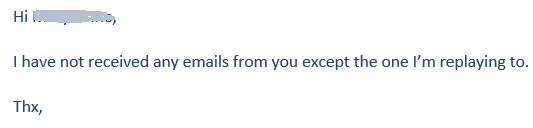 At this juncture, many individuals might feel a twinge of guilt for overlooking the initial email. This is precisely the reaction the scammer is banking on, despite the fact that there was no previous email. The scammer swiftly replied, revealing their true intent:
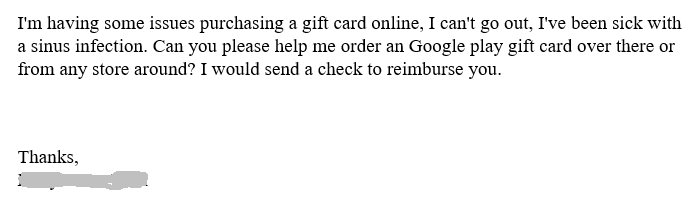 There’s always a reason why they can’t purchase the cards themselves. It could be a technical issue, illness, an ongoing meeting, or any number of pretexts.
 A scammer, realizing their ruse has been seen through, might typically abandon their efforts at this point. However, this scammer persisted, sticking to their script as shown below:
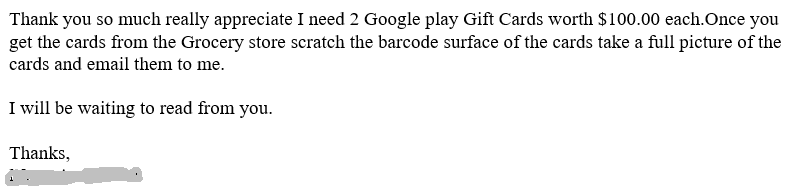 Perhaps they believe persistence pays off statistically? That they might eventually convince a potential victim? Unfortunately, we do occasionally encounter victims who purchase gift cards and send photos of the scratched-off numbers to the scammer. This is another telltale sign. Since the scammer can’t physically collect the cards, they request photos of the ID numbers. It’s a good idea to discuss this scenario with your supervisor and confirm that they would never ask you to purchase gift cards.
