Before the advent of modern print production when books were hand produced, parchment from damaged or discarded manuscripts would be reused or repurposed in the binding of other books. There’s an entire field of scholarship to study these fragments, and a site dedicated to cataloguing them all as they are discovered. The Fragmentarium is a “Laboratory of Medieval Manuscript Fragments,” to which UVic Libraries regularly contributes.
Sometimes, these fragments are easy to see but in most cases, the secondary or “host” volume must be damaged before the fragments are revealed, for example loosened binding or glues revealing what is inside or under various portions of the binding. For this reason, it can be a challenge for us to capture these images and most often I will do so with handheld cameras, sometimes even a cellphone camera. Frequently, I capture my own hands/fingers in these pictures because there is simply no other way to expose these glimpses of earlier print without risking further damage.
While some are known of before the Libraries receive an item, possibly having been highlighted in an auction catalog or by the donor, many are discovered by students or researchers using the materials. Each Fragmentarium entry usually speaks to the discovery in addition to providing as full a description as possible about the size and extant of any fragment(s) plus a description of the host volume and photos from different angles, exposing each piece or area.
Most recently, we received a “rent book” from the 17th century that used an earlier manuscript, or portion, folded over as its cover. I’ve also seen fragments inside various kinds of binding, exposed through wear or damage, like the bookworm damage, loosened binding, or exposed spine seen below.
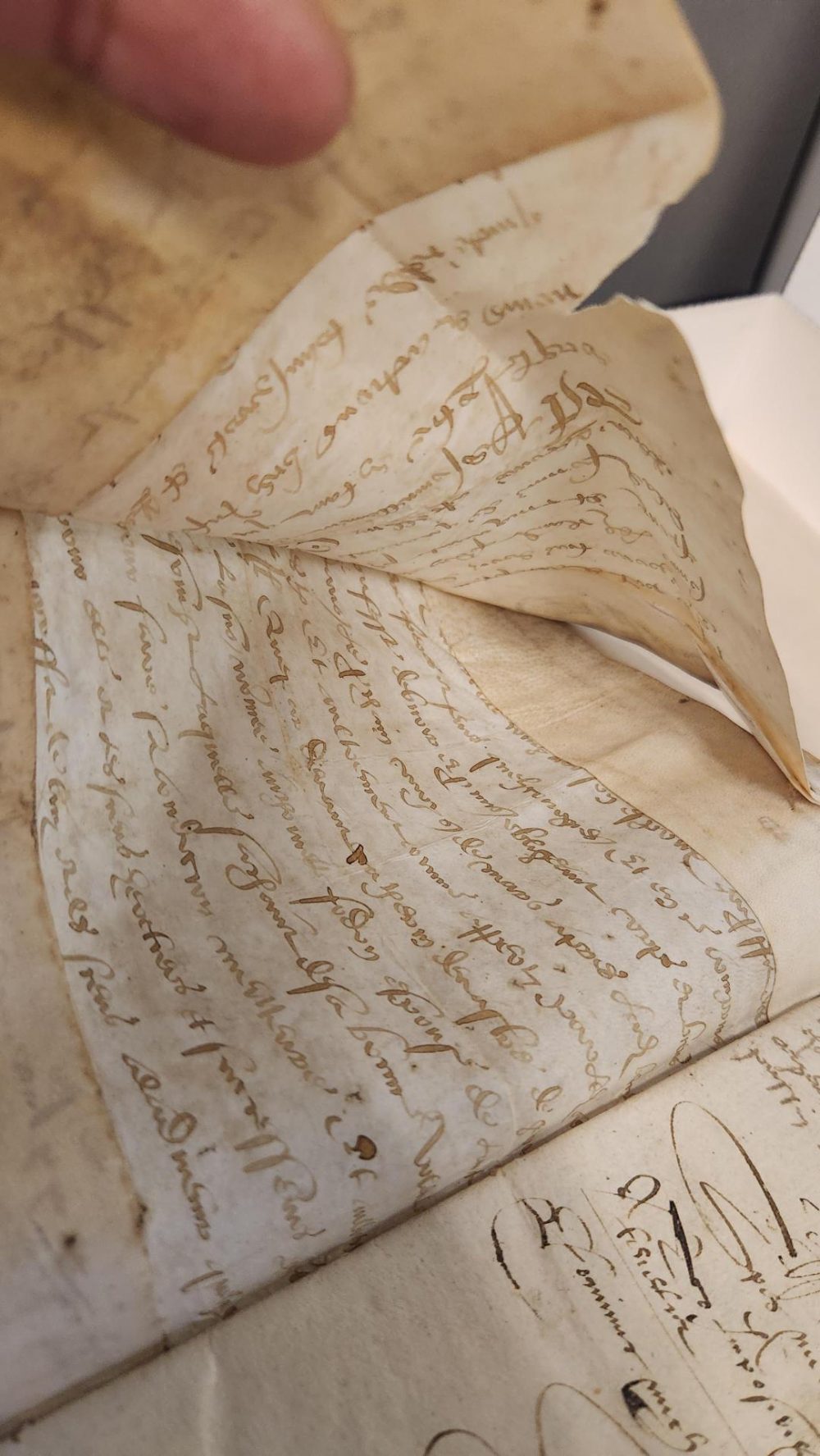
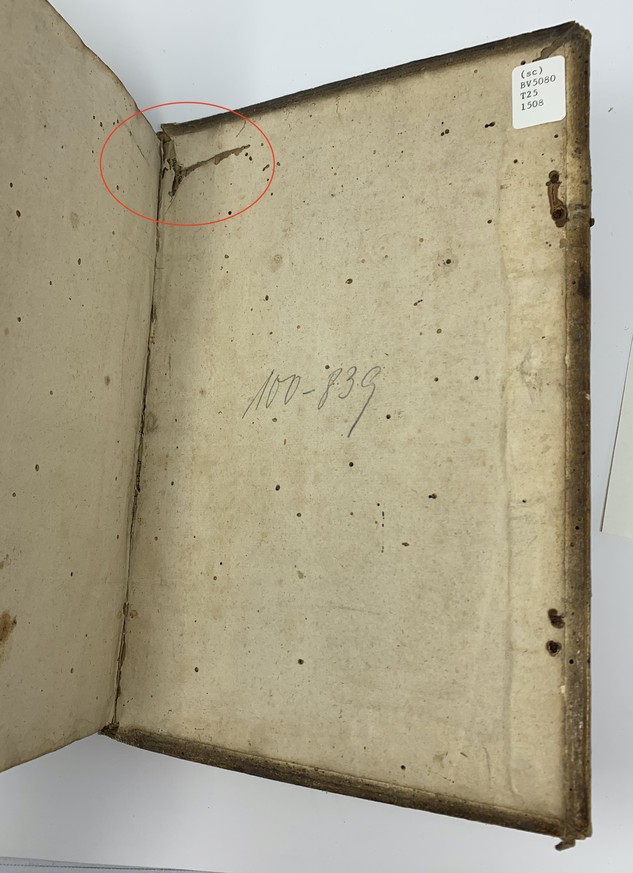
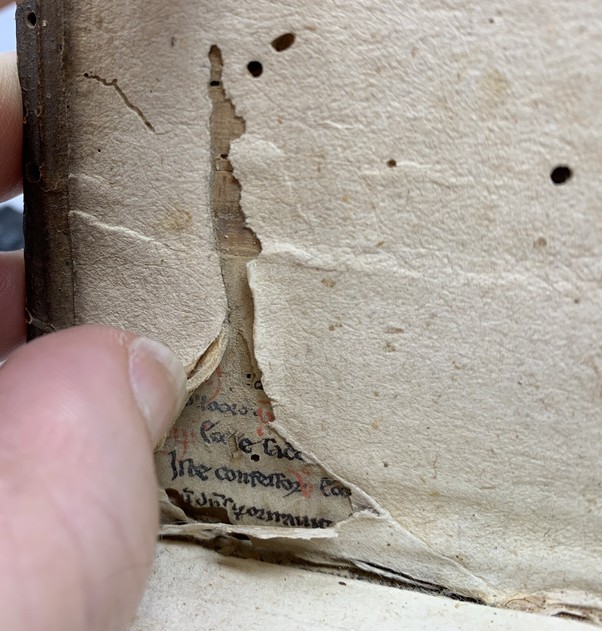
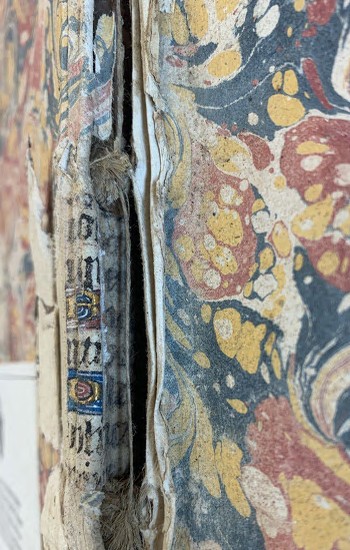
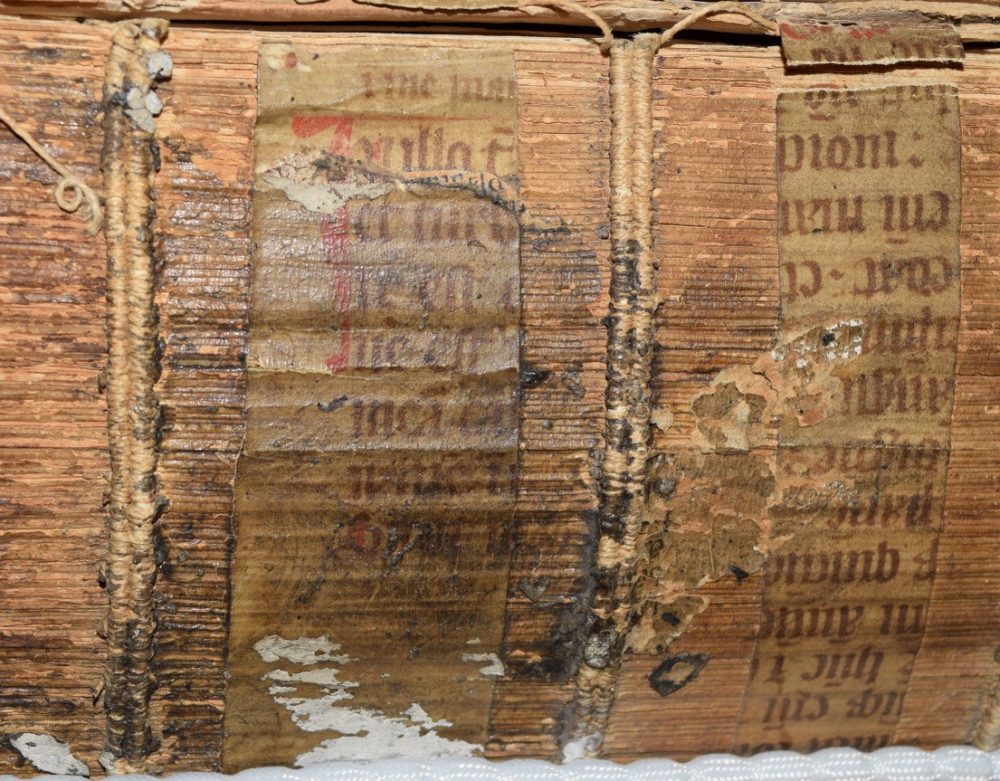

Overall, my job is to do my best to capture as much as I can of each fragment. I leave it to scholars to interpret any secrets these fragments contain.