Hi Brian. I enjoyed reading your blog post 1 for EDCI 335 on ‘Learning, motivation and theory’. I really liked your idea of explaining how you went through the process of understanding the concepts. You gave a clear example of what areas you found challenging to understand and showed ways of how you would understand the subject (Through ChatGPT, as you mentioned). At the end, you also gave a good example that you understood the 3 main concepts. Some recommendations I have would be to introduce the subject of the post and a general idea of what ‘Chapter 11 of foundations of learning and instructional design technology’ is. I was a bit confused as you went straight into the ideas. If someone who is not taking this course reads this blog, they might want a bit more overview. Overall, you still did a great job on the post, and formatting.
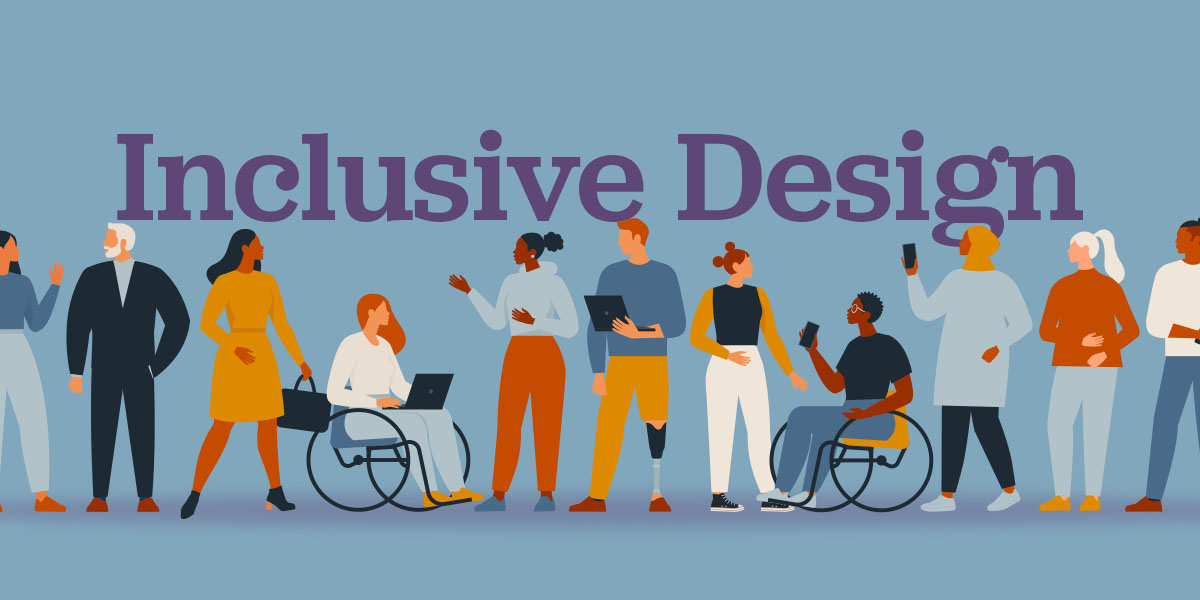
It is important that content is accessible and engaging for all learners. No matter the form that the content is presented in, it requires designing a learning experience for the learners’ needs. Inclusive learning design emphasizes that students may learn in different ways or that content may not be accessible to them. As Meyer, Rose, and Gordon (Citation 1) explain in their paper, Universal Design for learning: Theory and Practice:
“What is essential for some is almost always good for all” (p. 51).
This idea highlights that accessibility is not about making content “easier”. Instead, it’s about providing multiple ways for students to engage with it. For example, including audio or videos for learners who may have trouble hearing or reading while also supporting students who may have different learning needs, maybe no learning needs, is an important idea when thinking about how to design for inclusion. Moreover, content may not be available to people who lack access to the internet or digital tools. In these cases, providing alternative formats, such as printed guides or offline resources, ensures that learning opportunities are not limited. In this way, it ensures that content becomes more valuable, accessible, engaging, and inclusive for all learners.
How Our Project Is Designed for Inlcusion & Diverse Learner Needs
Our interactive AI prompt learning module is a WordPress site, designed to help people understand and create effective AI prompts. This site is structured into several sections for instructions, overview, practices, assessment, and reflection. Navigation through our site is also simple with “Back” and “Continue” buttons to move between our learning modules, and all resources, such as written guides and examples, are organized. This structure allows learners to progress at their own pace and engage with the content in multiple ways.
We made sure to include multiple means of learning by following the UDL Guidlines Framework.
Multiple Means of Representation: We provide examples of good and bad AI prompts and their outputs, online academic papers on our subject which learners can read, and written instructions for learns to follow through our theory page, activity, assessment, and reflection sections. This ensures that content is accessible visually and through text-based guides, accommodating different learning needs.
Multiple Means of Action or Expression: Students demonstrate their understanding by creating their own effective AI prompts after analyzing examples and learning tips. They also reflect on their outcomes and participate in group activities, allowing them to apply their knowledge in multiple ways and express their learning through creation and collaboration.
Multiple Means of Engagement: Learners interact with the module at their own pace allowing them to spend more time on sections they may find challenging. They also receive feedback on actitivites by comparing their responses to our suggested notes, which encourages them to continue learning. Group activities and reflection sections also creates for collaboration, discussion, and group learning allowing sutdents to learn from each other’s views.
Addressing Potential Barriers
While we did our best to ensure that our interactive AI prompt learning module is designed to be inclusive for all types of users, there are some potential challenges some learners may face. One key issue is accessibility for students who may have trouble reading. Unless you are learning our module with another person, people with these troubles will have difficulties following along since our learning module is all text-based. We could solve this by adding audio guides throughout each section to help students. Moreover, we also do not provide many visuals or videos for those who learn better by watching. Lastly, one key issue is accessibility for students with limited access to the internet or digital tools. Our learning module is an online-based resource which requires internet access. Providing downloadable PDFs for offline use or printable physical copies can make our content accessible to others. By addressing these issues and providing ways to solve them, we can make the learning module more inclusive and accessible for people’s diverse learning needs.
References
Meyer, Anne, et al. Universal Design for Learning: Theory and Practice. CAST Professional Publishing, an Imprint of CAST, Inc., 2014, UDL Theory Practice, retrieved from: udltheorypractice.cast.org/
Direct instruction is a teacher-centered learning approach that focuses on the style of learning, incorporating clear goals, learning objectives, and structured lessons. This learning design method guides students through step-by-step instructions to develop new, specific skills and ideas. This approach is effective for teaching foundational skills and for learners who benefit from clear explanations and frequent feedback to ensure they are learning and understanding correctly. A common practice of this learning approach is known as the ‘I do, We do, You do’ method.
Key characteristics of direct instruction include:
Structured lessons: Lessons are planned and structured in a logical order that starts from simple to more complex theories or skills
Learning Style: First, the teacher explains the concept (“I do”), then does step-by-step practice problems with students (“We do”), then provides students with resources and practice problems to complete individually (“You do”)
Frequent Feedback: Learners are assessed through questions, exercises, or quizzes either in class, online assignments or during labs/tutorials
To better understand, lets go over the various ways that direct instruction can be implemented in a learning environment:
Form of Direct Instruction
How it works
Teacher Modeling (“I Do”)
The teacher shows examples of the skill or concept step by step
Guided Practice (“We Do”)
Students practice with the support of the teacher, by asking questions and receiving feedback
Independten Pracitce (“You Do”)
Students practice on their own to build on their knowledge of the subject
Structured Lessons
Lessons follow an order to teach, from basic to advanced concepts
Frequent Assesment
Small quizes, daily excersies or weekly labs/tutorials for practice
Immediate Feedback
Teachers provide feedback for those who are misunderstanding the skills or concept
Digital Learning
Online lectures, interactive platforms, videos
Allignment with our AI Prompt Learning Module Group Project
Direct instruction aligns well with our project because it provides a clear, structured way to teach students how to create effective AI prompts. First, we address common misconceptions about AI to clear questions learners might have. We also model the learning process by demonstrating how to improve weak prompts step by step, guiding students through practice exercises and providing immediate feedback examples. This ensures that learners gain a strong foundation before experimenting independently or collaborating in group activities, making the experiential learning components of our project more effective.
Lets go over some examples of how Direct Instruction was used or not used in our AI prompt learning module:
✅ Prompt Examples: Demonstrating bad vs strong prompts (“I do”)
✅ Guided Practice: Student review prompts and write critiques on it then compare it to our critiques (“We do”)
✅ Independent practice: Students creith their own prompts and test them (“You do”)
❌ Group Activities & Reflection: Students reflect or discuss the topic and what they have learned (Not direct instruction, more experimental)
❌ Kahoot Quiz: Test knowledge of topic in a short quiz (more of an assesment than instruction)
Understanding how we learn is important for creating effective learning methods. In EDCI 335, we explored three core learning theories: Behaviorism, Cognitivism, and Constructivism. Each theory has a unique way of showing how knowledge can be taught and shared. While all have strengths and limitations, there are some ideas with which I don’t fully agree.
Behaviorism focuses on observable behaviors and how people respond to rewards, praise, or criticism. The main idea is that we learn through practice and repetition until the skill or concept becomes a habit. Positive feedback, such as praise or high grades, motivates learners to repeat their behaviors and continue learning. On the other hand, negative feedback may discourage learners.
Common ways of assessment can be exams, quizzes, weekly problems, and assignments. These forms of assessment are all designed to measure the learner’s knowledge of the topic. Furthermore, it allows teachers to provide feedback and monitor progress in a structured way.
From my own experiences, I have found that behaviorism works best for testing foundational knowledge. The effectiveness of this learning method largely depends on the subject. For example, in mathematics, where formulas and techniques require repetition, continuous practice, and memorization, this learning method would be ideal. Furthermore, I have also taken a German language course during my time at the University of Victory, where we had frequent vocabulary and grammar tests, as well as weekly readings and problem sheets, which were effective ways of measuring my progress.
However, as a computer science student, I find that the behaviorist learning approach does not work well. Many of my courses have 40-70% of the grade on midterms and finals, most also requiring a minimum score on the final just to pass. In real-world computer programming jobs, there are many resources and tools available. In university tests, we are expected to memorize complex codes without extra help, and I believe that this does not help enhance our knowledge of the subject. For more technical fields, I believe project-based and collaborative assignments would prepare students better for future professional challenges.
Cognitivism focuses on how people think and learn by understanding new information and connecting it to what we already know. This theory is more about understanding and adding a deeper meaning to the topic, rather than just memorization and repetition. Teachers can help by breaking down complex topics into smaller parts, such as diagrams, step-by-step explanations, guided tasks, discussions, concept maps, and more. Common forms of this assessment can be projects, lab or tutorial assignments, written reflections, and small weekly quizzes.
I find this learning approach to be my favorite. Instead of being taught large and complex topics, I can build my understanding gradually by breaking topics into smaller parts. For example, in computer science or math courses, working through lab exercises step by step allows me to learn and process the new ideas, make connections, and apply concepts to the task. Furthermore, I also find that group discussions and collaborative study sessions are a helpful way of showing your understanding of topics. When I explain ideas to others or hear different perspectives, it enhances my understanding, ensuring that I know the topic and helping others learn as well. It can also learn different approaches to learning the topic by working with others. For example, during a course last semester, I had a study group with 4 of my friends, where we would learn together, and explain which parts of the topic we are good at and how the other can understand it better as well. Being able to teach or explain a concept to someone else is a strong sign that you truly understand it.
Constructivism is a learning theory that encourages learners to build their understanding from past experiences, existing knowledge, and reflection. Instead of constantly receiving new information, learners can ask questions, connect ideas, and ensure that they understand new concepts in a more meaningful way.
This approach is great for collaboration, problem-solving, and deep or creative thinking. In this method of learning, the teacher’s role is to help guide and support the learning to build their knowledge. Common forms of this would be group projects, collaborative discussions, written reflections, blog posts, and presentations. These forms of learning allow the user to actively engage in the subject, think critically and creatively, reflect on what they’ve learned, and demonstrate their understanding.
My experience of this learning method would be from EDCI 335 and EDCI 338 where we are instructed to go through some readings in our own time and pace, then reflect on them by creating a blog post where we would express our opinions, share personal examples on how it relates to the topic and/or demonstrate our understanding of the subject.
Although constructivism allows for more freedom, responsibility, and creativity, I sometimes find it challenging to stay focused on tasks and apply my knowledge without any clear instructions. I enjoy reflection because it allows me to connect new ideas to my own experiences. For example, I used to run my football (soccer) podcast, which is similar to blog writing in EDCI 335 and 338. Through both the podcast and blog writing, I was able to reflect on the topic, express my opinions, demonstrate my knowledge, and share ideas.
Conclusion
Overall, all three of these learning theories have their strengths and limitations. Personally, my favorite and best way of learning would be through cognitivism; however, I would take a part of each theory and combine it into one. For example, I would take the reflective part from constructivism, which allows us to express our knowledge on the topics by connecting it to previous experiences. Furthermore, I would take the weekly tasks such as labs or tutorials, and group discussions, from cognitivism, which keeps us encouraged to continue learning and understanding topics. This would allow us to learn small topics each week rather than one large and complex idea. Finally, I would have occasional tests or quizzes during the course, as it shows your understanding of the fundamentals of the topic, but also your overall skills, since resources are limited.
Also feel free to listen to the audio of the blog if you do not want to read! Enjoy!
1. PLN Space Through Social Media
Section 1. PLN Through Social Media – Daniel Azarnoush
A Personal Learning Network (PLN) is a group of people, digital tools, and platforms that we can connect with to learn and share knowledge in both personal and professional matters. These networks can be built through social media and online communities.
In what ways has PLN effected me?
Social media, online platforms, and peers have played a key role in shaping my PLN, especially in the last few years. Initially, I used platforms like Instagram and YouTube mainly for entertainment and social purposes. However, as I’ve grown older, I’ve become more mature and professional with how I use social media. I’ve realized that these platforms are great tools for learning, networking, and staying connected with communities that align with both my personal passions and professional goals.
How I use My PLN for Personal Interests – Daniel AzarnoushHow I Use My PLN for Personal Interests
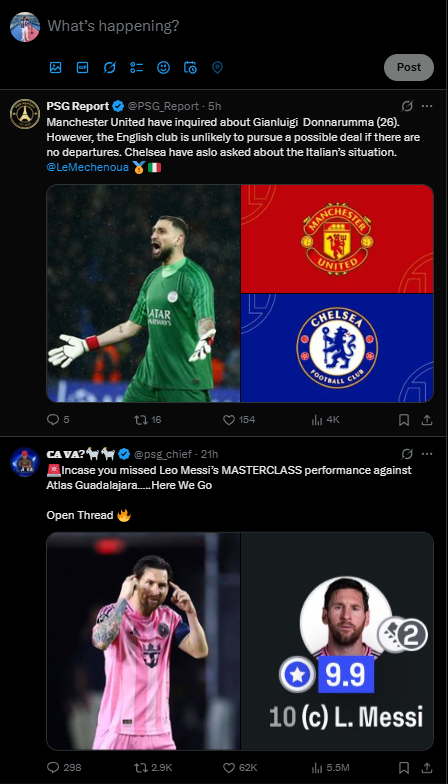
Twitter screenshot feed – Daniel Azarnoush
When it comes to my personal interests, especially football (soccer), platforms like Instagram and X (formerly Twitter) have had a big impact on my learning journey. I follow football analysts, sports journalists, and other football fans to stay updated on the latest news, strategies, data insights, and public opinions. These connections allow me to not only watch the game but also engage in discussions and analyze the sport from multiple perspectives. I also try to avoid being biased when expressing my opinion by reading information from multiple sources and comparing different views.
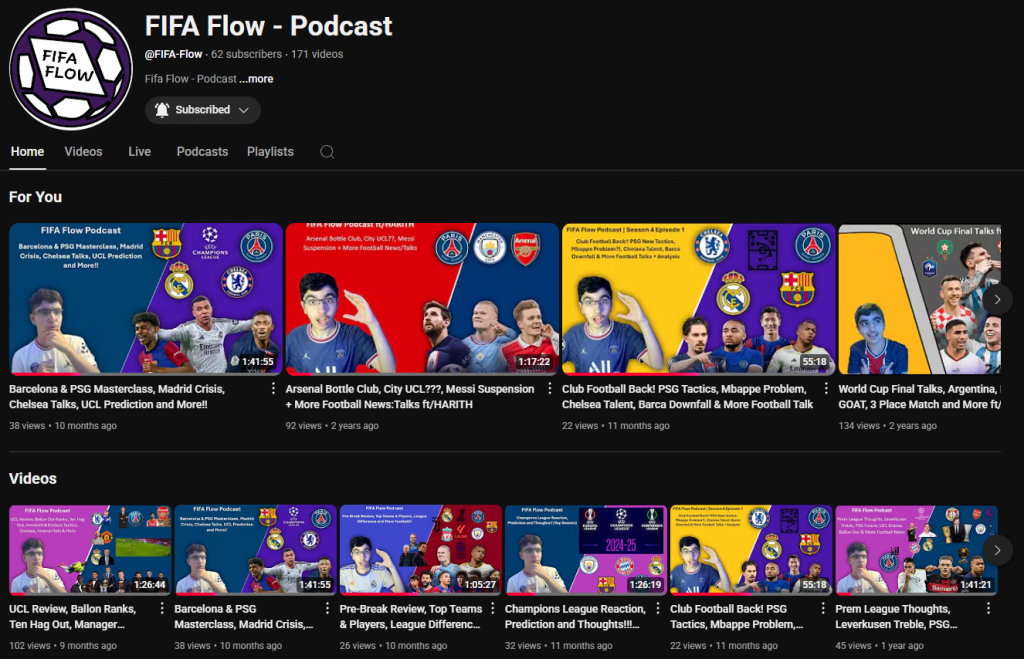
As I learned more about football from these platforms, I was able to apply my knowledge in videos when I started my football podcast in 2021, FIFA Flow Podcast. In this podcast, I wopuld discuss match results, go over team tactics, analyze and predict upcoming games, share my opinion on recent football news, and react to other public opinions. This experience has pushed me to think more critically and analytically, communicate my ideas clearly, and be more open both online and in person, especially since I used to struggle with anxiety about what others think of me.
Image 2 – FIFA Flow Podcast Channel on YouTube presented by Daniel AzarnoushHow I use My PLN for Professional Goals – Daniel AzarnoushHow I Use My PLN for Professional Goals
My professional PLN has grown from my interests and family influence. Growing up, playing many video games, especially FIFA, which I enjoy despite the many issues, has brought curiosity to me about the complex and in-depth process that goes behind the making of the game. Furthermore, looking up to my mom, who has been a computer programmer for over 20 years, has inspired me to pursue computer programming studies at the University of Victoria.
I started my computer programming journey during my 11th grade at high school. I took one computer elective in 11th grade and two in 12th grade. Once I started my degree at the University in 2023, I started utilizing more tools to help in understanding course topics and further enhance my programming knowledge beyond course notes. YouTube tutorials and online forums such as Stack Overflow became part of my learning routine. I was able to learn new skills and see how others solve problems, then apply my knowledge to assignments and projects. These platforms were very important in my PLN and learning journey as I got to engage with a bigger community of developers and others who were on the same learning path as me.
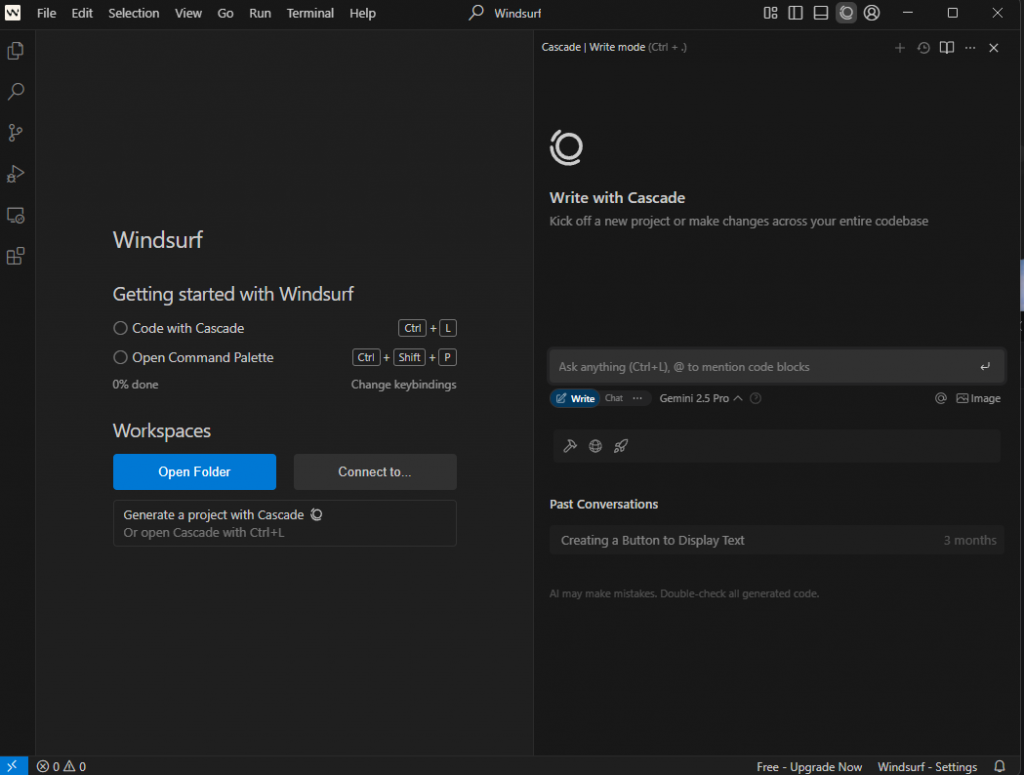
Image 3 – Windsurf IDE – Taken by Daniel Azarnoush
More recently, I have started using an application called Windsurf, which is an integrated AI tool within coding platforms such as Visual Studio. It has been useful in helping me write, debug, and most importantly, understand code. Tools like Windsurf are showing that AI is becoming a place for people to connect with and a part of modern digital learning. It has an impact on my Personal Learning Network by acting as a learning partner and assistant. It helps me with many of my problems and questions related to both my academic work and personal interests, such as projects and coding outside of school.
PLN Conclusion & Quote – Daniel Azarnoush
Overall, social media, online platforms, peers, and communities have had an impact on my Personal Learning Network in both my personal and professional life. Whether it’s discussing football opinions online or debugging code, my learning is influenced by my digital connection and how I use online platforms. As George Siemens says in his article “Connectivism: A Learning Theory for the Digital Age” [1]:
“Learning is a process that occurs within nebulous environments of shifting core elements – not entirely under the control of the individual. Learning (defined as actionable knowledge) can reside outside of ourselves (within an organization or a database), is focused on connecting specialized information sets, and the connections that enable us to learn more are more important than our current state of knowing.” (pg. 5)
My PLN is connected to this statement as it shows that knowledge is not only something we learn individually but also something we can share through participation and engagement, both in person and across online digital platforms.
2. Privacy, Ethics, and Security in Digital Spaces
Section 2. Privacy, Ethics, and Security in Digital Spaces – Daniel Azarnoush
In today’s day and age, privacy, ethics, and security are very important components of digital life. These digital features help protect personal data and ensure that we can create a safe and respectful online space. As more people use digital platforms for communication, entertainment, learning, and work, we must understand how to manage our information and behave ethically online.
I try to protect my online privacy by never reusing the same passwords, especially for important platforms like my bank account and university login. I also enable 2 factor authentication to ensure extra security. Moreover, I also limit the application permissions, such as access to my location, camera, and contacts. Most importantly, I review what data they collect and how it is used. Since the beginning of the class, when our EDCI 338 course instructor Joshua Hotchin [2] mentioned that 81% of users express anxiety about how companies collect and use their data, it has alarmed me to change my mobile settings. Recently, I have been reorganizing my phone settings and cleaning up app data, but I still worry that much of my information has already been stored or shared online.
Overview About Misinformation – Daniel Azarnoush
When it comes to ethics and online security, I find it annoying that there is misinformation being spread across the internet. Whether it is misleading football statistics or inaccurate academic content, false information can affect how people think about others and also how we learn. Even before I post and share content, I am aware that the content I share is respectful to those who view it. In our first lecture, Joshua Hotchin [2]mentioned an MIT study showing that false news spreads 6x faster than true news on platforms like X (Twitter). This not only harms public understanding but also critical thinking and digital literacy, which are two important parts of personalized learning.
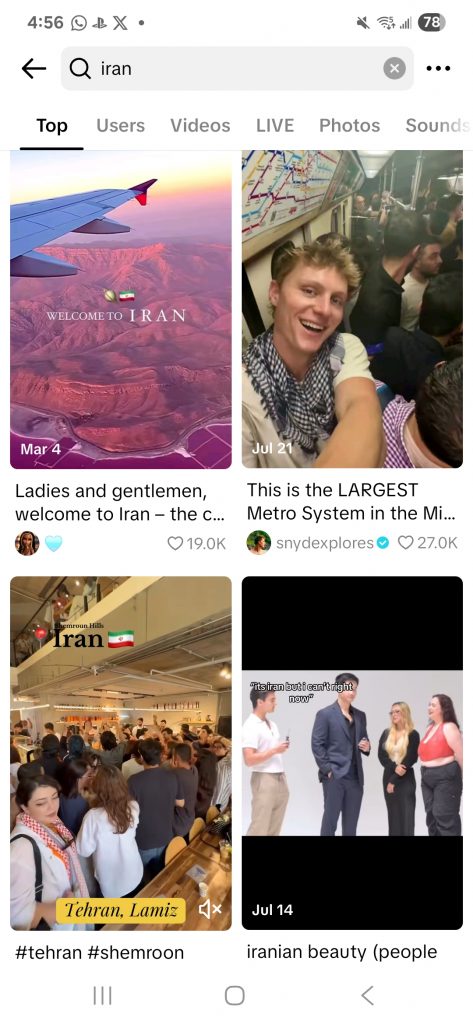
Image 4 – Screen shot of ‘Iran’ search on TikTok – Daniel Azarnoush
To further speak about misinformation, I also notice that a lot of online content is shaped by Western perspectives and controlled by the platform. As someone who is Persian and deeply connected to my culture, I often see Iran being represented negatively. I have never had the chance to visit Iran, but from videos shared online and stories from my family, I know Iran is a beautiful place with culture and history. While the government may have issues, the country and people are being misrepresented. This connects to the importance of digital ethics; not only is it about protecting personal data, but also being mindful of others and avoiding biased information. There are many scenarios where online spaces are not neutral; they are influenced by social, political, or corporate interests.
3. Inclusivity and UDL in PLNs
Section 3. Inclusivity and UDL in PLNs – Daniel AzarnoushImage 5 – Students collaborating in a diverse classroom (Alhambra Unified School District)
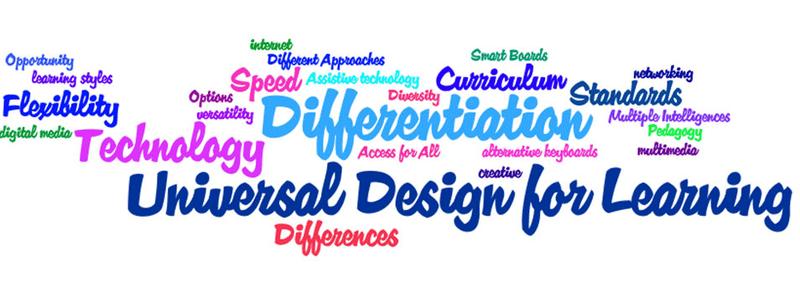
Universal Design for Learning (UDL) supports inclusivity in digital learning environments by ensuring that learning and content are accessible, engaging, and available to all types of learners. In the context of a Personal Learning Network, inclusivity means that we are connecting with individuals and content from diverse backgrounds, experiences, and perspectives. By applying UDL guidelines, both educators and learners can better support participation and engagement. There are 3 ideas that UDL is structured around: Engagement, Representation, and Action & Expression. Each idea has its own importance in making content accessible (Access), providing motivation and comprehension (Support), and effectively communicating and applying knowledge (Internal Function) [3].
Image 6: Universal Design for Learning (UDL) Guidelines 3.0The Big 3 – Engagment, Representation, and Action & Expression
The ideas of Engagement, Representation, and Action & Expression, as shown in the table above, represent the idea of diverse learning needs. For myself, these ideas have definetly influenced and continue to shape my Personal Learning Network, learning experiences, and learning journey. For example, when it comes to the idea of Engagement, I do my best to always stay motivated, positive, and connected by selecting topics and communities that interest me. This goes from staying connected with a football community, such as PSG fans, to academic communities and coding. As for Representation, I find content through various formats such as videos, articles, podcasts, PowerPoint slides, and even AI. Depending on what the topic is, certain formats of studying may apply better. For example, when it comes to computer programming, I would not listen to a podcast but instead watch videos and read online forums. Lastly, Action and Expression are the different ways I can share and express what I have learned, such as my football podcasts or a personal professional project in my field of study.
4. Challenges & Importance of Diversity in Digital Learning
Section 4 – Challenges & Importance of Diversity in Digital LearningImage 7 – Dimension of Digital Inclusivity in Online Learning
Diversity in digital learning is important because it creates more engaging discussions, adds more valuable perspectives, and contributes to more learning experiences for all participants. When learners from different cultures, languages, and social backgrounds are connected, it encourages critical thinking and a stronger connection within learning communities. Moreover, having diverse viewpoints can stop assumptions, biased information, and clear everyone’s understanding of the world. However, challenges such as limited access to technology and language barriers can make participation difficult in digital learning.
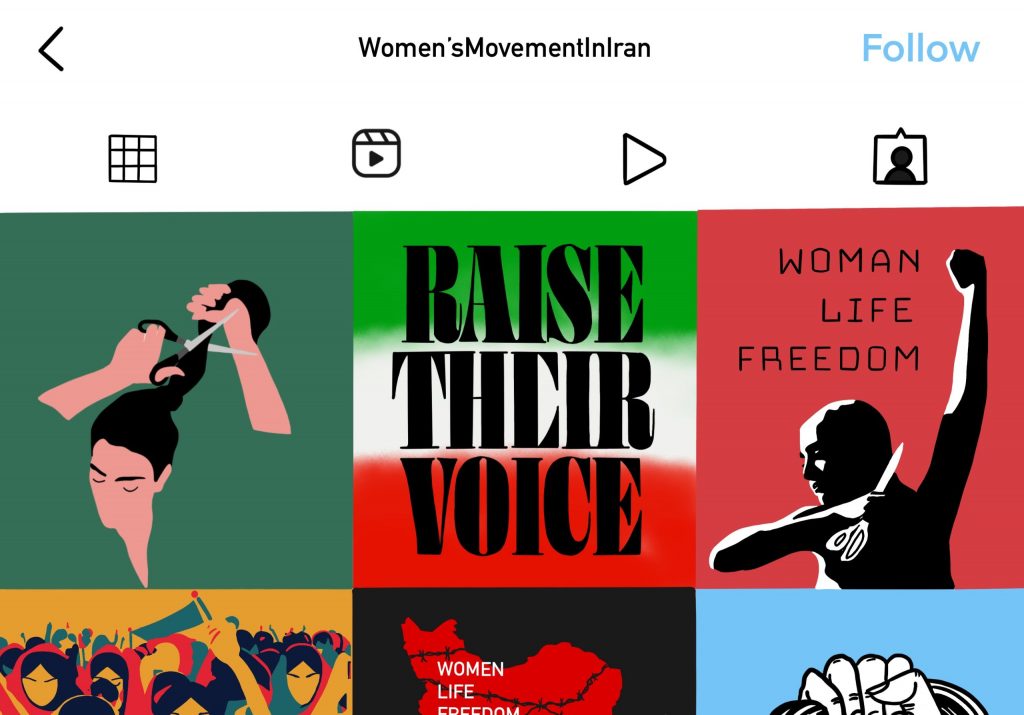
Image 8 – Siedow, S. (2024, May 1). How social media fueled the flames of Iran’s women’s rights revolutionIranian Challenges in Digital Space – Daniel Azarnoush
A major example, one that is personally meaningful to me, can be found in countries like Iran, where internet access is often restricted or shut down by the government, especially during political issues. Alongside the frequent power outages, these challenges make it hard for people to access digital learning platforms and share their voices online. As someone who is connected to the Iranian community, I understand that these barriers may prevent people from using online platforms. Despite these challenges, movements such as Zan, Zendegi, and Azadi (“Women, Life, Freedom”) show the important role of digital space when it comes to sharing your voice. These examples show why diversity and inclusivity are important in digital learning environments, not only for education but also for supporting freedom of expression and access to information. Although I did not include specific detail from the article, from the image citation above, I did read it and appreciated how it illustrated the strenght and courage of Iranian women using digial platforms to share their voice for womens rights.
[2] Hotchin, J. (2025). EDCI 338: Week 1 lecture slides [PowerPoint slides]. Brightspace. Available only to students enrolled in EDCI 338 at the University of Victoria.
[3] CAST. (2024). Universal Design for Learning Guidelines version 3.0 [graphic organizer]. Lynnfield, MA: Author. Retrieved from https://udlguidelines.cast.org
Thanks for reading/listening to my blog post. If you have any questions or opinions, feel free to leave a comment. Make sure to check out some of my other blog posts related to academic studies and personal interests! Also check my social media links bellow to stay connected on other platforms!
Recently, I have started to realise that my digital identity can impact both my personal and professional life in the online space and the real world. It is essential to understand what content is suitable for each platform to maintain a good reputation with all my friends, family, followers, and anyone who views my account and content.
It is important to understand how to maintain your digital boundaries. This means the content you share, the audience it reaches, the platforms you use to share content on, and your profile / how you present yourself online. These can all have an impact on your life in both a personal and professional matter.
First, let’s understand the different types of digital identity.
Personal Digital Identity
Professional Digital Identity
Audience
Friends, family, followers, other platform users
Employers, professional contacts, classmates, professors
Resume, achievments, portfolio, projects, work history, work strenghts and experiences
Purpose
Connect with friends, family & others + share your interests
Connections, networking, share academic achievments, build a reputation
Style of Text
Casual, humor, informal
Professional, respectful, formal
Example Platforms
Instagream, X (Twitter), TikTok, Reddit
LinkedIn, Indeed, Professional email, academic platforms (Brightspace, MS Teams, Mattermost)
From the table above, there are clear differences between the usage of personal and professional digital identity. When I reflect on my own digital identity, I can relate to these differences.
For example, on platforms such as Instagram, I am able to be more casual as I share content related to my hobbies. Some of these include the trips I have been on, photos I have taken during my days out, time with family or friends & posting my hobbies such as football.
On other platforms such as X (formerly known as Twitter), I can share my football opinions and read news about my interests. It’s not to say that these platforms cannot be used for professional matters; however, for my use, it is more of a personal digital space.
As for my professional digital identity, I use platofrms such as LinkedIn and outlook, using my school email. I make sure that the tone of my message is more formal and respectful.
I try managing my boundaries and online presence by making sure I am not posting anything controversial that may ruin my reputation. It is important to know what type of content you are sharing and the audience it is reaching as it may affect you and others. That comes into place for both in my personal and professional online presence. When it comes to my professional accounts, I try to make sure that my profiles are up to date and show the strengths and qualities that I can deliver to other professional networks.
Overall, it is important to understand the difference between personal and professional digital identity. Understanding these has helped me become more aware of my online presence.
Digital Visitor and Resident Map
Over the past week, I learnt the difference between a digital visitor and digital resident as well as reflect on the platforms and applications I use for both my personal and professional use.
Before I get into my usage of social media, lets go over the different ways that we can use it:
Resident
Visitor
Personal
Professinoal
– Active on the platfoorm daily,
– engagine and interacting with the content
– posting, commenting and connecting
– have an open profile on the platform
– a quick search or reading a post
– not logging into the site
– used to connect with friends and familly
– share your opinions
– used to show and follow your hobbies, interests, and enternainment
– used for work, netwroking, school and career
As for my Digital Visitor and Resident Map, I was able to reflect on the platforms I use and what I use them for. I found it very interesting to reflect on my usage of social media. Here is what I found out after reflecting:
My Digital Visitor and Resident Map (By Daniel Azarnoush)
From the map, you can see that I use platforms such as Instagram and X (Twitter) daily, hence why I placed them towards the resident and personal side of the map. When it comes to a platform such as TikTok and YouTube, although I also use those platforms for entertainment, I also use them as a tool for learning new topics and concepts, either for my interest or for university courses. Applications such as MS Teams, Brightspace, and Mattermost are used for school communication. Platforms such as Outlook and Gmail are also for both my school, professional, and personal use when I sign up for new platforms, connect with others, and plan my calendar. Currently, my map is a mix of both social and personal use, but also for student purposes. However, I can start to notice that I am slowly starting to change direction to a more professional use as a finishing university and start looking for a career in my degree. It’s not to say that I will still not be using other applications such as Instagram and X (Twitter), however, in a few years, this map will for sure look completely different from how it is now.
Theories of Personalized Learning
Everyone has their own style of learning, whether it’s through visual information, hands-on practice, independent learning, or class lectures; learning styles can vary significantly. After understanding what personalized learning is, I realized that it’s not only important to know ‘what’ you’re learning, but also to understand your learning style. Personalized learning focuses on tailoring education to meet each student’s unique needs, interests, and learning styles. There are two theories of personalized learning:
Constructivist Learning
Constructivist learning suggests that, rather than listening to a lecture or reading notes, people learn by actually completing tasks such as problem solving, asking questions, reflecting, teaching others, or even working cooperatively. Students enhance their knowledge of new concepts and topics by using past experiences and information they already know.
Self-Directed Learning
Self-directed learning is essential; you are the teacher and the teaching. You set your plans, topics to learn, how you learn them, when to do them, finding suitable resources, and reflecting on the progress. Instead of relying on the teacher to give you information and a set of instructions, you are more responsible and independent in your learning.
In my own experience, both constructivist and self-directed learning have had an impact on my learning journey.
When it comes to self-directed learning, I feel that there is less pressure on me. I like setting the pace of my learning, the resources I am allowed to use, and choosing the topics that interest me. Although there is more freedom in this style of learning, it requires a lot more responsibility, discipline, and desire to learn. An example for myself would be my interest in learning my ethnic language. Growing up in a Persian family, I was able to learn and listen to the words that they spoke at home; however, since I was raised in an English-speaking country, I never got the chance to learn how to read and write, or, furthermore, enhance my speaking skills in Farsi. Therefore, this past summer, with the idea of self-directed learning, I collected multiple resources from online and in person, set my deadlines, created my assignments, and used my style of learning, via online sources such as social media, translation platforms, and textbooks, to develop my Farsi writing, reading, and speaking.
Both constructivist and self-directed learning have their pros and cons. I like a mix of both styles of learning. Constructivist learning offers engagement with others, group work, hands-on assignments, and times where I can reflect and apply my current and past knowledge to the tasks. On the other hand, I have more freedom when self-directed learning is involved since I can choose how I study, when I learn, and the pace at which I study. A combination of both, what is known as “Learner-Centered Learning”, is what I find the best style of learning.
Privacy, Surveillance, and Digital Footprint Awarness
Whether it’s posting on social media, online websites, or other applications and platforms, almost everything we do online is being tracked and can leave a trace behind. This is what is known as our ‘Digital Footprint’. After reading several articles and listening to videos, given by this course and my own personal interest, I realized how how much a digital footprint I create.
I try to limit the number of platforms I am active on and the time I spend online. The more I interact on social media and applications that I use, the more of my personal information and digital identity are revealed and shared. An example is not allowing full access to most of my mobile applications. This includes limited access to my photos, location, camera, and other privacy settings that I don’t want to be shared. When it comes to my online saftey, I always make sure I am using secure and trusted links, run occasional scans on my devices for any malware or virus, create strong passwords for my accounts which are updated regularly and not common amongst all other online platforms which I use, and finally, updating my computers software for further protection. Recently, I have been going through each application individually to limit the data I allow the app to access, and changing some of my privacy and security settings. I also make sure that before posting online, the content I share is not harmful or misunderstood to ruin my reputation.
It is very important to be aware of what applications and online platforms are collecting your data and how it is being used.
Thanks for reading my blog. Feel free to leave a comment on your suggestions and opinions or if you have any questions you would like to ask.
Make sure to check out some of my other blogs and social media links to stay connected!
I enjoyed reading your post and how you told your story of posting art content and how social media can be used in learning. I totally agree with your idea that social media is a “casual classroom”. Furthermore I agree that social media has both its advantages and challenges because I go through the same struggles that you wrote. I like the part where you described how you learn better through images, videos, collages or hands on creativity. Social media can allow all of us to learn in our own ways to get a better understanding of the topics we are learning. It is not a strict and professional way of learning but as you describe it as “casual classroom” space to learn online. Overall the content of your blog was very inspiring.
In terms of the blog layout and how it was desigined, I thought you did a very good job by adding images of what you were talking about, titled the sections, added lists, adding links to other sites you used to learn, and adding a drop down to not add to much content on the page and is only accessible to read if the user wants to.
One problem I had with my blog post was not giving a definition on the topic before giving my opinion and examples. If I had one suggestion for you, it would also be the same one that I got. For exampe in the “Personalized Learning and Digital Literacy” section of your post, you gave a cery great example but for those who might not know the definition of “personalized learning” or “digital literacy” they might not totally understand how your storys and examples are linked to the topic.
You did a great job overall. I wish you the best on the future blog posts!
It was fun reading your blog. I thought that you gave very good examples on your opinions about social media and learning from it. I can really connect with you when you described that you use youtube for self studying and that it can be used at your own pace, and your own personalized learning experience. When I need to learn new topics from a course or anything generally, I am sometimes to anxious to ask or practice in person with others. But as you said, we can use social media to learn at our own pace and own style. I found the part of how you connected with others using facebook to study for the IELTS was very inspiring. Social media is a place where we can all connect, learn and share our experiences and ideas. I also agree with the examples you gave about the challenges of social media as now adays it is hard to find creddible sources and also the security and privacy we have online. When I first started using social media I felt the same that “social media paltofmrs may not be inclusive for certain groups or may easily cause anxiety” – First paragraph of your post. However after using social media more and learning how to use it better for my personal health, these issues started going away.
Your blog was well structured and had alot of other examples which I enjoyed reading. Simular to myself, I think it would be a good idea to add some images and other content to your post to make it more engaging for viewers to connect your text with an image. I told this to grace aswell but for my post I did not have many definitions of the topic such as what “personalized learning” or “digital literacies” is so maybe giving a definition before your examples would help the reader connect your example to the topic. Also one last thing would be to highlight the title of each section to make it a bit easier to read.
Overall great job on your post. I really liked reading your opinions and examples because it felt thoughtfull and honest. Good luck on your future posts!
I was really intreged when reading your blog post as you went in depth about each topic and gave good examples and points to back them up. I agree in the place where you disccusedd that we can use social media beyond the lecture hall to comminucate, learn, collaborate and share. There are so many new digital tools these days to work on assignments either individually or as a group, and to learn new concepts. You can choose your own way to learn and communicate via many different platforms. I also really liked your points about the benifits and challenges. Social media provides alot more flexibility and accecibility. Instead of wiating for in person meetings to ask a question from the proffessor or to read a book from the library, all these answers can be found online form many sources (just make sure you know which ones are reliable). Secondly the privacy and secutiry that social media has is very challenging. Sometimes it feels like your phone is tracking you at all times, even when your asleep.
Overally you gave really well in depth examples and definitions of the topics. I liked the formatting of your blog post. I think you could add some of your examples and experiences of the last topic “navigating and using online platforms ethically”. How do you do that?,
Great post! I look forward to reading your future posts!
Technology, digital tools, and online platforms have changed how we communicate with others, learn, and share content online. As a student and person who has been through this technological change in learning and social media, I have experienced how technology has influenced my personal growth and education.
Social Media and Its Role in Education
I use social media every day of my life since that is how I connect with others, stay up to date on news I am interested in, share and watch content, and learn new skills and topics. As I’ve gotten older, especially since starting university, I have learned that social media platofrms such as Instagram, TikTok, and Youtube are not just for enternaiment but a resource for learning.
When studying for midterms and finals or reviewing course materials, I use these platforms to get a better understanding and build my knowledge on certain topics. For example, when I do not understand a concept or tool that is being taught in courses, I watch YouTube videos or TikTok to solve my problems and get better explanations. I find that it makes learning more engaging as I can get different views and examples of one concept.
Outside of my university, I use social media to connect with others online, and share and explore my interests, such as keeping up on football news. I can also learn new topics and skills that I want to learn, such as Persian, as mentioned in my ‘About Me’ page.
One of the benefits of using social media for education is the accessibility and availability compared to traditional learning tools such as textbooks. There are many online sources on platforms like YouTube and TikTok that can help with learning, providing examples, and solving problems. Sometimes during university, if I am stuck on a concept, I can search online for an explanation or clarification rather than waiting until office hours.
The challenges that comes with using social media as an educational tool is the reliability of the content. There is are lot of misinformation and false news posted on social media to change people’s perspective on something, so it is important to know what sources are valid and can be trusted. Wikipedia is the biggest example of misleading and invalid information, as it is an open-source website for everyone to share content on.
As I have used technology more, not only have I used social media to communicate, share content, and explore my interests, but I have also gotten better at identifying valid sources and using social media to learn new topics and solve problem
Personalized Learning and Digital Literacies
For me, learning should not feel forced but should feel enjoyable. I am always motivated to learn concepts that I enjoy learning, and I want to explore and expand my knowledge on them. For example, as someone who plays a lot of video games, I am intrigued to understand the process and development that goes behind it. Although I do not play Fortnite, I am interested in the tools they use to develop a game of that quality. After researching the tools that they use, I came across Unreal Engine, a 3D creation tool for video games. In the past, I have created some small projects using Unreal Engine, but not to an extreme level.
Digital literacy is important in today’s world, especially for communication and learning. It is important to know what resources are used best to complete certain tasks, and always being able to communicate with others by receiving notifications on the go. For example, for my EDCI 338 class, I came across an issue that I would not be able to connect with my peers while away from my desktop computer. I was able to resolve this issue by downloading the Mattermost application on my phone and enabling notifications, so that I can always stay connected. Another example is when I am stuck on computer concepts. Over time I have learned what sites are best for certain tasks, and personally, when I get stuck on a computer science concept in my course, I head to Stack Overflow, a Q&A site for programmers to ask technical questions and share their knowledge
Digital Identity and Online Presence
My digital identity is important to me because I want to share content that is personal and close to me, such as my interests in football, while also staying professional for future job opportunities, and how it affects my education.
Although I use platforms such as YouTube and TikTok to learn new skills, the content that I post on my social media is not necessarily the same. On platforms such as YouTube, Instagram, and X (Twitter), the content I post usually relates to my interests, such as football, daily activities, or trips. However, to stay professional, I use sites such as LinkedIn to connect with others for job opportunities. I also occasionally post academic achievements on Instagram, such as projects that I am working on, or something new I have achieved or learned. I make sure that I am not posting any controversial or disrespectful content that will hurt others or even myself, such as receiving threats or lowering my chances for future job opportunities.
Every now and then, I make sure to update my privacy settings, the content that I have shared across all social media platforms, and the people that I follow, as they can all play a role in my education and personal growth.
Navigating and Using Online Platforms Ethically
When the global pandemic hit in 2020, I enhanced my skills with online platforms both for educational purposes and personal use. Over my 2 years at university, I was not well informed about using platforms such as Visual Studio and Git for my computer science courses. Even for EDCI 338 and 335, it took me a while to learn how to use WordPress. Over time, after watching videos, reading instructions, and getting more experience with the sites and platforms, I was able to learn new online tools and platforms to complete work, communicate, learn for education, and also for personal use. An example of my personal use of navigating through online platforms was when I first started my podcast. I did not know what tools were available, how to record, post, and edit, and how to set up my page, but after repeatedly doing podcasts and searching online, I was able to grow my channel and the quality of my content.
The content I share with others and post is important for my own saftey, online prescance and others well being. If I post the wrong thing I am at risk of getting hate comments, threats and ruining my reputation leading to reduced chances of future job opportunities.