

As our name suggests, the Digital Scholarship Commons primarily uses and teaches modern technology, from statistics software to laser cutting. But what happens when these tools are combined with ancient practices? The result might look something like our new Laser-Cut Rigid Heddle Loom.
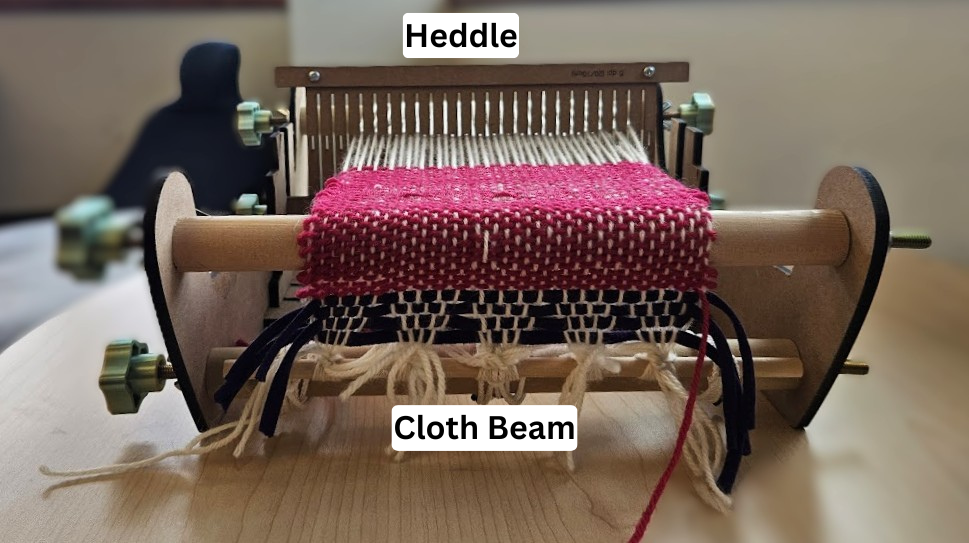
This model includes a heddle block with three positions in which to rest the heddle – up, down, and neutral. By placing the heddle at one of these positions, we can raise or lower alternate warp threads. As the weaving advances, material is rolled onto the cloth beam to keep it clean and tidy.
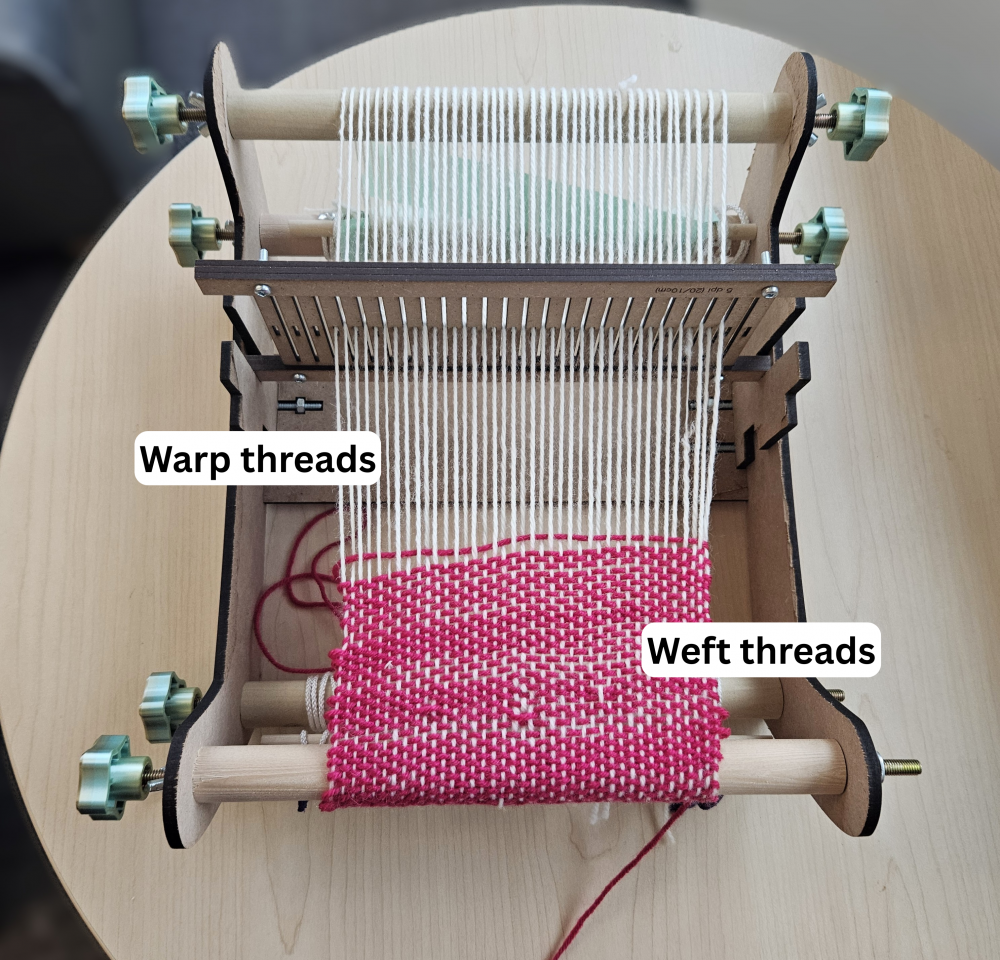
Controlling the warp threads (white) allows us to pass the shuttle and its weft (red) through the openings created between the raised and lowered threads, creating the weave! At its most basic, weaving creates the simple pattern seen con the loom. Using different colours, pickup sticks, and textures of yarn allows for complex weaving to be made on a small loom.
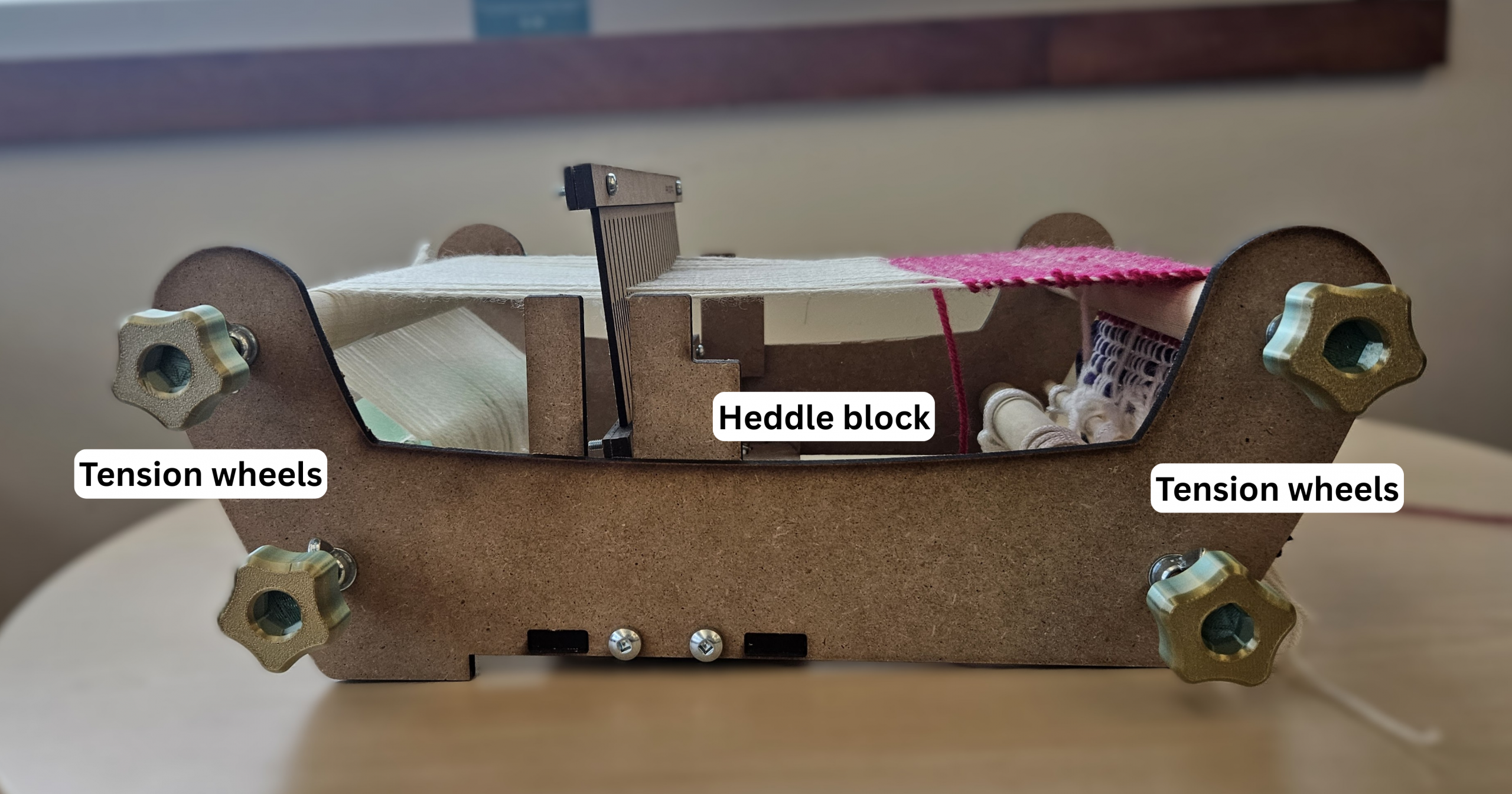
The tension wheels feed the warp threads through the loom. They can be loosened to allow cloth to be rolled onto the cloth beam, which also pulls more warp into the working space of the loom.
The rigid heddle loom is a relatively recent invention. The first models date to the late 1920’s. But it is just one of many kinds of looms. Weaving has been practiced across the world for millennia, using simpler setups such as this handheld frame loom.
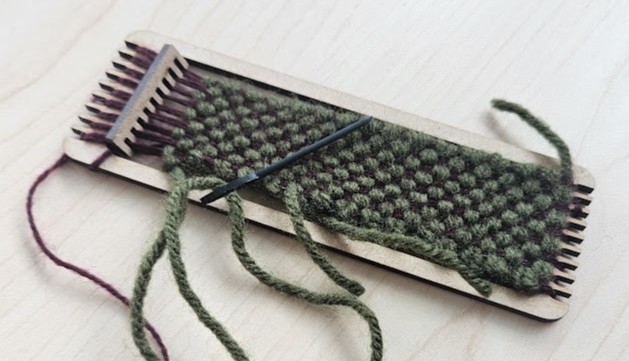
It uses a tapestry needle to weave the weft threads through alternating warp threads. Our tapestry needles are 3D printed, allowing them to be customized for length and eye size!
Handheld weaving can be a very relaxing process, and it is a great way to test colours and patterns before setting up the table loom. All frames can be custom-sized according to user need by simply rescaling the template in Inkscape before laser cutting. By bringing modern technology and ancient practices together, we end up with customizable, useful tools that can be made accessible to everyone interested in the art of weaving.
If you are interested in trying some of our looms for yourself, stay tuned for craft events in collaboration with Ask Us desk staff! You are also welcome to email us at dscommons@uvic.ca to ask us any questions about the looms, or to make an appointment to see them in person.