Why are BC high school students making healthier choices?

Teens sometimes get a bad rap for being careless with their bodies and minds. But according to McCreary Centre Society’s 2013 Adolescent Health Survey, published in February 2014, most of the 30,000 BC youth surveyed say they are healthy or very healthy (87 percent), and 8 out of 10 report good or excellent mental health (81 percent). The majority also said they feel cared for, competent and confident about their future.

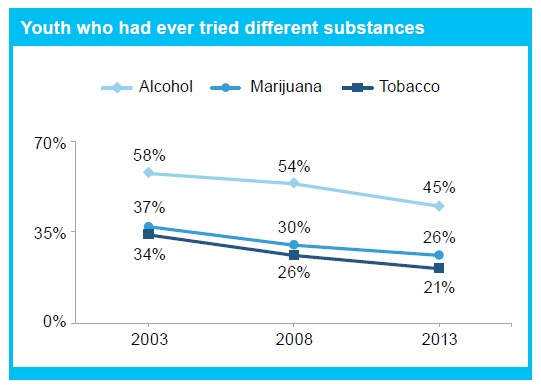
Along with feeling good about themselves and their world, more young people are steering clear of alcohol and other drugs. Survey results show substance use rates have been declining over the last 10 years, and the majority of students in Grades 7 through 12 say they have never experimented with alcohol, cannabis (marijuana) or tobacco.
Image
Source: Smith, A., Stewart, D., Poon, C., Peled, M., Saewyc, E., & McCreary Centre Society (2014). From Hastings Street to Haida Gwaii: Provincial results of the 2013 BC Adolescent Health Survey. Vancouver, BC: McCreary Centre Society.

Part of what’s driving this decline is that young people are waiting longer before trying drugs. For example, 35 percent of young people who have ever tried alcohol waited until they were 15 or older (compared to only 20 percent in 2003), and of those who have ever tried cannabis, 41 percent waited until they were 15 or older (compared to 28 percent in 2003).

Equally positive, youth who are choosing to use alcohol or other drugs seem to be taking fewer risks. For example, 2 percent of those who had ever used alcohol said they had driven after drinking in the past month, down from 6 percent in 2008 and 8 percent in 2003. There was also a decrease in impaired driving among youth who had ever used cannabis, although 9 percent had done so in the past month.

So, why are BC youth making healthier choices? A number of protective factors seem to be at play including family connectedness. For instance, youth who felt their family paid attention to them were less likely to drive after drinking than those who did not experience such attention (2 percent vs. 6 percent). They were also less likely to have been a passenger in a vehicle with someone who had been drinking (15 percent vs. 33 percent).

Having someone to confide in seems to make a difference too. Students with supportive adults in their lives are less likely to have used alcohol (43 percent vs. 54 percent). And, among students who had tried alcohol, those with an adult they could turn to were less likely to report binge drinking in the past month (37 percent vs. 42 percent). Youth in government care who had a supportive teacher or other caring adult in their lives were also less likely to binge drink in the past month.

What exactly does this mean for parents, teachers and other caring adults in young peoples’ lives? Many teens are making healthy and positive decisions and we can continue to support and acknowledge the positive decisions they are making. For teens who are struggling to maintain their health or happiness, we can make a difference by reaching out to them. Finally, we must continue leading by example. By being happy and healthy adults, we show young people that health itself is a worthy life-long goal.

For more information about the results from the 2013 BC Adolescent Health Survey: http://www.mcs.bc.ca/pdf/From_Hastings_Street_To_Haida_Gwaii.pdf

Image

Author: Nicole Bodner, Centre for Addictions Research of BC

**Please note that the material presented here does not necessarily imply endorsement or agreement by individuals at the Centre for Addictions Research of BC

Why give alcohol to alcoholics?

Three people sit around a kitchen table; they chat, share a meal and enjoy warmth from the stove on a cold Ontario winter day. As they visit, someone approaches the group to remind them: it’s time for their dose of alcohol.

A year ago these three people would have lived outside in sub-zero temperatures, moved in and out of emergency shelters, and repeatedly be picked up by the police or emergency medical services. They were homeless and dependent on alcohol, often drinking heavily over a short time and consuming “non-beverage” alcohol like mouthwash, rubbing alcohol and hair spray. Today they have a place to call home and alcohol harm reduction support as participants in the Kwae Kii Win Managed Alcohol Program.

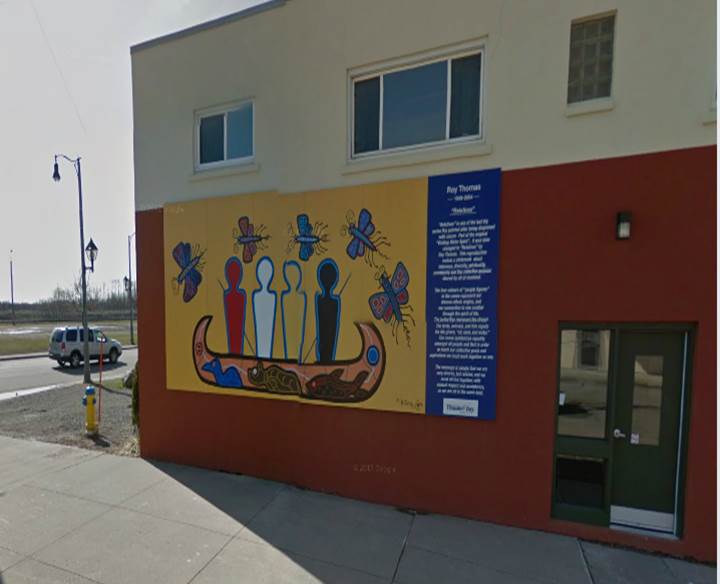
Kwae Kii Win, Thunder Bay, CA

For the last few years, I’ve been part of a team studying Canadian Managed Alcohol Programs and their impacts on participants and communities. Most discussions about harm reduction focus on health measures for people who inject or smoke illicit drugs, but we can use the same harm-reduction principles to help people addicted to alcohol. Many emergency shelters do not allow people to drink or have alcohol with them, so for those addicted to alcohol and without housing, the only option may be to stay outside. Managed Alcohol Programs provide housing and small regular doses of “beverage” alcohol (usually white wine). This is enough alcohol so that people do not go into withdrawal, but not so much that they are intoxicated. The wine also replaces more harmful kinds of alcohol like rubbing alcohol. The primary goal is to improve the welfare of participants, but some programs also try to reduce emergency health and policing costs by reducing need for these services among participants.

When I first heard about Managed Alcohol Programs, I wondered, “Why would anyone give alcohol to alcoholics?”

Actually, the idea is not to give people more alcohol, but to change how they consume alcohol so that it’s consumed in safer ways. The intention is to replace the existing unsafe drinking (in public, in the cold, large amounts at a time, unsafe kinds of alcohol) with safer drinking (inside in their own homes, under medical supervision, much smaller amounts at a time), and not to increase the overall amount of alcohol.

You may be wondering, “If drinking is so bad for you, why can’t people just stop drinking?”

People in Managed Alcohol Programs have all tried, repeatedly and without success, to stop drinking, sometimes undergoing many rounds of detox and treatment. Many times, it seems, people are drinking to cope with traumatic events in their lives, and while that pain remains, drinking seems like the best option. Also, anyone who drinks a lot cannot stop suddenly without suffering significant medical problems like seizures. Managed Alcohol Programs, like other harm-reduction measures, provide a link to health services and can be a first step towards drinking less or quitting altogether if the participant decides that’s what they want.

Most significantly, though, Managed Alcohol Programs provide a safer place for people who are otherwise left without protection from the often gendered and racialized violence and trauma that characterize many people’s experiences of homelessness. As one Managed Alcohol Program participant put it, her family members know where to find her now and don’t have to wonder, when they read of the death of an Aboriginal woman in the paper, if that is her.

For more information about Managed Alcohol Programs, take a look at these links:

This new report highlights significant reductions in hospital admissions and time in police custody for participants once they start the program, as well as other benefits.

MAP Shelter House – Thunder Bay “The Value of Harm Reduction” https://www.youtube.com/watch?v=exaIP5TUZNw&feature=youtu.be

The Current interview: http://www.cbc.ca/thecurrent/episode/2014/01/06/harm-reduction-vs-abstinence-is-it-ok-to-give-an-alcoholic-a-drink/

Kathleen

Author: Kathleen Perkin, Research Manager, National Evaluation of Managed Alcohol Programs in Canada, Centre for Addictions Research of BC