Actions speak louder than words: How to include people who use drugs in decisions that affect them

I have had the privilege to work with various peer-run organizations of people who use drugs for many years now. As a National Programs Manager at the Canadian AIDS Society (CAS), every harm reduction related project I work on first starts with creating a countrywide steering committee that includes people with lived experience of drug use to guide the project and ensure its relevance. Not having much guidance on how to properly include people with lived experience as part of decision-making, I navigated my way by trial and error. At times, I tripped over my own assumptions and clumsily had to adjust my process on the fly. The people I worked with also shared their experiences about participation in other committees, which had been at times positive, and other times negative or tokenistic. I became intrigued about finding out how to better include people with lived experience on such committees.

I decided to make this subject the focus of my PhD studies, under an amazing supervisory committee, Dr. Bernie Pauly, Dr. Cecilia Benoit and Dr. Budd Hall, and in partnership with the Drug Users Advocacy League (DUAL) in Ottawa, Ontario, and the Society of Living Illicit Drug Users (SOLID) in Victoria, British Columbia.

Now, we are so thrilled to be launching the fruits of our labour, From One Ally to Another: Practice Guidelines to Better Include People who Use Drugs at your Decision-making Tables, as part of the Centre for Addictions Research of BC’s (CARBC) Bulletin series.

Inclusion of individuals and groups marginalized by the stigma against drug use in decision-making structures has emerged as a way to challenge the dominant power structures. The goal is to render decision-making more equitable for groups that have historically been excluded from decisions that affect their lives. The premise is that by including people experiencing marginalization at decision-making tables, power will be shared and shifted from power over to power with people with lived experience. By sitting together around at decision-making tables, the possibility opens up for a shift in consciousness whereby people learn to relate to each other in non-stigmatizing, non-discriminatory ways. Research on the processes and outcomes of such inclusion, however, has been sparse.

Often over coffee with various people who use drugs, we discussed how interesting it would be to better understand the relational dynamics at play at decision-making tables and the factors that either contribute to or hinder the transformation of power inequities. These groups of people who use drugs longed for practice guidelines to hand over to organizations that wanted experiential people at decision-making tables.
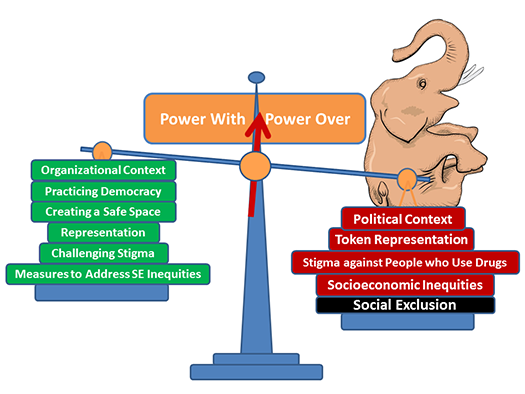
image of scale_smallv03

Together, DUAL, SOLID and I established a partnership agreement with a shared understanding that the research was ultimately for my PhD pursuits, though we would work together along the way, using a community-based participatory research framework, to advance evidence-based practice guidelines. We developed the research questions and selected four harm reduction committees that DUAL and SOLID were involved in. We developed interview questions to speak to various committee members. I observed committee meetings and collected relevant documents to understand their decision-making processes and how they included people who use drugs at their table. As I compiled preliminary results, I had meetings with DUAL and SOLID to review them and get their feedback. I also presented preliminary results to each of the committees for their input.

Throughout my studies, I continued to work with peer-run organizations of people who use drugs across Canada and assisted the Canadian Association of People who Use Drugs to develop and mobilize. In 2013, they held a national meeting of 14 peer run organizations and produced a report entitled Collective Voices Effecting Change: National Meeting of Peer-run Organizations of People who Use Drugs. As a result of my research, I experienced my own transformation whereby I have learned to shift from a position of leadership to one of facilitation. I assist groups in whatever way I can, following their lead and working with their strengths and aptitudes. Together, we developed another useful resource, Peerology: A guide by and for people who use drugs on how to get involved.

In addition to the summary cited above, my full dissertation, At the Table with People who Use Drugs: Transforming Power Inequities, is now available, should you be interested.

As part of CARBC’s lecture series, I will also be speaking on this topic at the Royal Jubilee Hospital, in the Patient Care Centre, Room S169 (Lecture Theatre), on Friday, June 3rd, 2016 at 10 am. If we want to be true allies to people who use drugs, let’s make our actions speak louder than our words.

_______________________________________________________

Lynne Belle-Isle, PhD, is a National Programs Manager with the Canadian AIDS Society and a Research Affiliate at the Centre for Addictions Research of BC, University of Victoria. She recently completed her PhD through the University of Victoria’s Social Dimensions of Health Program.
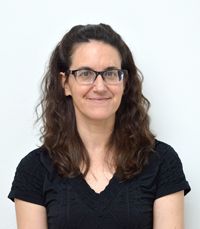
Lynne_headshot_June2016_blog

UNGASS 2016: Q&A with Jean-Luc Lemahieu, Director of Policy Analysis and Public Affairs UNODC

Image: Wikipedia Commons/Creative Commons

The UN General Assembly will convene a Special Session (UNGASS) on what it calls “the world drug problem” from April 19-21, 2016, at UN Headquarters in New York (UNGASS 2016 website).

We had the opportunity to correspond via email with Jean-Luc Lemahieu, Director of Policy Analysis and Public Affairs at the United Nations Office on Drugs and Crime (UNODC), and ask him a few questions just hours prior to UNGASS 2016.

The following is an unedited version of our email Q&A with Mr. Lemahieu:

CARBC: The UN does not appear to condone narcotic drug use outside of medical or scientific purposes – is that correct? If yes, does it support the criminalization of all non-medical and non-scientific narcotic drug use?

Jean-Luc Lemahieu: The drug control Conventions* do not allow for recreational use.  The aim is to protect the most vulnerable – those who regretfully will fall in problem use.  However, whereas the Conventions see no place for non-medical or scientific use, the Conventions do not consider personal use itself an illicit activity – this is up to the interpretation of the Member States and national legislation.  Depenalization is also accepted within the Conventions.  Evidently the member states can always decide to go further by altering the scheduling of certain illicit drugs. WHO does play a core advisory role to this end.  The growing perception in especially North America is that recreational use should be accepted for cannabis.  Interesting to this regard is to read the latest WHO report on cannabis (March 2016 [link: http://bit.ly/1qUBFgP]).  Also many countries around the globe, including within Latin America, still prefer a wider coverage instead of accepting the option of individual liberty as often expressed in the pro-lobby circles. Hence, Conventions might not change soon on this topic yet pressures are to increase on this international system with many more US States expected to opt for full legalization.

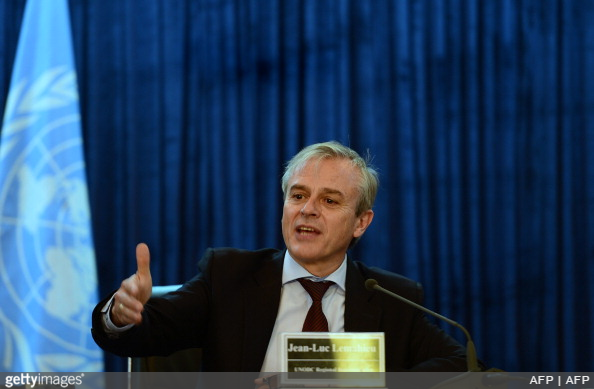
Jean-Luc Lemahieu, Director of Policy Analysis and Public Affairs at UNODC, 2013

[CARBC] At the last Special Session in 1998, the members pledged for a “drug free” world by 2008.  The 2016 draft Outcome Document makes no such commitment.  Is the goal of a drug-free world over and, if so, what is the reason for this change?

[J-L L]There are many aspirational goals which intend to motivate and mobilize.  A ‘cancer free world’, a ‘wor[ld] without poverty’, ‘justice for all’,  and more recently the new 2030 Development Agenda.  Nobody truly believes that a world without cancer, equitable and just to all, ‘nobody left behind’, or a world without drugs is within reach.  Pro-lobby groups however love to turn the table around and make it much more than it is or was.   Fair, that is part of advocacy work.  The real issue which we hopefully all can stand behind is how can we prevent and not promote drug use which can, not necessarily for each and everybody, lead to problem use or other negative effects on families, communities and society at large.  Also crucial is to ensure that those getting to problem use are considered a health and not a criminal problem.  People come first.

[CARBC] You note that UNGASS 2016 “is not about assessing the ‘War on Drugs,’ which,” you write, “never has been framed, mentioned or asked for, in any of the UN Conventions.”  Yet the expression is ubiquitous – in the media, used by special interest groups, and laypeople alike.  Briefly, what is UNGASS 2016 about?

[J-L L] The ‘war on drugs’ has been a prime advocacy tool, is a great soundbite and fell well within press and others.  Correct that the concept itself is without base within the Conventions, one still needs to appreciate that especially in many Latin American countries the suffering from strong prohibitionist regimes has been palatable.  While the Conventions for instance do not ask for the incarceration of drugs users, many Latin prisons are still overburdened by poor individuals who should fall under health care instead of a prison regime.  There is a lot of work ahead of us in going back to the essence of the Conventions, promoting a balanced approach and proportionality of the crime justice system. Beyond this, as with many other criminal activities, the linkage with the 2030 development agenda is equally obvious.  Both vulnerability and opportunity is to be tackled.  Poverty provides vulnerability but there is no causal effect – not all poor are drug users, or worse small criminals (‘not all poor Afghan farmers cultivate opium, and not all opium farmers are poor’).  Nonetheless this vulnerability needs to understood and corrected through pointed development interventions.  In the same time the corruptive and abusive opportunity who exploit the vulnerabilities need to be taken on too – through an equitable justice system, transparent governance and predictable rule of law.  This is what UNGASS 2016 is about. 

For more information, here is a pdf draft copy of Mr. Lemahieu’s presentation at the 2015 Symposium on International Drug Control Policy in China titled “Improving Global Drug Policy: The importance of UNGASS – the contextual setting

_________________________

*  the Single Convention on Narcotic Drugs of 1961 as amended by the 1972 Protocol, the Convention on Psychotropic Substances of 1971 and the United Nations Convention against Illicit Traffic in Narcotic Drugs and Psychotropic Substances of 1988 (see: http://bit.ly/1qWHKth)