
Broader Historical Context
Joseph A. Amato describes how local historians “discard the present…” and become “[e]namored with the static past….” Furthermore, “[t]hey risk mistaking what is common to an entire epoch and a whole nation as singular to their own place and time.” With this in mind, we will briefly sketch the broader Canadian context of the history of streetcars, as well as explain how our map can build upon it critically.
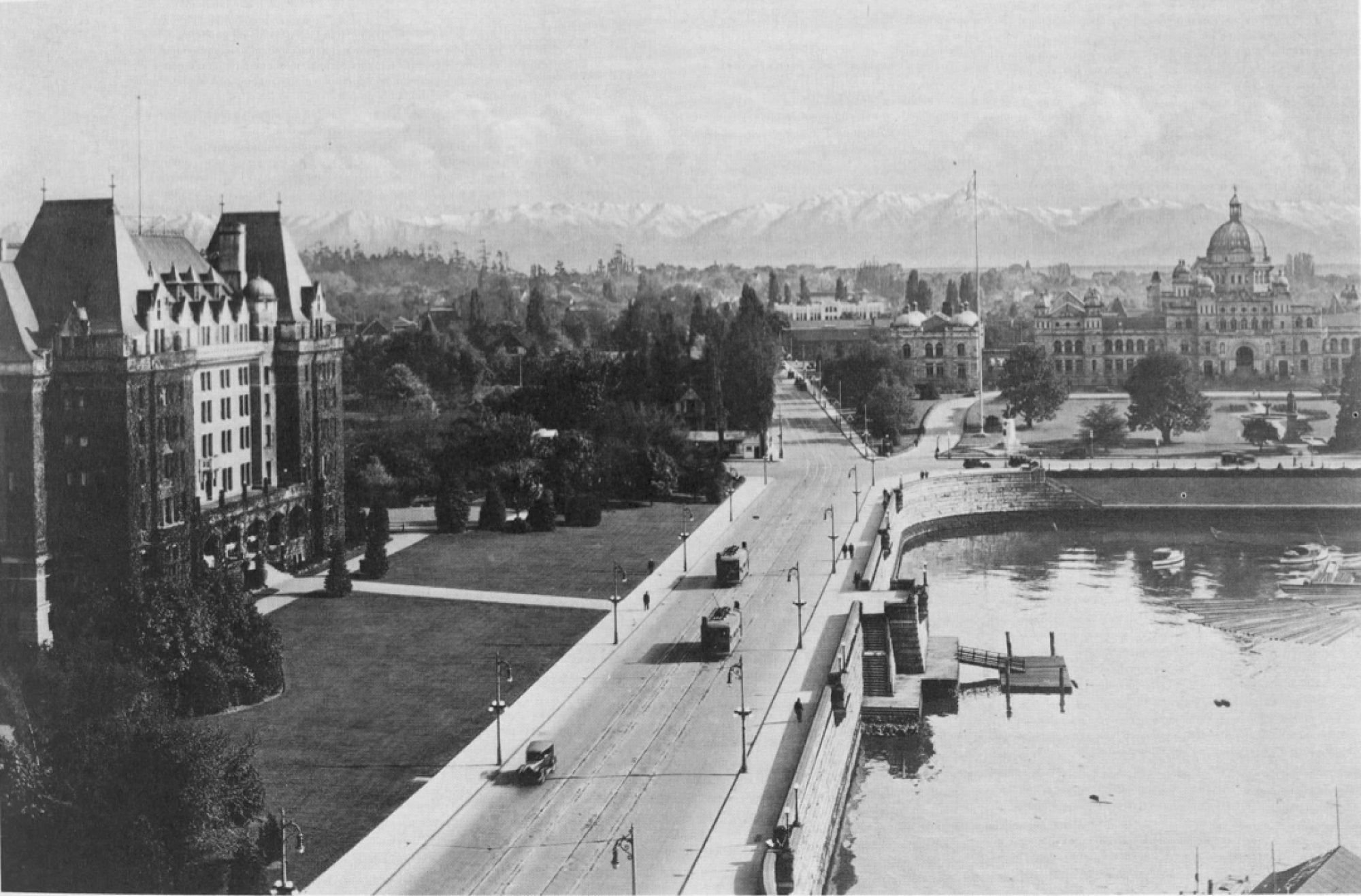
The London, Ontario, street railway lines were first laid in 1873, becoming electric-powered in 1895. Winnipeg’s massive streetcar service began in 1891. Victoria’s preceded it in 1890. This is to name only three, and shows Victoria’s pioneering position within the history of streetcars. Victoria was the third city in Canada to implement electric rail streetcars; it had been beaten only by St. Catherines, Ontario, in second place, and by Windsor, Ontario, in first.

The removal was just as swift as the implementation and just as Canada-wide. Only Toronto retained its streetcars, and this way only due, interestingly, to popular pressure. Otherwise, the city council would have made the same decision that every streetcar-city had made—that streetcars were a thing of the past and deserved to be removed. Victoria was no different and tore its tracks out in 1948, the same year as St. John’s. Halifax followed in 1949. Then Calgary, Hamilton, Saskatoon, and Edmonton in 1950 and 1951. The cause of the removal of the streetcar was first and foremost the introduction of the automobile. Post-war prosperity and the promise of plenty led individuals to line up for newly mass-manufactured automobiles. The result for urban life was catastrophic: lively cities were reduced to a series of parking-lots, as people sought refuge in the suburbs. Indeed, the broader, North American patterns of consumer culture and the formation of a suburban middle class play out in the history of the streetcars. In short, Amato is right to guide students of local history towards national narrative considerations. Victoria, while a pioneer of the streetcar, was involved in the same forces and the same historical contexts that influenced Canadian (indeed, North American) cities to install and then remove their streetcars within similar timeframes.
The critical reflection engaged in through our maps will contribute to the following understanding: the installation and removal of the streetcars involved competing economic and social histories. Not everyone was happy to see the streetcars arrive, nor to depart. Their stories exist and can be placed into their geographic context.
One final element needs reflection: the fact that the removal of tracks occured when it did, despite peak ridership in the war and post-war years (equally true in post-war Victoria). A certain level of ideology is required to explain this phenomenon. “Progress,” says Dimitry Anastakis, was an ideal that contributed to the wide perception that streetcars were “an anachronism despite their low costs, low environmental impact, and high ridership”. While Anastakis remarks that many citizens did lament the railroads’ passing (indeed, significant numbers of Torontonians did), the overall belief in the streetcars’ uselessness was widespread. Our map will help, in part, to challenge any view of history which takes this linear progression at face value. Not only was it not a belief universally held and was for a large part mistaken, but the true complexity of the streetcars’ history is best view from beneath this master narrative: by examine the voices of more diverse crowds. Polyphony and microhistory can be utilized to expose non-dominant stories and to put them into dialogue with normalized narratives like the one above.