Terahertz engineering explores the “THz gap” — a frequency band between microwaves and infrared light with huge potential for future wireless, imaging, and sensing technologies.
Our team at UVic designs and builds the world’s first chip-scale THz filters, waveguides, and sensors, combining simulation, nanofabrication, and hands-on experiments. We work at the intersection of communications, health, and materials science, with projects ranging from glucose detection to AI-driven device design.
If you’re excited about working at the frontier of physics and engineering, this is where you can help invent the next generation of THz technology.
Terahertz
The Terahertz (THz) region exists between the electrical (< 300 GHz) and photonic (> 10 THz) regions of the electromagnetic spectrum. This region is commonly called the THz Gap because few room-temperature sources exist.

Terahertz Engineering
The THz spectral region sits between microwaves and infrared light and is special because:
- Communications – It can support ultra-high-speed wireless links beyond today’s 5G/6G.
- Imaging & Security – THz waves penetrate clothing, paper, and plastics, making them useful for non-invasive imaging.
- Spectroscopy & Sensing – Many molecules (such as glucose, explosives, and drugs) have unique absorption fingerprints in the THz band, enabling chemical detection.
- Biomedical Applications – THz waves interact with water and biological tissues in ways that could enable label-free diagnostics.
How Our Team Approaches THz Engineering
Integrated Planar Platforms
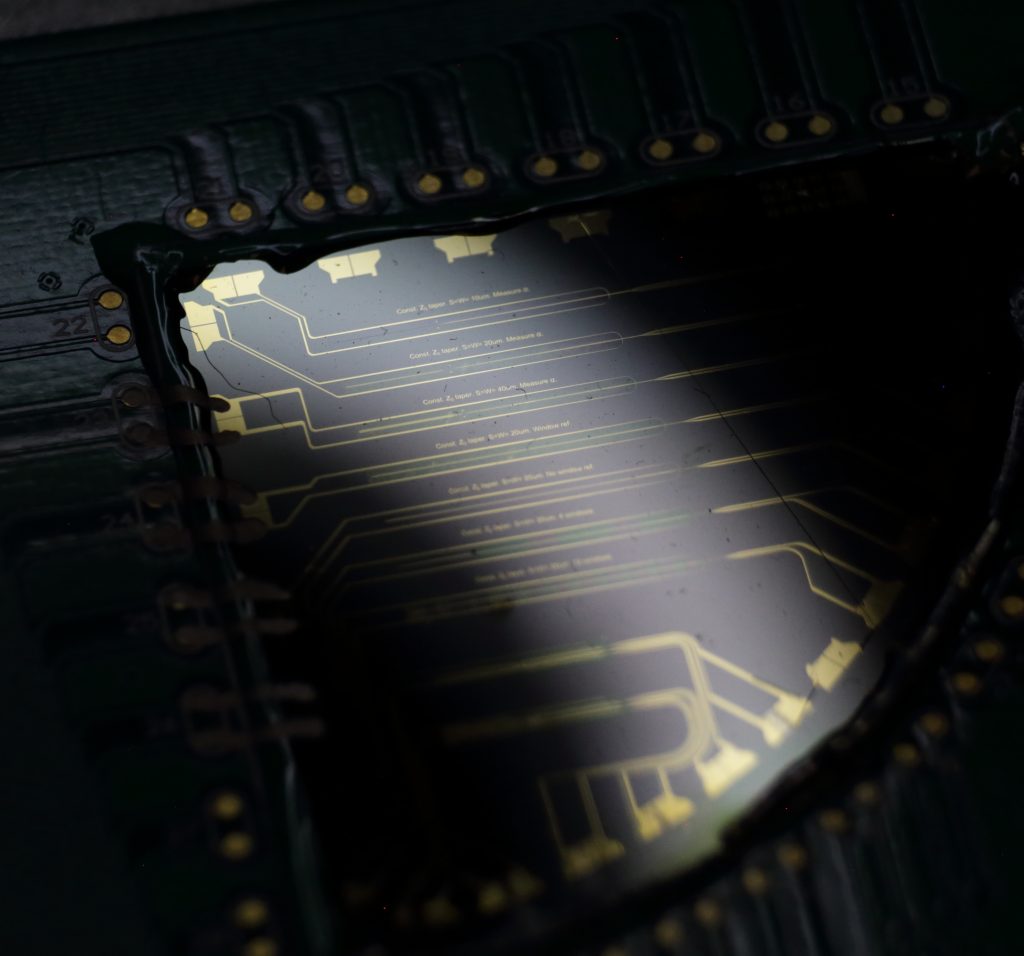
Instead of bulky free-space optics, we use uniplanar transmission lines on ultra-thin membranes to minimize loss and dispersion. This approach enables on-chip, system-level integration, much like a THz “printed circuit board.”

Novel Filters and Waveguides
- Metamaterial based filter design

- Pioneered the verification of spoof surface plasmon polariton (SSPP) waveguides behavior at THz frequencies on thin silicon nitride membranes.

- Demonstrated planar THz filters based on microwave network synthesis (Bessel, Chebyshev, multimodal periodic designs)

Sensing & Biomedical Applications
-
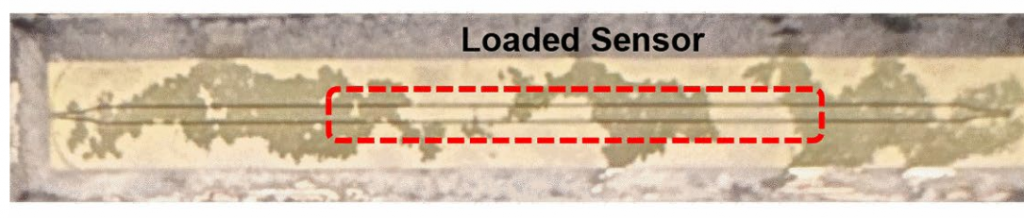
Developed on-chip glucose sensors for label-free detection at absorption peaks which bridges engineering with real-world health and food safety challenges.
AI and Optimization
-
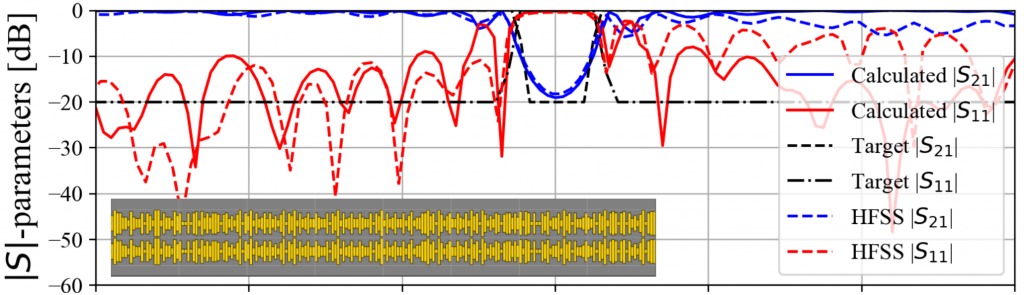
Created a genetic algorithm inverse design framework that automatically discovers new THz filter geometries which merges computational intelligence with device physics, accelerating discovery.

Transmitters and Receivers
In my lab we generally use photoconductive switches as transmitters and receivers. This technology has been selected for its low-cost, and ability to function into the 5-10 THz region.

Transmission mediums
Transmission mediums are used to transfer energy between two locations. Common examples in the electrical region are wires and circuit board traces. In the photonic region optical fibers are used. In the THz region significant loss and dispersion limits the viability of wires and optical fibers; however conductive transmission lines on ultra-thin substrates can be used to mitigate these issues.
Hands-On Student Training
-
Students learn simulation (HFSS, COMSOL, VPI Photonics), nanofabrication techniques, and THz measurements using in-house THz system-on-chip platform.
-
The lab environment combines microwave engineering, photonics, and materials science with practical, experimental validation.
Applications
THz Spectroscopy
THz spectroscopy is used for chemical sensing. Molecules have unique absorption characteristics which act as finger prints which are then used for classification. The following Figure illustrates the absorption spectra for H2O, CO, NH3, and H2S.

Photonic Spectroscopy
Greenhouse gases (GHGs) are a major contributor to climate change and there is a need for effective and low-cost emission quantification methods. Our lab develops technologies that can achieve these goals using a novel combination of lasers and sensitive detectors.
Equipment
- Large assortment of optics, fiber, and optomechanics
- Femtosecond laser (Calmar Carmel 780/1550)
- Agilent External Cavity Tunable Lasers (C and L band)
- Dozens of laser current and temperatures controllers
- Voltage/signal sources
- Oscilloscopes
- Spectrum analyzers
- Optical spectrum analyzers
- High speed balanced photo detectors (43 GHz)
- Lock-in amplifiers
- Many more…
Lots of shared equipment (with Prof. Gordon):
- Optical tables
- Anechoic chamber
- RF/optical probe station
- Streak camera
- 65 GHz vector network analyzer
- Optical tweezers
- Many more…