The list you made for checking the inclusivity of class material is really practical. It feels like a real, tangible checklist that anyone can use, and also leaving a link to let people explore further is a great idea. I also enjoyed how you incorporated your own experience as a STEM camp counselor with importance of representation. As someone in Computer Science program, I sometimes see information about dedicated workshop for women in STEM. I am always impressed by just how strongly people work to get women involved with the field, and “…(girls) can picture themselves as an astronaut” really reiterates the importance of representation for marginalized groups.
One thing I am worried about is listing out hurdles and barriers from an online source may not be as effective as the rest of your post. Since you were able to effectively incorporate your experience to most paragraphs, I wonder if it might be better to write challenges you found while working as a STEM camp counselor, and how you navigated through them.
Your perspective as a Persian man in Canada, and your analysis of the online environment through that lens gives this post a unique sentiment. In particular, your example of “Women, Life, and Freedom” movement in Iran and the importance of digital platform for marginalized community does excellent job to strengthen the importance of diversity and inclusion. I’m also a fan of your use of voice recordings. Accessibility online is something that I became interested in some time ago, and starting taking small steps in including things such as alt-text for images in my blog posts. But your voice recordings does much better jobs for those in need, and again underlines your focus on Inclusivity.
For the last section, I worry that there might not be enough to showcase what people can do to encourage inclusive digital environment. I wonder if including what steps you can take to achieve that goal may strengthen your point even further.
Overall this is a very powerful post that incorporates your experience with concepts we covered excellently!
Right off the bat, I was impressed by how well you integrated tables and images into your post. Inserting images can be difficult because there are infinite images online to choose from, but choosing one that is both relevant and impactful is always a challenge (or at least it is for me). I usually insert one at the beginning of a paragraph, but the way you incorporated them between the paragraphs to support and emphasize your argument is well done. The tables also does excellent job showcasing ways to deepen your PLNs. I particularly like how you created specific actions you can take for each hypothetical goal.
With that said, I worry that people may be confused with inclusion and diversity being in separate paragraph. I wonder if you could combine those together, and state the distinction between the two clearly to better explain what they are and the relation between them.
Overall this is a great post with plenty of information!
As the online platforms increase in size and numbers, they have become our primary way to build connections with one another. However, it’s important to recognize that every post, messages, and comments we share leaves behind a trace of us visible to the world. This is why it’s essential that we actively manage our online identity, and what information about ourselves that we manage to circulate.
How I protect my information online:
My Information
Protection
Account Access
use randomly generated password 2 FA
Third Party Apps
only grant permissions to necessary requirements. Check privacy settings
Web Browsing
Https only enabled
Account Visibility
Only to those I know in person. Keep it hidden or privated
In class, we learned that ethics online can be followed by:
respecting others
avoiding harmful or false content
crediting work of others
The thing that I found most important is “respecting others”. As cliché as it sounds, common courtesy and kindness seem to be lacking in online spaces. I wrote about being baffled at how people are using online spaces to attack others or casually spread hate in my earlier blog post. Respect shouldn’t disappear just because the setting is digital. Maintaining ethical behavior starts with each and every one of us choosing to treat others with the same respect we expect in return.
Challenges and Importance of Diversity in Digital Learning
Diversity of opinions is vital in creating an excellent Personalized Learning Network. Online platforms often show contents that align with your existing beliefs, or contents that you feel compelled to engage with, either due to anger or other emotions. This creates an echo chamber effect, limiting your exposure to new ideas, and chances to engage with those with different perspectives.
Creating Inclusive Digital Learning Spaces
In this video, Natalie Dunbar, who is a Senior Manager of UX Content Strategy at Walmart talks about inclusiveness in UX (User Experience.
Her focus is on removing barriers that exists for variety of users, with the goal of creating an accessible, equitable space.
Steps I Take to Promote Digital Inclusivity/Diversity
While I am sometimes guilty of putting myself into echo chamber, there are few things that I do to garner a rounded view. One key thing being using multiple news websites. Rather than using BBC as the main source of information, I use other sources such as AP news, Reuters, or even Japanese sources to compare how the same events are reported. Subtle differences in tone and framing are common, but the difference is particularly large when reading from entirely different language or cultural contexts. This practice helps me recognize bias that may exist, and reminds me to seek diverse sets of opinions.
When I took a course on Human Computer Interaction last semster, accessibility and inclusion were recurring themes. We studied importance of features like alt text and text to speech. Tools that make digital content usable for more people, but likely never seen by most users. That experience changed how I think about design. Now, when I try to create something, I focus on usability above all else. I imagine multiple scenarios: someone with no technical background, someone who is not a native English speaker, someone who is color blind. I try to consider many scenarios to improve usability, in order to create an experience that is intuitive and barrier-free for all.
Hello all, very excited to have joined this class. My name is Mitsu Eisaki, and I am a fourth year Computer Science student.
Reflections
There aren’t many things I would highlight about my educational journey, but one of the things I become accustomed to in college is using YouTube as a learning tool, rather than as an entertainment. I used it a lot particularly in Math courses I was required to take that involved some abstract ideas, or theory heavy courses that had very little in terms of visual aid. Watching multiple videos on one topic, all from different perspectives, often helped me comprehend difficult concepts or topic better than lectures did.
Personalized Learning
Another significant influence on my educational journey has been online learning. Few years ago, when I enrolled at Camosun College, I was required to take preparatory Math courses before I could register for a transferable credit course. However, the school offered a math assessment test that could allow me to potentially bypass those requirement depending on the score achieved. So for the next few weeks before the start of the semester, I used Khan Academy to study every day and spend few hours going through its curriculum. While math was never my strongest subject in school, and still isn’t, the fact that I was in full control over what, when, and how long to study made the experience feel very enjoyable and manageable.
Compared to traditional classroom settings, online learning gave me greater sense of autonomy. I could always pause, rewind, or skip sections, allowing me to control the pace and focus on what I needed. After some time, I wrote the assessment test and passed with flying colors.
It was the first time I had used an online resource to study independently, and it left a strong impression on me: from the quality instruction provided by completely free platform, to the flexible roadmaps that I could follow at my own pace. It showed me how unique an online learning experience can be, as well as how it can offer a personalized experience that adapts to individuals needs.
Digital Identity and Online Presence
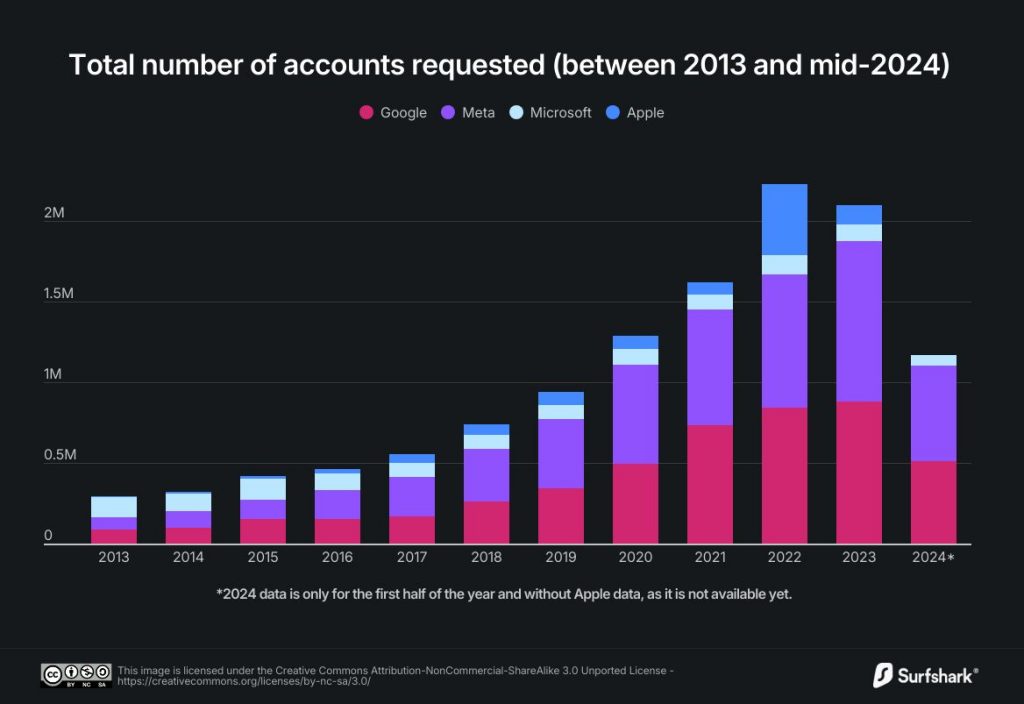
While not directly related to my educational journey, managing my online presence has become increasingly important. Few years ago, around the time GDPR was receiving global attention, I deleted or deactivated most of my social media accounts due to growing concerned about my privacy and data collection. I became more privacy conscious online, and made some changes by switching my browser to Firefox, removing google apps, and creating an email with separate provider. While most of these have stayed with me through the years, I eventually had to return to using social media. It used to be that they made things easier, but today I find it’s no longer an option, but a necessity; Instagram or Facebook are now needed to communicate with people, and UsedVictoria or even Craigslist seems to have been largely replaced by Marketplace, and LinkedIn feels like another page in a resume you have to submit. More and more, we’re putting personal information online, willingly or otherwise, for the entire world to see. What is more baffling is that even as people reveal their whole identity online, many still choose to engage in hostile, offensive arguments on a random Facebook video. It is strange that even as we lose layers of anonymity and reveal our real identity online, people still fail to recognize the person on the other end.