
Introduction
This toolkit includes strategies to implement inclusive teaching and culturally responsive practices into instruction sessions and interactions with students. Our goal in creating this toolkit is to provide practical strategies for librarians, faculty, and staff to improve their instructional approaches and help them create an inclusive space in their classrooms building towards anti-racism. This toolkit will benefit those familiar with the culturally responsive and inclusive pedagogy frameworks and novice users. It serves as a valuable resource for current and prospective faculty, graduate students, supervisors, library staff, university staff, librarians, library administrators, and other campus stakeholders.
The toolkit is organized into wide topics that were derived from a comprehensive qualitative research project that was carried out from 2021-2022. The topics provide an overview of different frameworks as well as methods that include a detailed checklist to assist faculty, staff, and librarians to incorporate culturally responsive and inclusive teaching into their instruction and interactions with students. This toolkit is designed to guide the individual choices of faculty, staff, and librarians. However, for these frameworks to be truly effective, they must be widely implemented at the institutional level to influence policy adaptation. Ultimately, this toolkit provides strategies to cultivate an inclusive culture that will enhance learning and teaching outcomes for all learners.
Why this toolkit?
Oftentimes, Black, Indigenous, and people of colour (BIPOC) students feel unwelcome because of the lack of learner-centered teaching practices in classrooms and libraries (ABLE Research Consultants & BCcampus, 2020). This negatively impacts student achievement and learning. At the University of Victoria, as librarians of color and as immigrants to Canada, we have witnessed barriers that conventional Western educational approaches posed to students from equity deserving groups. This toolkit was created by focusing on the results from focus group interviews, which can be found in our article, titled “Listening to diverse voices: inclusive pedagogy and culturally responsive teaching for library interactions” (Gupta et al., 2023). These interviews highlighted the specific challenges faced by BIPOC students in academic settings and informed the development of the toolkit. Our goal is not only to provide librarians, faculty, and staff with an opportunity to assess their current instructional practices and interactions through self-reflection but also to help colleagues identify and review their biases, assumptions, and cultural perceptions in order to discern potential barriers for students. We want this toolkit to be central to the learning and development of inclusive strategies to support the broader work of decolonization by incorporating culturally responsive and inclusive pedagogies and by using principles of anti-racism and Universal Design for Learning (UDL).
Purpose
The purpose of this toolkit is to offer practical approaches to incorporate culturally responsive teaching and inclusive pedagogies into instructional methods and student interactions to build towards equity in education. Designed for use by library professionals, instructors and staff with teaching roles and those providing services to students, the toolkit aims to enrich the learning experiences of all students by:
- fostering an understanding among faculty, librarians, and library staff regarding the challenges encountered by students.
- addressing concerns associated with conventional educational practices, instructional methods, and student interactions.
- equipping faculty, librarians, and staff with actionable strategies to enhance student experiences in classrooms and at the library effectively.
- elevating the cultural awareness of faculty, librarians, and library staff to enhance their cultural proficiency or fluency when engaging with students.
- cultivating a shift away from pre-existing biases and assumptions, promoting heightened awareness of racial histories and the potential traumas experienced by students.
Positionality Statements and Contact
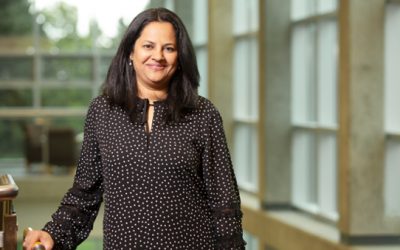
Aditi Gupta
I grew up in India and came to Canada as an international student to pursue my degree in Librarianship. I immigrated to Canada subsequently and am grateful to live, work and learn on the territories of the Lək̓ʷəŋən (Songhees and Esquimalt) Peoples. As a South Asian immigrant and person of color, my background combined with over 20 years of diverse library experience, shapes my approach to...

Ying Liu
I was born in Shanghai, China, and immigrated to Canada in 2001. I studied in the Master of Library and Information Science program at McGill University as a local student. Despite this, my foreign education background from undergraduate to graduate studies posed challenges similar to those faced by international students. Adjusting to the Canadian campus and local society while striving for...

Robbyn Lanning
I am a settler-Canadian, grateful to live and learn in Lək̓ʷəŋən (Songhees and Xwsepsum) and W̱SÁNEĆ Territories. Culturally I identify as Irish through my maternal family – immigrants to Canada from a small island off the south west of Cork. My mother and her mother were storytellers during their lives, and their value of knowledge and storytelling has influenced my path in education. As a...
Bibliography
ABLE Research Consultants & BCcampus(2020). Removing Barriers to Online Learning Through a Teaching and Learning Lens. https://bccampus.ca/wp-content/uploads/2020/06/Report_Removing-Barriers-to-Online-Learning-Through-a-Teaching-and-Learning-Lens.pdf
Gupta, A., Liu, Y., Lin, T.-C., Zhong, Q. and Suzuki, T. (2024), “Listening to diverse voices: inclusive pedagogy and culturally responsive teaching for library interactions”, Reference Services Review, Vol. 52 No. 1, pp. 66-85. https://doi.org/10.1108/RSR-04-2023-0042