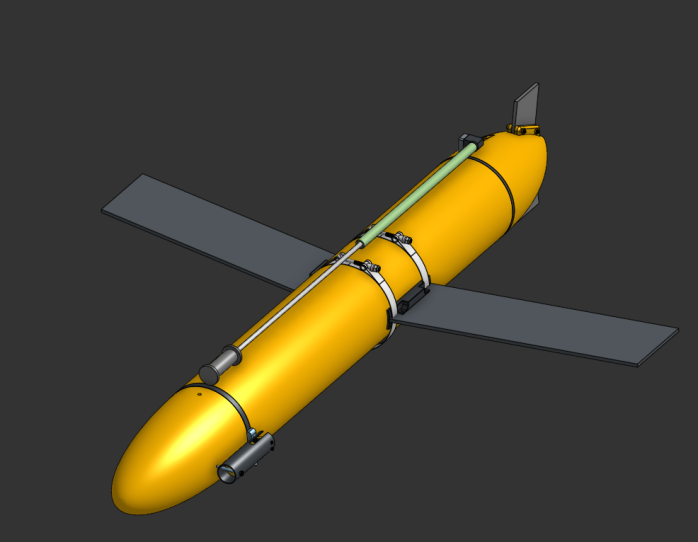
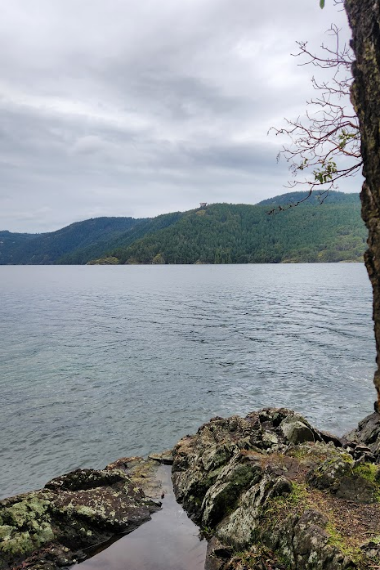
Underwater gliders are an excellent technology for autonomous data collection. These energy efficient vehicles travel long distances slowly, propelled by changing weight or buoyancy rather than power-intensive propellers. Beginning in 2023, we have been developing an economical shallow water glider to increase research opportunities in undergraduate level oceanography. The glider is set to be deployed in the Saanich inlet in early 2026.
About V0
Design decisions for the glider are carefully made to ensure high performance and affordability. Our design utilizes a water tank and pump to move vertically and a wing to efficiently move forward. Internal motors adjust pitch and roll, with a long-distance communication system that keeps track of the glider’s location and operational status as it follows the path as set by its users.
The glider is outfitted with a conductivity, temperature, and depth sensor (CTD) to create data profiles while travelling across the inlet. CTD data is used as a baseline for many oceanographic cycles, and additional data would contribute to a large variety of research efforts. Following the completion of our data collection mission, we will compile a detailed report presenting the insights gleaned from our glider operations.
Coming soon…
Underwater Glider – V1:
Increased Depth, Modular Sensor Package
Unmanned Surface Vehicle
UVEEC’s first project ran from 2021 to 2023. Founded and led by Jun Park, the team designed and built a microplastic filtration module after discovering microplastics along Victoria’s beaches. The system used bubbles to lift plastics into a collection bay, and a fiberglass catamaran was constructed to carry the module through shallow waters.