Blog Post 4: Interaction

Introduction to Storytelling YouTube Video

Interactive Learning Design Subject: Visual Storytelling

Importance of Interaction

Interaction is a key element of meaningful learning. It ensures that students are not just passively receiving information but actively engaging with it in a way that shapes their understanding of the content. As Wagner describes, interaction involves reciprocal events that influence both learner and content (1994). Without interaction, learning risks becoming passive; with it, students are more likely to connect to ideas, build deeper understanding and stay engaged.  

What kind of interaction would the video require from your students? Does it force them to respond in some way (inherent)? 

The interaction this video would require from students is active listening. Since it features a Pixar director from Monsters Inc., it naturally draws students’ attention and encourages them to think about how stories are created. While the video itself does not force students to respond in an inherent way, its engaging content makes it easy for grade 4 students to connect with, reflect on, and discuss storytelling concepts afterwards. This represents learner-content interaction (Anderson, 2003). Students engage with the director’s storytelling, but the exchange is one-directional rather than reciprocal. It doesn’t meet Wagner’s definition only partially, since the learners do not directly influence the content (1994).

What activity could you suggest that they do after they have watched the video (designed)? What type of knowledge or skill would that activity help develop? What medium or technology would students use to do the activity? 

The activity I would suggest is a visual storytelling exercise. Students are given a photo and asked to create a story inspired by it. While telling the story, they are encouraged to draw on the emotions the image conveys and connect it to something from their own lives. This helps them learn to craft stories that are more engaging and appealing to the reader’s emotions. The skill they develop through this activity is story writing and emotional expression through visual storytelling. Students would use Google Forms to type and submit their stories. 

How could the video have been designed to generate more or better activity from viewers or students? 

The video could have generated more student activity by including embedded open-ended questions for viewers to pause and answer, keeping them engaged. For example, it could ask, “What is your favourite story and why?” It could also include short slips from Monsters Inc., or other Pixar films, to illustrate how strong storytelling works in action. 

How will you address any potential barriers for your learners in the use of this video to ensure an inclusive design? 

A potential barrier is that some students may need closed captions or transcripts to support comprehension, so I would ensure they know how to access these features. Another barrier could be attention span, as longer videos can lose engagement for grade 4 learners. I would ask students to take at least two notes during the video to address this. One about something they learned and one about something that surprised them. This helps keep them engaged and ensures they actively process the content. 

References

Anderson, T. (2003). Getting the mix right again: An updated and theoretical rationale for interaction. International Review of Research in Open and Distance Learning, 4(2), 1–14
Wagner, E. D. (1994). In support of a functional definition of interaction. American Journal of Distance Education, 8(2), 6–26.
Blog Post 3: Inclusive Design

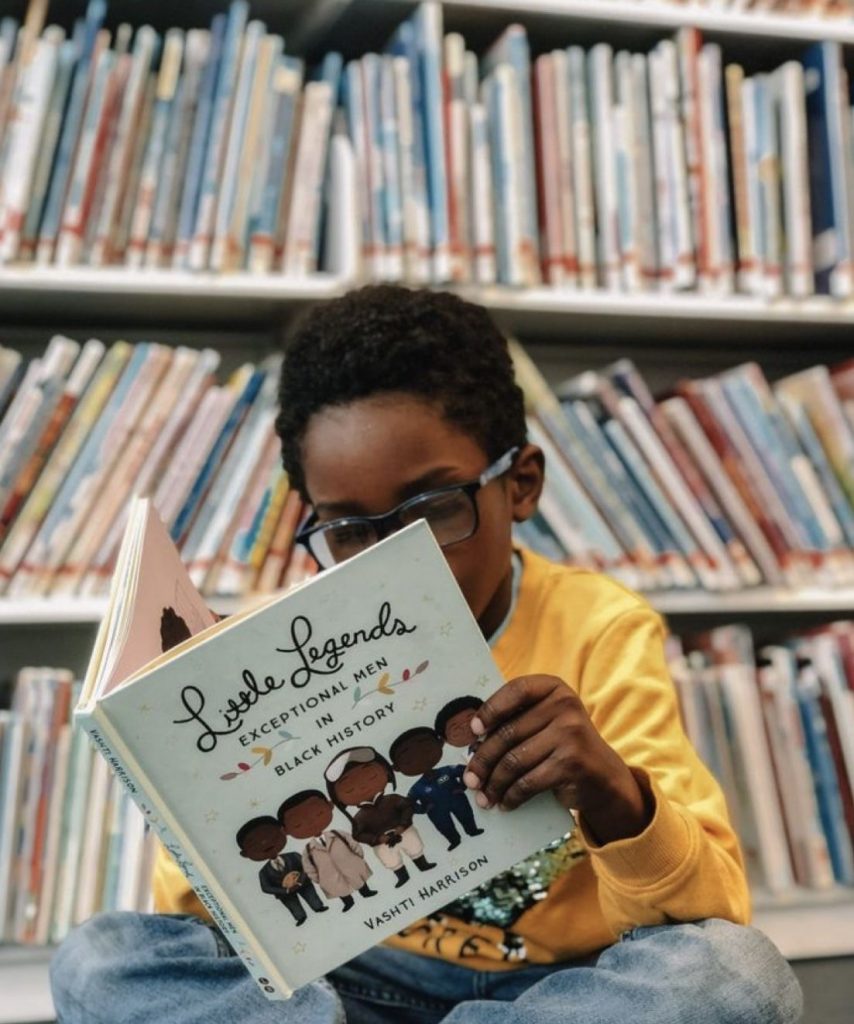
Storytelling by CDC on Unsplash

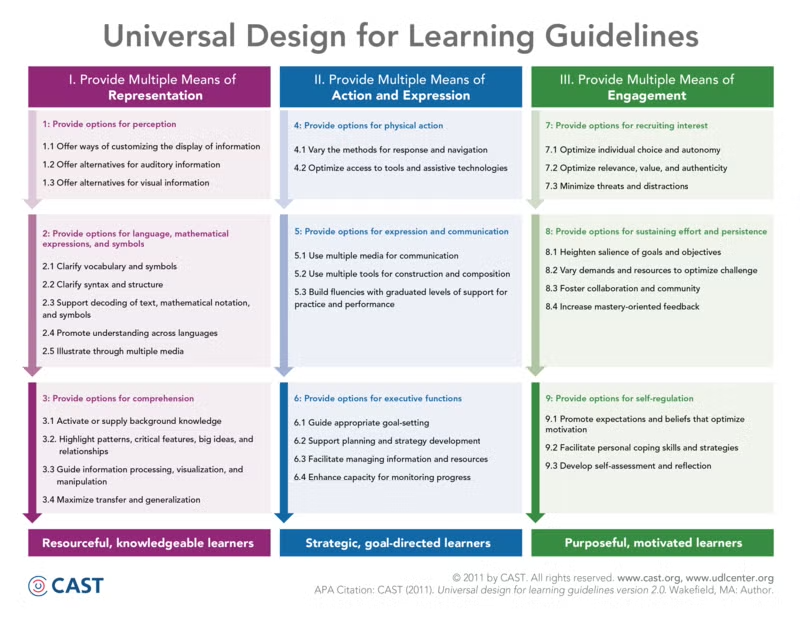
Universal Design for Learning (UDL)

Universal Design for Learning (UDL) is a learning design created to include everyone. It focuses on addressing learning limitations by both supporting and challenging students. UDL is built around three core categories: multiple means of representation, multiple means of action or expression, and multiple means of engagement. To learn more about these, you can click the bolded link below the picture.

Universal Design for Learning by East Coast Carolina University

Meeting the Needs of All Learners

For my group’s learning design on storytelling, the multiple means of representation we are offering include visual supports, where students view a series of pictures and then write about them. We provide clear instructions in both written form and through step-by-step processes. We also include sample story structures such as first, then, finally to guide students who may need extra support.

The multiple means of action or expression include giving students the choice to answer questions using Google Docs of by handwriting their responses and uploading a photo. This flexibility supports those who may struggle with technology. We also include a peer commenting activity, where students read classmates’ stories and leave comments to connect with others and see different perspectives on the same set of images.

The multiple means of engagement included allowing students to complete the module at their own pace. They can choose how to tell their story (typed or handwritten) and they will have opportunities to interact with peers during the commenting stage. Motivation is built into the activity because students can use the pictures to connect with their own interests, drawing their own conclusions about the story rather than being told the answers by the teacher.

Identifying and Reducing Barriers

Some potential barriers and limitations our group needs to consider include the possibility that reading through the entire module could be challenging for some students. To address this, we could provide a video link with instructions or add a voice button that reads the instructions aloud. Research on online learning has shown that lengthy text-only instructions can be a barrier to engagement and understanding and that alternative formats can help improve accessibility (Yeh & Tsai, 2022).

Another limitation is that some students may be stronger at storytelling through speaking rather than writing. To support these learners, we could offer an alternative option to submit work orally, either as a video or voice recording.

Finally Yeh and Tsai also note that distractions in the home learning environment can significantly impact focus and productivity in online learning (2022). For younger students they could have interuptions like loud home environments that can make it hard to complete assignments. To address this barrier, the module could be broken up more into more clear segments that allow for students to easily pick up where they left off without losing track of where they were.

Conclusion

Learning more about UDL in this unit has helped me improve the storytelling learning design and shown me that there are many ways to make lessons includes. It is important to think beyond your own perspective when creating lesson plans and to consider the diverse needs of different learners. Always allowing students to communicate their learning needs is essential, as is finding creative ways to support each learner so they can reach their full potential.

References

Yeh, C., & Tsai, C. (2022). Massive Distance education: Barriers and challenges in shifting to a complete online learning environment. Frontiers in Psychology, 13. https://doi.org/10.3389/fpsyg.2022.928717

Response to Leah’s post on “Inquiry-Based Learning & Constructivism”

Hi Leah!

I really enjoyed reading your blog. The way you connected inquiry-based learning to constructivism made it easy to understand, especially when you talked about students leading their own learning and building understanding through exploration. I totally agree with what you said about how inquiry-based learning isn’t just about getting to the right answer, its about the process of thinking critically and making real-world connections.

The quote from Merrill really stood out to me about how “information alone is not instruction.” I fully agree with that because I’ve found that I learn the most when I’m being creative and coming up with topics or ideas on my own. In university, a lot of my learning has actually happened outside of the classroom. For example I have developed many leadership and teaching skills while being the captain of the UVic tennis team. It’s shown me that real learning often happens through experience, not just lectures or textbooks. Reading your blog made me reflect on how important it is to bring that kind of creativity and ownership into the classroom. Inquiry-based learning seems like such a great way to foster that. Thank you for your post!

Response to Chad’s post on “Learning, Motivation and Theory”

Hi Chad!

I really enjoyed reading your post. The way you introduced each theory and connected it to a personal example made it super engaging, it kept me interested the whole way through. I thought your sticker example was a great way to show behaviorism in action. It reminded me of our class discussion about extrinsic motivation.

It also made me wonder how behaviorism would handle intrinsic motivation. Since it’s so focused on rewards and consequences, how would it support or measure motivation that comes from within?

Your example for cognitivism was also really strong. I liked how you showed the process of breaking down complex information to really understand it. It made me think about how important that kind of learning is in subjects like math or science, where just memorizing isn’t enough. Thank you for your post!

Blog Post 2: Open Pedagogies

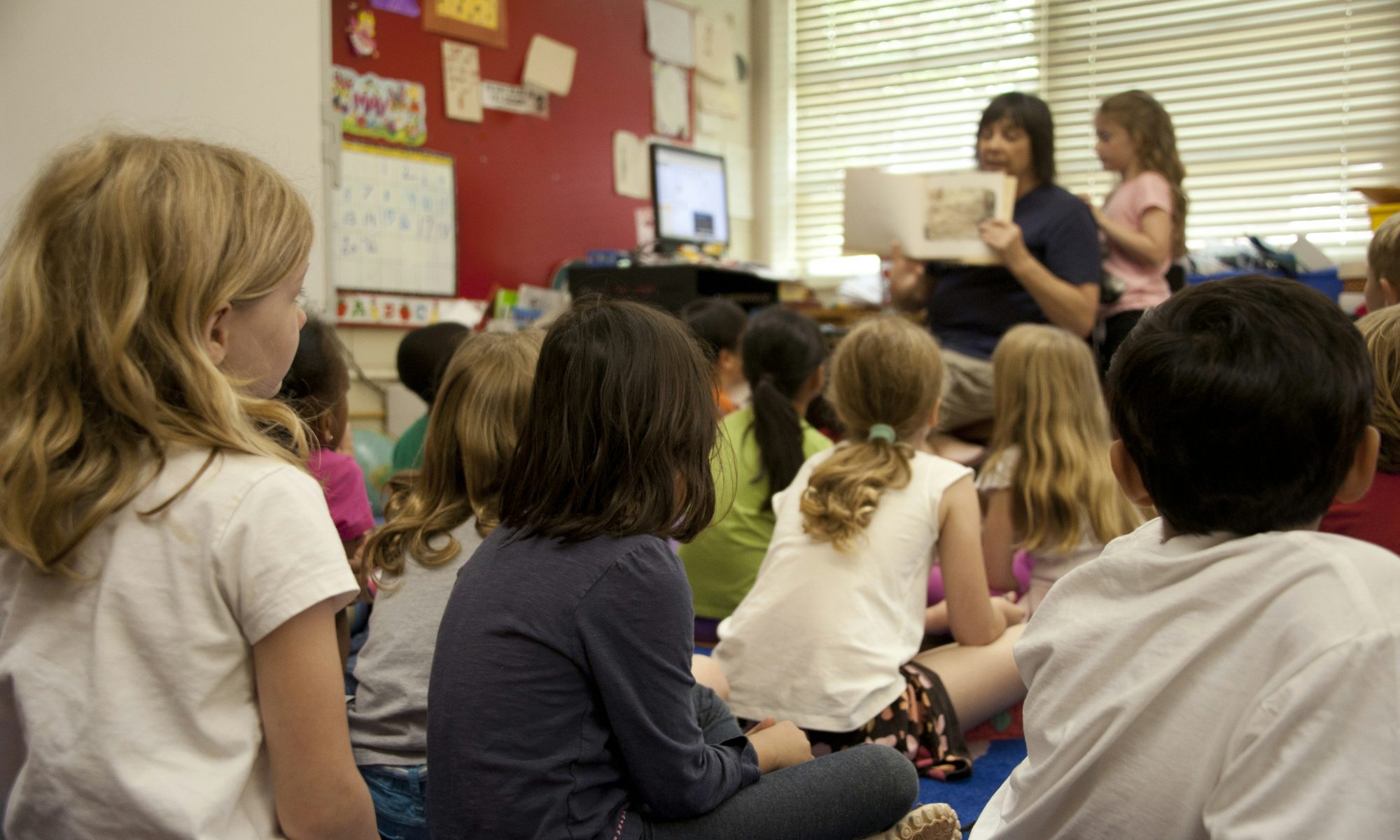
Open pedagogies fosters creativity photo by Lorie Boudreau

What Are Open Pedagogies?

Open pedagogies are a learning approach where students create information instead of just consuming it (Woods & Copur-Gencturk, 2023). This kind of learning is based on student interest and is very self-led. Students can choose the pace of their learning and when to complete assignments. This type of learning approach is very student-centered and gives the learner more independence.

Tech-Mediated Environments

An example of what open pedagogies could look like in a tech-mediated environment is when a course has modules that are self-paced. Students can submit assignments whenever they are ready. The topics are also open-ended, so students get to pick the specifics and choose how they want to express their ideas. For example, one student might write a paper, while another could create a video or infographic. The main goal is that students get to choose what works best for them.

Strengths and Challenges

There are many strengths to using open pedagogies. One is that students have lots of choice, they can focus what they are interested in, which can lead to intrinsic motivation (Woods & Copur-Gencturk, 2023). Another strength is that it builds real-world skills, like time management and self-direction. This helps students figure out what they enjoy and are good at. However, there are also challenges. Since there isn’t a set structure, it can be difficult to assess students fairly (Woods & Copur-Gencturk, 2023). Everyone might be doing something different, making it hard to compare outcomes. Another challenge is that with no strict due dates, some students might fall behind or not complete the work at all.

Our Group Project: Storytelling

Our Interactive Learning Resource is focused on storytelling for a Grade 4 classroom. This topic fits well with open pedagogies because storytelling encourages student voice and gives them the chance to choose how they want to share their ideas. While we haven’t fully used open pedagogies in our design, we have included many opportunities for choice. Since assessment is still a major part of our plan, I think open pedagogies are a partial fit, but combining them with other approaches gives us the best balance.

Storytelling photo by Sarah Sommers

References

Woods, P. J., & Copur-Gencturk, Y. (2023). Examining the role of student-centered versus teacher-centered pedagogical approaches to self-directed learning through teaching. Teaching and Teacher Education, 138, 104415. https://doi.org/10.1016/j.tate.2023.104415

Blog Post 1 – The Power of Motivation: What Drives Us to Learn

Motivation
Motivation by Mark Enser

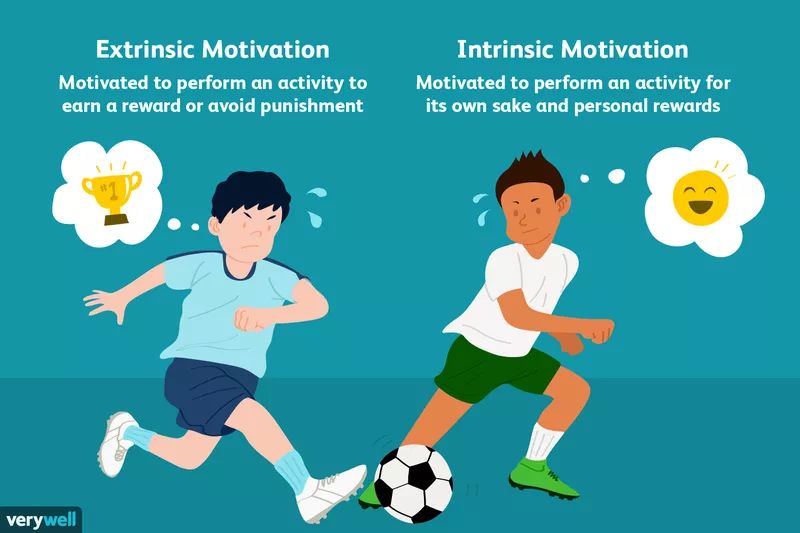
Intrinsic vs. Extrinsic Motivation

Learning about intrinsic and extrinsic motivation is very interesting because it reveals the different reasons behind why we stay motivated. It’s so important to understand the difference between how different types of motivation influence how we approach tasks. Intrinsic motivation is about enjoying the process of learning itself. It’s when you find something personally meaningful, and you are internally driven by curiosity, passion, or the desire to grow. On the other hand, extrinsic motivation is when you are motivate by external rewards or pressures rather than genuine interest in the task. From my own experience, I’ve found that intrinsic motivation works best for me. When I truly care about what I’m learning, I become more focused and driven. I even go above and beyond what is required because I am genuinely curious. When I am not as interested, I struggle to put in the same level of effort or depth in my work.

Extrinsic vs. intrinsic motivation photo by Joshua Seong on Verywell

The Challenge of Teaching Through Motivation

Thinking about these two types of motivation makes me realize how challenging it can be to design lessons that engage students intrinsically. Intrinsic motivation comes from within and therefore it is deeply personal. A teacher can’t simply give it to a student, they have to create conditions to foster and support it.

Keller’s ARCS Model: A Framework for Motivation

One of the learning materials from class that really stood out to me was Keller’s ARCS Model, which offers four ways to support learning motivation: attention, relevance, confidence and satisfaction. Each had a question which help guide educators in creating those learning environments that encourage motivation.

Why is Learning Hard?

One video that really changed that way I think about learning was the “Backwards Bicycle” video. It showed just how challenging it can be to unlearn something and relearn it in a new way, even when it seems simple. At first, I thought I could probably ride a backwards bike without too much trouble. After watching multiple people attempt it and fail, I realized how difficult it actually is. The video highlighted that while it took a child only two weeks to learn, it took an adult eight months to do the same task. This really stuck with me, it showed that learning is hard because it often requires us to retrain our brains and let go of habits we have already formed. It takes time, focus, and motivation, especially when progress doesn’t come right away. The video reminded me how important patience and persistence are when it comes to learning something new.