I really enjoyed reading your blog and hearing about how social media has influenced your education. I liked how you balanced the benefits and challenges of platforms like Instagram, TikTok, and LinkedIn. The examples you gave like joining online study groups showed how social media can be a valuable educational tool rather than a distraction.
I appreciated how you connected Shauna Bedley’s ideas to your own experience with digital literacy. It was powerful to read how this inspired you to change your habits and engage more intentionally with the digital world.
One small suggestion I have is to consider adding more visuals, like photos or even screenshots of helpful study tools. These could break up the text a bit and draw readers in. Overall, you did a great job, and I learned a lot from your post!
I loved your blog, Island in the Sun is such a perfect summer song! It’s always on my playlist at this time of year. I also really related to what you shared about struggling with study habits and using social media as a distraction. It’s something I’ve worked on too, so I appreciated your honesty and reflection.
I thought it was great that you didn’t just focus on the negatives, but also highlighted how social media can be used as a meaningful learning and connection tool. The chart listing the positive and negative effects was super clear and helpful, such a great way to organize your ideas.
If you are looking to build more interaction with readers, maybe try ending with a question to spark conversation in the comments. I am looking forward to working with you and reading more of your posts!
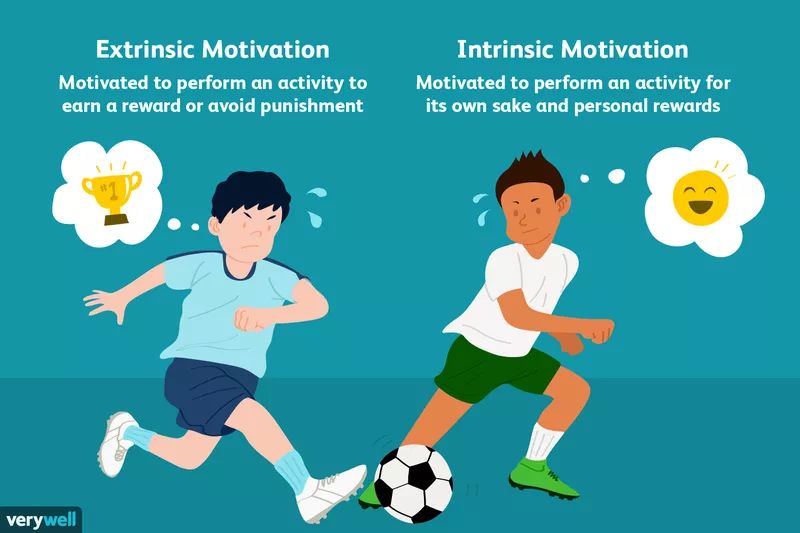
Learning about intrinsic and extrinsic motivation is very interesting because it reveals the different reasons behind why we stay motivated. It’s so important to understand the difference between how different types of motivation influence how we approach tasks. Intrinsic motivation is about enjoying the process of learning itself. It’s when you find something personally meaningful, and you are internally driven by curiosity, passion, or the desire to grow. On the other hand, extrinsic motivation is when you are motivate by external rewards or pressures rather than genuine interest in the task. From my own experience, I’ve found that intrinsic motivation works best for me. When I truly care about what I’m learning, I become more focused and driven. I even go above and beyond what is required because I am genuinely curious. When I am not as interested, I struggle to put in the same level of effort or depth in my work.
Extrinsic vs. intrinsic motivation photo by Joshua Seong on Verywell
The Challenge of Teaching Through Motivation
Thinking about these two types of motivation makes me realize how challenging it can be to design lessons that engage students intrinsically. Intrinsic motivation comes from within and therefore it is deeply personal. A teacher can’t simply give it to a student, they have to create conditions to foster and support it.
Keller’s ARCS Model: A Framework for Motivation
One of the learning materials from class that really stood out to me was Keller’s ARCS Model, which offers four ways to support learning motivation: attention, relevance, confidence and satisfaction. Each had a question which help guide educators in creating those learning environments that encourage motivation.
Why is Learning Hard?
One video that really changed that way I think about learning was the “Backwards Bicycle” video. It showed just how challenging it can be to unlearn something and relearn it in a new way, even when it seems simple. At first, I thought I could probably ride a backwards bike without too much trouble. After watching multiple people attempt it and fail, I realized how difficult it actually is. The video highlighted that while it took a child only two weeks to learn, it took an adult eight months to do the same task. This really stuck with me, it showed that learning is hard because it often requires us to retrain our brains and let go of habits we have already formed. It takes time, focus, and motivation, especially when progress doesn’t come right away. The video reminded me how important patience and persistence are when it comes to learning something new.
How you present yourself online can have a lasting personal and professional consequence. Everything that gets posted online can be shared and saved between people and is there forever. Whether you are posting a story while on vacation or sharing a work update on LinkedIn, your digital identity speaks for you. An important question when thinking about your digital identity, both personal and professional, is: How do we balance the two sides? It is important to find a good balance while staying true to who you are.
Personal vs. Professional Digital Identity
What is Digital Identity?
Digital identity is an individual’s presence online. It is the trace they leave behind when using any website or platform. This identity can be either hidden or public, and how you choose to present yourself often depends on the app or site you are using. Digital identity can show up in many different forms, like an Instagram profile or a username commenting on a Reddit post. Most people have several digital identities across different accounts. For example, I use my Instagram account mainly for close friends and family, so I keep it private. On the other hand, I use LinkedIn for future jobs and employers, so I leave that account public. I also change what I post depending on who I know will see it. I share more personal things on Instagram, where only close friends can see, while LinkedIn is more professional and work-related.
How Do I Differentiate Between the Two?
I keep my accounts separate based on how I use them. I also change my privacy settings. On Instagram, my account is private and people have to request to follow me. I have attached below a helpful video that shows how to change your Instagram privacy settings if you want to make your account more private.
Privacy settings
Think before you post
It is also important that every time I post, I think about who I am posting for and who follows me. Even if my account is private, I still stop and think before I post anything. When I post on LinkedIn, I think more about what future employers might think. On Instagram, I might post something more casual since it’s just for close friends. I found a great poster that uses the word THINK to help you decide whether to post something online. It includes five questions you should ask yourself before posting. This is a good reminder for both personal and professional accounts.
Maintaining boundaries online and ensuring that my online presence aligns with my personal and career goals is important. It’s important that I keep personal and professional digital identities separate because they serve different purposes. Without boundaries, it can lead to misunderstandings, privacy issues, or even missed opportunities. My identity reflects who I am in everyday life, my interests, sports and relationships, whereas my professional identity shows my skills, experience and goals. Keeping them separate helps me make sure that future employers see a version of me that aligns with my career path without mixing in content that’s just meant for family and friends. By setting clear boundaries, I can protect my online reputation and stay focused on my goals. It allows me to be myself while still being mindful about what I post and who sees it.
My Digital Visitor and Resident Map
The visitor and resident model is about thinking about how we interact and use different websites and apps. It looks at how we behave online and the trace of ourselves that we leave. A visitor is someone who goes online and leaves little to no trace of themselves. An example would be searching something up on Google and you don’t log in, but just search something up and leave. Residents have a visible presence online that stays over time. Creating content and interacting with others online are examples of what a resident does online that makes them visible. Below is my digital presence online based on how I use apps as a visitor or resident and if I use those apps for professional or personal use.
Platform
Visitor or Resident
Purpose
Instagram
Resident
Stay connected with friends and post photos of my favourite places or people.
Good Reads
Visitor
Keep track of books I’ve read and find new reading suggestions.
Snapchat
Resident
For daily communicate through photos and videos and groupchats with multiple friends.
Google
Visitor
To search for information quickly.
Pinterest
Visitor/Resident
For inspiration, ideas or saving crafts for future use.
Seeing where each app falls on the visitor/resident scale helps me understand how I present myself online and where I leave a digital footprint. It also reminds me why boundaries are important on the different apps that I use.
My digital visitor vs. resident map
As I grow and my personal and professional goals change, I think my digital visitor and resident map will also shift. Some platforms I currently use for personal reasons like Snapchat and Instagram, might become less important to me over time. I have already started to notice this change as fewer and fewer people I know are using these apps regularly. I think apps like iMessage and WhatsApp will become more dominant in my daily communication, especially for staying connected in more private and direct ways. I also expect to become more active on professional platforms like LinkedIn, depending on what field of work I go into. When I begin to think about jobs after university, I know LinkedIn will be more useful, especially if I go into a business-related career. My online presence will become more focused on professional networking, and that shift will naturally affect how I use and prioritize different apps. I believe I will also encounter new apps for these different uses, and these will appear in new ways on my digital map.
Conclusion
Creating a digital identity that reflects both who I am personally and who I want to be professionally takes thought and balance. Through the visitor and resident model, I have been able to see how my online presence shifts depending on the app and its purpose. It is important to know who I’m sharing with and why. By keeping my accounts separate, adjusting privacy settings, and thinking before I post, I’m learning to keep my privacy while still being authentic online. Understanding my digital identity helps me set boundaries, stay focused on my goals, and build a presence consistent with my reputation that represents me both now and in the future.
Hi, my name is Sarah Lang-Gould, and I’m in my third year of Psychology at the University of Victoria. My educational journey has been a mix of in-person and online learning. I’ve learned a lot not only through school, but also through the different people and communities in my life like sports, school, and social media. In this post, I’ll share how I’ve grown as a student, how social media has played a role in my learning and friendships, and how I try to maintain a positive presence online.
When I was in high school, I found the move to online learning really hard. Without in-person classes, I had a hard time staying focused and motivated. I learn best when I am in a group with students talking through the material. I found it challenging to just listen to a teacher online and not have a chance to interact with the material with students. When I started university here in Victoria, I really enjoyed my Psychology lectures. It was challenging at the beginning to adjust to the amount of studying I needed to do, but once I found friends to study with, it became easier to learn. I joined the volleyball and tennis teams at Uvic, which really helped me meet new people and expand my personal learning network. Meeting people through school and sports had a big impact on me, not just socially but academically. I have learned a lot both inside and outside of class through these different social groups.
Competing at the Uvic Invitational 2025 with my doubles partner.
Social Media and Learning
Social media has influenced my life in both positive and negative ways. It has helped me stay connected to international students, siblings, friends, and family members. One of my favourite parts of social media is being able to connect with people who live far away. Social media has also been challenging. I sometimes struggle to keep up with the fast pace of social media and the pressure to always be active. In high school, it was hard to see posts about events I wasn’t invited to, and that feeling of comparison made it tough. I didn’t have social media when I first started high school, which made it hard because that was a main way that everyone was connecting outside of class. Once I got social media, it became a way to make friends and stay included.
Social Media During COVID
During COVID, I used social media a lot for learning. I found guitar tabs, recipes and workout routines, and that showed me how social media is not just for connecting with friends, but it can actually be a great way to learn new things. When we talked about this in class, it really made me think more about how social media can be educational, not just social. It helped me realize that I’ve learned a lot through platforms like YouTube and Instagram, even if I didn’t always see it as learning at the time.
In the article we read this week about the 10 different types of social media, I learned about the many different ways people use these platforms. I realized I use a bunch of them, including:
Instagram – for a social network
LinkedIn – for a professional network
Pinterest – for bookmarking
Snapchat – for video sharing
Goodreads – for an interest-based network
Each of these is a part of how I stay connected and learn outside of school.
My digital identity looks a little different depending on the platform. On Instagram, I mostly post pictures of what I am doing, like trips, nature, or hanging out with friends. I am private on Instagram, and so these are posts for my friends and family. On LinkedIn, I try to be more professional, since this platform is directed towards school or future jobs. I have not used it a lot yet, but I know it will be helpful down the road.
Even though my social media accounts are private, I still remember that anything I post can be seen by others. I try to keep my posts and comments positive and kind, and I don’t say anything online that I wouldn’t say in person. Social media can become a negative place when people aren’t careful, and I want to be someone who spreads kindness and encouragement online. As a student and someone preparing for a future career in mental health, it’s really important to have a digital presence that reflects who I am and what I care about.
Conclusion
Looking back, I’ve realized how much my learning has been shaped by both my connections with others and the ways I use social media. From struggling with online learning in high school, to joining teams and study groups at Uvic, to learning new skills through social media, I realize all the different ways I’ve grown. I’ve learned that how I show up online matters, and that I can use digital tools in a way that reflects the person I want to be in school, friendships and the future.