Category Archives: Instructional content

Instructional Content #8: Ear Diagram Quiz

https://kidshealth.org/en/kids/bfs-earsactivity.html

What you’ll Learn from this diagram:

  • Make sure students understand the video.
  • The appearance and location of different parts of the ear.

What to do:

  • Use the information from the video [Content #7] to help fill out the diagram.
  • When filling out the diagram with the class, describe or listen to other people’s descriptions of what each part does.

Instructional Content #7: How Your Ears Work Video

What you’ll Learn from the video:

  • The different sections of the ear (outer, middle, inner). o The roles of the different sections of the ear.
  • The different specific parts of the ear and their function.
  • Protecting the ear (the roll of earwax, earplugs).

What to do:

  • Understand how the different sections of the ear work and what the roll each section plays in helping you hear noises.
  • Know the parts in each section of the ear.
  • Use the information in the video to fill out the ear diagram quiz [Content #8]

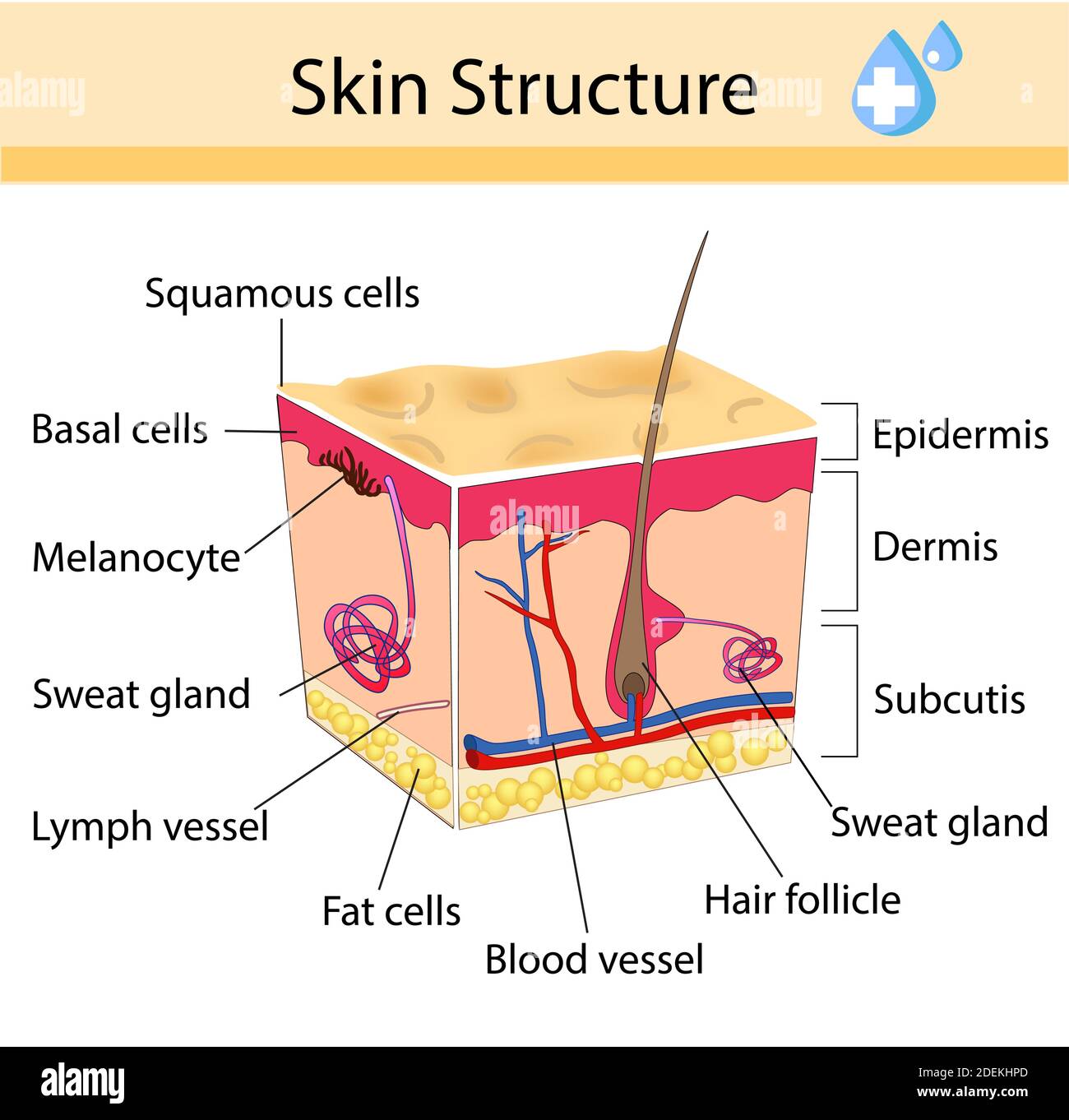
Instructional Content #6: Skin diagram

https://c8.alamy.com/comp/2DEKHPD/human-skin-and-hair-structure-anatomical-sign-beauty-care-isolated-illustration-2DEKHPD.jpg

What you’ll learn from the diagram

  • A more detailed look at the concepts the video covered
  • The ability to look at everything in one place, in an anatomically correct diagram

What to do

  • Students can discuss the concepts they learned from the instructional video.
  • They can talk to their neighbouring students and express their ideas
  • They can apply the ideas presented in the video relating to temperature, and conjecture about how they affect the anatomy of the skin

Instructional Content #5: How Your Skin Works Video

In this section of the lesson, you’ll explore an informative and engaging video.

The instructional content will be centered around this video. For the duration of this section, we will pause intermittently and reference the video, having discussions about the topics that video covers.

What you’ll learn from the video

  • The layers of the skin (subcutaneous fat, dermis, and epidermis)
  • The lifecycle of a skin cell
  • How melanin and pigmentation change the color of your skin
  • How sunburns and temperature work on your skin

What to do

  • You should pay close attention as you watch the video which you have the option to stream or download. Take your time.
  • Take notes while watching. Try writing down:
    • 3 interesting facts you didn’t know before
    • Learn the definitions of 2 new vocabulary words.
    • 1 question you still have about touch
  • Look for key ideas like:
    • How does our body produce new skin?
    • How does it react to temperature?

Instructional Content #4: The Sense of Smell

Passage: The sense of smell is important for humans basic needs when considering the effects it has on everyday life. Smell can help detect hazards, such as smoke from a fire, smell can help connect us to past memories and even forgotten memories. Smell has the influence of attraction, and malaise. Smell is an essential being in everyday life.

What you’ll learn from this video:

  • Smells we detect are particles floating in the air.
  • In the nasal cavity there are small hairs that clean and filter the air.
  • The filtered air reaches the “Olfactory membrane” – this is the part of your body that sends the information to the brain.
  • The signals from the smell to the brain allow humans to make decisions based on the smells they receive.

What to do with this information:

  • Recognize your use of smell when it comes to everyday life, and recognizing how your brain makes impulse decisions based off of the smells you encounter.
  • You can create various sensory activities and experiments related to smell
  • You can create various art or business products with the specific focus on smell

Instructional Content #3: The Sense of Taste

Passage: The sense of taste is important for humans basic needs when considering the effects it has on everyday life. Taste has nutritional factors that help differentiate between healthy and unhealthy, yummy and disgusting, spoiled or rotten, etc. Taste has a major role in humans pleasure in eating and influences the appetite. Taste is heavily reliant on smell, which will be discussed in your lesson plan.

What you’ll learn from this video:

  • The tongue is the sensory organ responsible for taste perception.
  • Taste buds are in charge of collecting different information and sending it to the brain through the taste nerves.
  • The 5 basic tastes are: Sweet, Salty, Bitter, Sour & Umami (Savoury).
  • The location of each taste bud on the tongue.
  • Taste is a personal experience, and we all experience taste differently.

What to do with this information:

  • Learn what foods you like and don’t like.
  • Understand why someone else might not like the same foods as you.
  • Conduct taste testing experiments
  • Develop taste-based diets, guides or cookbooks

Intructional Content#2 How your ear works

What You’ll Learn from the Video As you watch, you’ll discover:

  • The ear contains three main sections which include the outer ear, middle ear, and inner ear.
  • The mechanism by which sound moves through air as waves
  • The process by which your ears transmit sound signals to your brain
  • This lesson explains the reason behind different sounds having high and low pitches.
  • Your ears maintain your balance by performing specific functions.

What To Do

  1. You should pay close attention as you watch the video which you have the option to stream or download. Take your time!
  2. Take notes While watching, try writing down:
    • 3 interesting facts you didn’t know before
    • Learn the definitions of 2 new vocabulary words.
    • 1 question you still have about hearing
  3. Look for key sections like:
    • How sound waves move
    • The parts of the ear
    • How the ear drum works

Optional: Reflection Prompt Think about this as you move forward:

  • Which sound brings you the most joy and what makes it so special to you? You are welcome to record your thoughts for later or post them in the comments section.
Instructional Content #1 How Our Eyes Work Video

What You’ll Learn from the Video As you watch, you’ll discover:

  • Key components of the eye include the pupil, iris, lens, and retina.
  • The process by which light travels through the eye to form visual images
  • Our brain processes the visual information we receive to help us comprehend what we see.
  • Glasses help certain people achieve clear vision due to their eye conditions.
  • Our eyes enable us to detect colors and observe motion.

What To Do

  • Be sure to watch the video through and you have the ability to stream or download it for watching later. It’s about 4 minutes long!
  • Take notes While watching, try writing down:
    • 3 interesting facts you didn’t know before
    • The video introduces two new vocabulary words with their definitions.
    • Identify one remaining question you have regarding your eyes.
  • Look for key sections like:
    • How light enters the eye
    • How the eye works like a camera
    • Our eyes function together to enable us to perceive depth.

What’s Next? After watching the video, you’ll move on to:

  • Students will participate in a matching activity designed to review the functions of various parts of the eye.
  • An observation activity using magnifying glasses
  • Proceed to complete a sketching task that demonstrates your understanding of the material.

Optional: Reflection Prompt Think about this as you move forward:

  • How can you maintain healthy eyes while protecting them?
    You can write your thoughts down or post them as comments.