What is UDL
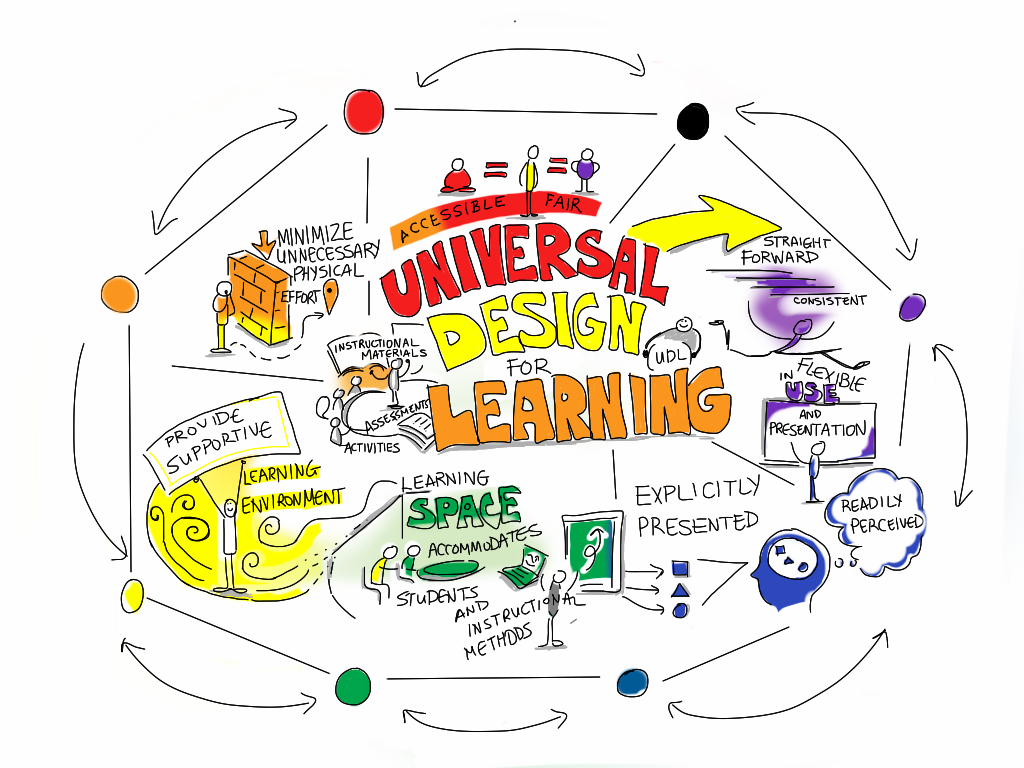
UDL stands for Universal Design for Learning. It’s a framework developed by CAST (2024) that helps teachers design lessons that work for everyone, not just one type of student. Instead of expecting all learners to fit one single approach, UDL encourages multiple ways to access information, express understanding, and stay engaged. The main idea is that every student learns differently, so good course design should plan for those differences from the start.
Inclusive Learning Design
Inclusive learning is about making every student feel valued, respected, and supported. One way to achieve this is by giving students different ways to show what they’ve learned, allowing to learn in a way that fits them best. Not all students express understanding through the same method—some do better in writing, others through discussion or visual work. When teachers recognize these differences and build flexibility into their design, students feel more confident and willing to participate. It also helps reduce the fear of failure, because learning feels more personal and fair. In the end, inclusive design isn’t just about access—it’s about creating a space where every learner can belong and succeed.
However, this approach also has its limits. In science-based courses such as math, physics, or computer science, learning outcomes often have a single correct answer—unlike the others, which allow for more open or creative expression. Still, inclusive learning doesn’t mean “anything goes.” It simply means there can be more than one way to reach the same correct answer.
For example, in literature, one student might write a paper while another records a short talk about the same novel. Both show the same understanding, just expressed in different ways. Similarly, in math, one student might write out the full equation, while another uses a visual diagram to explain the same process. Both reach the same correct answer, only through different paths.
Synchronous and Asynchronous Learning
From my own experience, asynchronous learning supports engagement by giving students more freedom to plan their studies. During the pandemic, when all my courses went online, I found asynchronous classes especially helpful because I could learn anywhere—even while traveling—and manage my time the way I wanted. This flexibility reduced stress and helped me stay on track at my own pace.
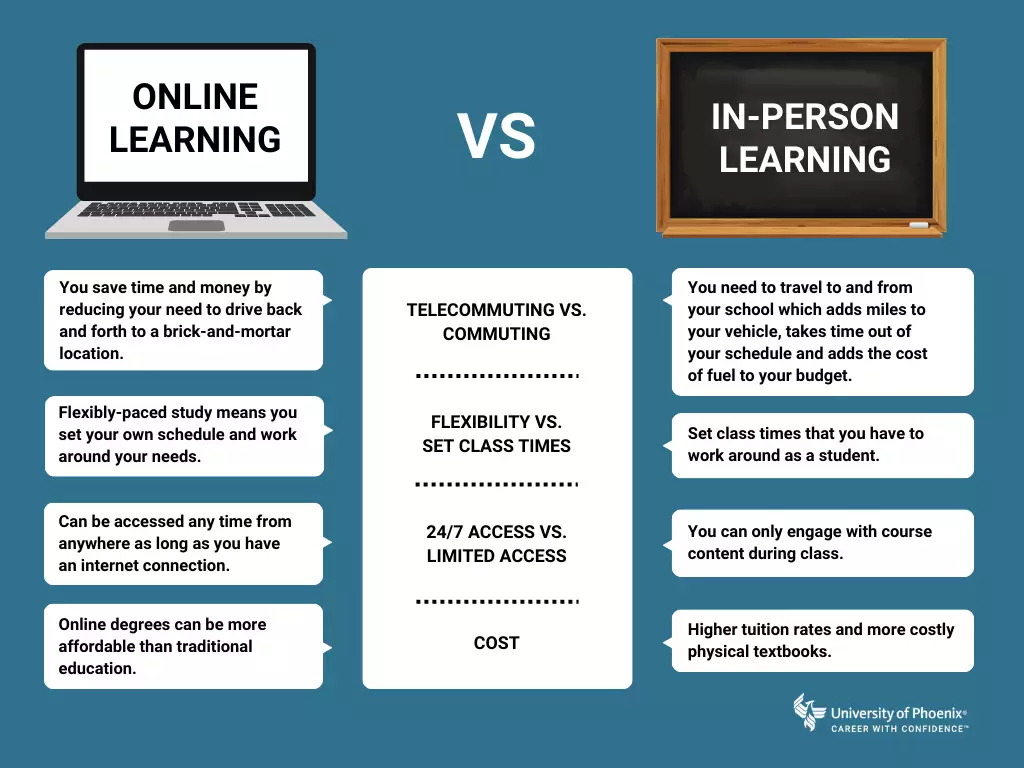
Figure 2. compares online and in-person learning. Source:Advantages of online learning vs. classroom
Synchronous learning, on the other hand, creates a stronger sense of connection. Real-time discussions and instant feedback make it easier to stay motivated and feel part of a community. A balance between the two is ideal: asynchronous learning provides flexibility, while synchronous sessions bring interaction and support. Together, they make learning more inclusive by allowing students with different needs, schedules, or learning styles to participate fully.
Principles of Effective Online Education
An effective online learning experience is clear, flexible, and accessible. Students need to know what they’re learning, why it matters, and how to get there. Clear goals, organized materials, and consistent instructions make it easier to stay focused. Flexibility is also important because everyone learns differently and may have different schedules or challenges.
Frameworks like UDL help make online learning more effective by encouraging multiple ways to access content and show understanding. For example, providing both videos and text, or allowing students to choose between a written or visual project, helps everyone engage in a way that works best for them. UDL also supports alignment by connecting learning goals, materials, and assessments so that students always know what’s expected. Overall, it makes online learning not only more inclusive, but also more meaningful and motivating.
Interaction and Presence
Interaction is a powerful catalyst for learning. It reduces isolation, fosters collaboration, and strengthens a sense of belonging within the learning community. Research supports this idea: Moore (1989) identified learner–content, learner–instructor, and learner–learner interactions as central to engagement, while Garrison, Anderson, and Archer (2000) emphasized that such interactions cultivate social presence and deepen learning. Similarly, Rovai (2002) found that building community through interaction helps reduce isolation and improves persistence in online education.
Interaction also plays a key role in engagement and inclusion. When students exchange diverse perspectives and connect with both peers and instructors, they build motivation, confidence, and a deeper understanding of the material. Learning becomes more meaningful when everyone feels part of the conversation.
Reference
CAST. (2024). Universal Design for Learning Guidelines version 3.0. Retrieved from https://udlguidelines.cast.org
Moore, M. G. (1989). Three types of interaction. The American Journal of Distance Education, 3(2), 1–6.