
Allysha’s co-op journey

What is your academic program?

I am in the Biochemistry program

Where did you work?

I have done two 8-month coop terms. My first was with Agropur Canada and it was mostly a microbiology-based coop. I ran quality control on dairy products made in the plant.

The job that I am currently working is at Zymeworks which is a biotech company. I test a bunch of targeted drug therapies for cancer and a lot of in vitro assays and that sort of thing, so very industry-based. I actually got a Research Associate position offered to me after the coop is over, so I am hoping to take some time off and then start again soon after I graduate.

 Why did you join co-op?

I didn’t know what my career path was going to be. I had ideas going into school of what I wanted but I wasn’t convinced because I didn’t know what kind of jobs were available to me with the degree I was going into.

Coop was a way for me to see what else was out there and try out different jobs because the last job I had and the one I currently have are quite different. Also, science and biochem is a very competitive market and lots of students have a very similar background if they don’t do coop. Therefore, having something to set you apart is very important. It definitely did meet my expectations.

How did co-op meet your expectations?

I have learned a lot about what I wanted and what I didn’t want. I think that is very important, especially when you are still in school. It is better to know that before you graduate so you aren’t left as a graduate trying to figure it out.

What have been your favourite aspects of your co-op experiences?

Overall, I think what I love about coop is that you meet a ton of different people.

You get to learn from people from so many different backgrounds and they all have advice and stories that they can share with you that can help you as you go through university.

What does professionalism mean to you and has your concept of professionalism changed through your co-op experiences?

If you are showing up and asking questions and have a willingness to learn then you can across as being a professional because you are interested in what they are showing you. You don’t need to know everything; you just need to show that you are able to learn and ask the questions.

Do you have any advice for future co-op students?

While searching for jobs, don’t be discouraged. There are a lot of jobs out there. If you are not getting the jobs you want in the first couple of months, you just have to stick it out and hope you get something that you find interesting.

I think also something that is really important for coops is that you learn what you don’t want. Whether it be the job itself or the type of environment, you learn a lot about not only the good but the bad.

I think it is important to stick with the job and ask lots of questions. I think I was hesitant to ask questions at the start because I didn’t want to sound underqualified. I wanted to sound like I was equal to everyone else, but they know that it is a learning experience so be curious!

Overall, don’t be discouraged if you don’t get the dream job for your first coop because that opportunity will lead to the next opportunity. Your next term might be even more interesting which is what I found.

September 2025 update: After she completed her undergraduate degree with co-op distinction, Allysha was hired to work as a Research Associate I at Xymeworks. She currently works on the ADC Therapeutic Development team as a Research Associate II.

Claire’s co-op journey

Claire’s co-op journey

What is your academic program?

I am in the Microbiology program

Where did you work?

The co-op I am in right now, which is my final one, is in the Boraston lab at UVic under the supervision of Dr. Joanne Hobbs and I am looking at the genes responsible for antibiotic resistance in Staphylococcus aureus.

My first co-op was at Agriculture and Agrifood Canada in Saskatoon, SK. My project there was looking at the functional groups in wax in the leaves of canola plants.

My previous co-op was an 8-month co-op at the BC Cancer Centre in Victoria and I was in the Histology Lab there. So that was more immunology focused, working with human tissue and trying to develop immune-fluorescent staining protocols for different types of tissue.

histology image

 Why did you join co-op?

Part of the reason why I originally joined co-op was because both my parents did co-op and they had really good things to say about it and they thought it really helped them get jobs in science. I thought it was a unique way to get job experience in my field; because it is quite hard to get into a lab without having co-op and I really wanted to have that experience.

How did co-op meet your expectations?

I have loved all the jobs I have had, and been given a lot of responsibilities and freedoms and done some really cool stuff in all my various positions so it has met my expectations.

What have been your favourite aspects of your co-op experiences?

I really really loved the team I worked with in Saskatoon, I met some great friends. It was a very good work environment, and they gave me lots of freedom and responsibility. They gave me this project and I had to read papers and figure out what experiments I wanted to do; I kind of had complete control, which was a really unique experience, especially for someone who was only in second year.

I really love the job I am doing right now; it is exactly the job I want to be doing which is working with pathogenic bacteria. My boss invited me to keep working with her over the summer, so it is really rewarding knowing that the work you are doing is being valued. And working at BC Cancer is obviously a very prestigious place to work.

Especially in the Histology lab, you are being sent real patient samples and you have to develop the staining plan and stain them. So knowing what you are doing is going straight to someone’s hands and they are going to use that data to help themselves, that was really cool.

What does professionalism mean to you and has your concept of professionalism changed through your co-op experiences?

All of my labs have been quite different but the sense of community in all the labs I have worked in has been a big thing. Communication, understanding each other, getting along and having a good flow to the work environment has been just as important as the work you are putting out.

Do you have any advice for future co-op students?

My advice for people applying, especially for your first couple co-ops, is not to limit yourself to staying in Victoria. I know everyone wants to stay in Victoria but I found success in my first one by being willing to move somewhere else. And you might have a really great experience too because I had a really fun summer!

Try to apply for things that do not necessarily sound like your dream job but you will probably still learn a lot from them, and then you can make your second or third co-op your dream job. For your first one, just get some experience under your belt.

For the first couple weeks of the job I would say just make sure you ask a lot of questions, be really engaged. Be curious about what you are doing and the background of it as well as the future goals of the project. Make sure you are eager to put in extra work, take initiative, go above and beyond the work you are tasked with. Make that good impression!

September 2025 update: After graduation, Claire worked in the Boratson lab at UVic under Dr. Hobbs as a Research Assistant and she is currently pursuing her PhD at the University of St. Andrews in Scotland.

Student to worker – a reflection

Student to worker – a reflection


I wanted to take a moment to reflect on the points raised by the UVic Science Alumni Advisory Board at last night’s meet the board event.

Don’t compare your achievements to others.

In school, you are surrounded by peers going through the same course work. But when you start working, you meet new people from different backgrounds and with diverse experiences.

After I graduated, I had friends who were in med school, friends starting their own businesses, and friends who were making double what I was. I wanted to be able to feel the same sense of achievement as I thought these friends felt. But what was making me feel unsatisfied with my own achievements?

I was comparing myself on a scale that was not meant for me.

As a student, grades made it easy to know if I was doing well. But after graduation, there’s no universal quantifiable scale for measuring success, and I was comparing apples to oranges, chalk to cheese. Once I understood that, the next step was to feel sure of myself without making comparisons.

Define your own success.

At what point should you consider yourself successful? How do you even approach this question? How can you know what you will want 10 years from now? I realized that success is different at every stage of life. It’s a constant re-evaluation.

I decided to define my current success as doing something that I am good at and something I am passionate about.

This helped me feel more satisfied. Because now all I had to do was to be good at my job, and maybe do something on the side, like continuing with volunteer work.

Then, a couple of weeks ago, I was rewarded with positive feedback from my manager after a challenging year. I have learned so much this year, and now I am left with feeling relief and satisfaction — relief from having felt so terrible about myself at times along my career path, and satisfaction with being good at something.

Try not to see your career as linear.

During the panel discussion, it was asked: “Do you think you’ve made the right choice with your career?”

I don’t think I have made the right choice, as this would mean that there was only ever a single correct path for my career to follow.

The idea of the right career, the one job that you find right after school and settle down into, has made so many unhappy. If there’s anything I learned over the past decade, it’s that you can’t start out limiting your choices, and expect life to turn out.

I was doing an undegraduate internship that to my great surprise, didn’t turn into a full-time position. I was left without a job right in at the end of my degree. I remember being powerfully miserable. But a few weeks later, I found the job that led to my graduate postion.

Back to that non-linear career path

winding path through the woodsThere is just so much in the world, so much available. The need to find the “right choice” is something that we no longer need in 2022. We have so many options that we have the privilege of experimenting with in our career. That’s the most exciting thing about career.

Today I am in co-op, yesterday (not literally) I was in the lab, and tomorrow I may be running my own company, the point being: I have options and it’s never the end of the world if the first job I choose does not end up working out.

I have been out of school for more than a decade now, and it took years to feel like I was finally able to see clearly. I am still working on my way to my own success and I hope this post inspires you to do the same!

Disclaimer: I have presented a lot of personal opinions here and in doing so, I do not intend to represent anyone else or any organizations that I am affiliated with. This is purely a personal reflection.
 

How to get the most out of your co-op work term

How to get the most out of your co-op work term

Guest writer: Elliott van der Wee, Science Co-op Peer Mentor and Biology Co-op Student

Participating in the Co-op program is a great opportunity for you to gain career-oriented experience relevant to your field of study. It is also a chance for you to engage more deeply with your academic work from classes and labs.

When you are actually on your work term, it can be easy to forget about advancing your career when you are caught up with the busyness of your work routine. It is important, during your work term, to think about how you can be setting yourself up for more success in the future. There are a few thing you can think about to maximize what you get out of your Co-op work term.

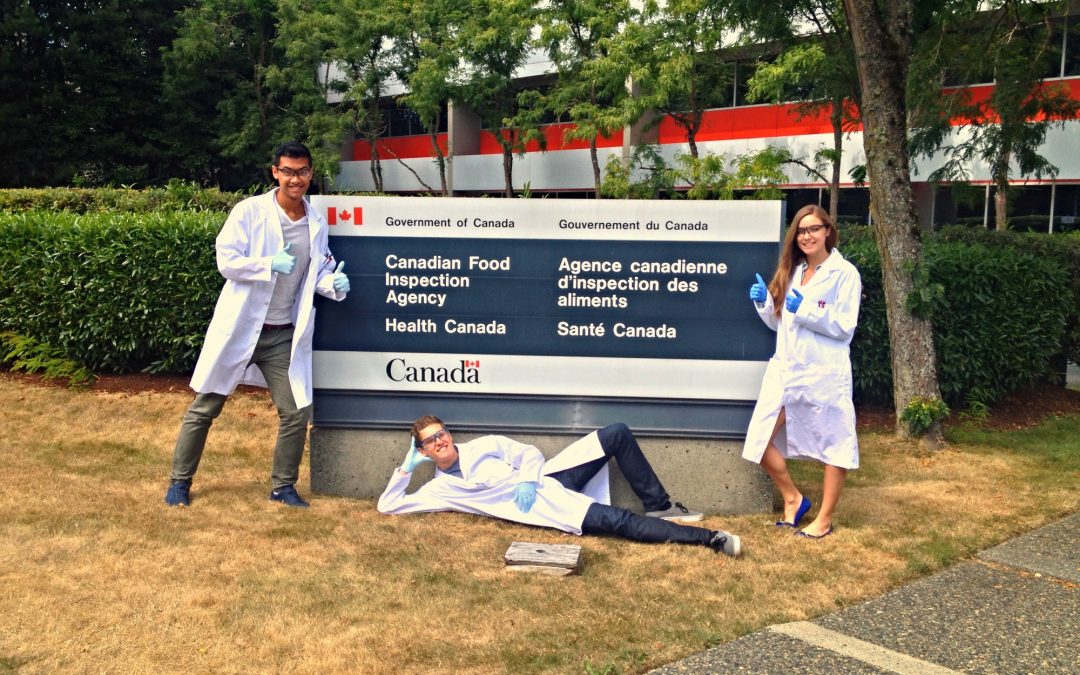
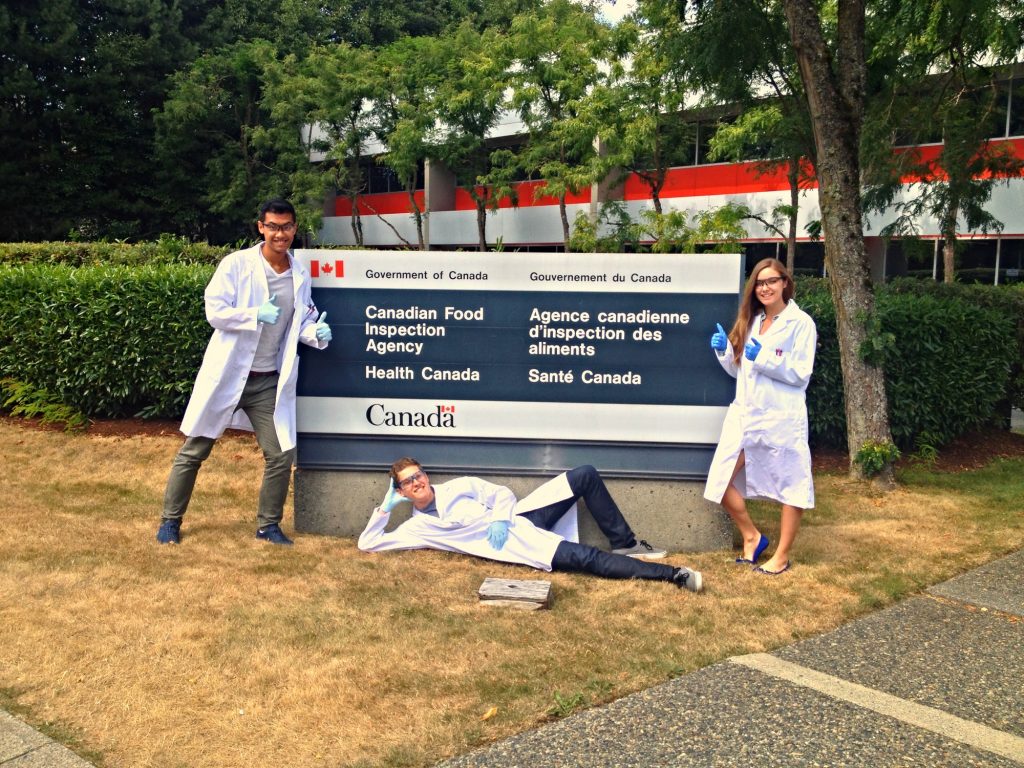
students in front of CFIA sign

Relationship Building

While you might imagine that you won’t see the people you work with once your work term is over, remember that your colleagues and supervisors are people in your field with similar career trajectories. Prioritize building friendships with your co-workers – it is likely that you may run into them in the future in a professional setting, and having good connections will set you ahead of the game.

Take opportunities to network with your supervisors as well: this could give you an advantage if you are competing with others for a future position.

Learn as much as you can

From an academic standpoint, you can learn a lot on your work term that you will be able to take to future classes. Take any opportunities at work where you could learn about something new, and ask questions as you go. Learning on your work term can also mean learning skills and gaining information about the fields you are interested in.

Ask your supervisor about their work and how they came to be where they are – you might end up on a similar path. Learning about how your supervisors like their jobs can help you understand whether those positions might be a good fit for you one day. It is also a great idea to write down new skills you learn on your work term. You can then use this information when you build your resume and write cover letters in the future.