Continuing the CW conversation…

Picking up where we left off with Friday’s Pro-D discussion…

Here’s a link to a presentation Veronica Pacini-Ketchabaw gave on June 21, 2021 called Education for worlds to come (Curriculum in Canada Seminar Series, UBC). In it, Veronica talks about what, for her, is missing, overlooked, and/or lost in popularized take-ups of common worlding (CW) pedagogies, particularly through the BC ELF’s brief mention of the framework (when there is so much more to consider, as discussed on Friday).

Education for worlds to come


[5:04] If there is an idea that I want to emphasize today it is that EC education needs to be a possibility of transformation of the status quo. For the invention of otherwise worlds and for thinking about what the human might be…
[6:09] My concern is that perhaps we are a moment in ECE that we have forgotten – we have left behind what bell hooks says – that education is a revolution and a space to invent oneself…

Among other things, Veronica talks about the creation of the ELF, some of the so-called ‘accomplishments’ and concerns arising for her now, specifically in regards to an unfortunately insufficient (superficial) incorporation of the term common world (common worlding pedagogies) into the revised BC ELF (2019, p. 15). In actuality – as we discussed during Friday’s Pro-D – these pedagogies are layered, complex, often taking years to create and comprehend, requiring us to think carefully about how to experiment and enliven these concepts through methods like slowing down, cultivating new modes of attunement, and creating intentional curriculum- making processes that help us reconfigure children, families, colleagues, and the more-than-human we share place with. Presentation link: https://www.youtube.com/watch?v=g6uwAKqHfpM

Around the 9:43 minute mark  in the presentation, Veronica shares concerns about what she has witnessed in conversations with pedagogists and educators as she travels around the province of BC, including observations of the ways common worlding pedagogies are taken-up/engaged with. Her perspective is an important one to consider, as we continue working common worlding concepts, highlighted during our pro-D day discussions.

Reflecting on the dangers inherent in what Veronica has been witnessing in the field, through increasingly popularized ‘applications’ of a common worlding approach, she talks about tendencies to fuse common worlding with romantic notions of ‘Nature’ that reinforce colonial and neoliberal logics. Veronica cautions:

I have become very concerned. The concern is that common worlds pedagogies are becoming de-politicized. By that, I mean that they are becoming ‘The’ answer, ‘The’ solution to our problems. They give practitioners direction for managing and instructing children to be able to achieve predetermined ends. They are used to perpetuate individualism and [function as] the guardian of social privilege. They are used interchangeably with nature-education and stewardship pedagogies. They are used to position children as investment for future economic productivity.

Within the [ELF] framework, common world pedagogies are not just misunderstood but are quickly appropriated with neoliberal aims. Using the words of bell hooks, common worlds pedagogies might not necessarily be understood in counter-hegemonic ways but used politically to maintain the status quo. Children are not encouraged to reinvent themselves. Rather, common world pedagogies are merely used to strive to reinforce domination…As Sharon Todd writes:

On the one hand pedagogy touches on the hope that people can think differently, can change the way they relate to each other, and can form new understandings of themselves and the world. And other the other hand, the demand for ‘learning to become’ carries with it a great burden. For if pedagogy is about the the becoming of the subject, (she says,) then it can become a tool for the most oppressive ends.

Perhaps what I see in the way common worlds pedagogies are working now, is under and educational paradigm that creates adaptive capacities toward individual success. Often early childhood educators quote these pedagogies and draw from theories that are activated and valued within Early Childhood, like theories from Population Health, using EDI, using qualitative evaluations of young children’s engagements, self-regulation theories, neuroscience-scientific theories, social and emotional development around children’s adjustments to society.

If I ask about ‘what is the child and what is the society that we are trying to create through common world pedagogies?’, even though these ideas are not necessarily thought through and hidden in most of these kind of neoliberal pedagogies, [through a neoliberal lens] we would say (and this is what the [ELF] framework says) that we’re trying to create “strong, competent children, in their uniqueness, capable children, self-actualized, well-adjusted within society, a society that works toward individual rights and liberal competencies”. And then in the way in which these pedagogies are practiced, the methods that are used, are: 
-observations of individual children meeting competencies; 
-activities that keep children occupied; 
-play as something that young children do, and also 
-the management of the children through 'health and guidance' 

This, specifically, is what concerns me.

So what does this mean for us? In taking her concerns seriously, as co-founder of the Common Worlds Research Collective and framework, we might want to reflect on the impetus behind doing things that we easily attach to ‘common worlding’ in centres. For example, when taking children to Haro Woods have we stopped to consider: How to do this in a way that resists instrumentalizing the forest as cure for so-called ‘modern deficits’ in children?  Such as going to the forest “because it is inherently good for children, for their eco-social development, to burn energy, etc.” How do we attend to children’s forest relations in ways that do not abandon or white-wash histories of colonization that removed Chekonein (Lekwungen and WSANEC) children and families from these lands in the first place? Alongside honouring joy and excitement often associated with ‘going to the forest’, have we stopped to consider what is required of us, as educators and pedagogists, to go to the forest (and/or other places) in ways that invite reconsiderations of: What kind of human does the forest (world) need? How might we experiment with children to meet with our responsibilities, the politics of place, relations still yet-in-the-making, and entanglements that continue to influence ideas and shape material realities of who can grow in the forest/who can visit/who is excluded (questions about who we imagine ‘belongs’? Who doesn’t? Whose connections to place are historicized or located in the past? Whose relations are understood as ongoing?).

Throughout the rest of the presentation, Veronica moves through 4 different ‘Acts’, sharing facets of her childhood experiences growing up under state dictatorship in Argentina. In so doing, she delves deeper into  power and deeply political framings behind the development of common worlding as a framework and educational approach. In the Q & A she responds to a question from a webinar participant, Dana (in Vancouver), about the depoliticization of common worlding  [37:58]  continuing to try to explain her concerns, saying:

Part of this is what happens in a capitalist space and it is constantly appropriating…I don’t know if it’s unavoidable when education today is about maintaining the status quo...In general, what concerns me is that: we continue to think that all pedagogy(ies) are outside of political aims, outside of political intents. And I don’t think early childhood educators do it because they have bad intentions or anything like that. But I think part of it is: we forget why we are in education. We forget about the political project of subject formation that takes place. That the goal of when we take common worlding pedagogies – or, when we engage in nature education or stewardship/environmental pedagogies - is about maintaining the status quo, maintaining nature/culture divides, maintaining humancentric notions of the world, and so on and so forth.

Thanks again everyone for such deep engagement with the concepts and methods on Friday. Lots to think with as we continue working together! Always.

Rematriation and locating ourselves.

Since attending Juniper and Salal’s seminar earlier this week (sorry I had to leave early) I’ve been thinking about some of the questions I was presented with at the Rematriation workshop regarding the construction of a land acknowledgement.

Yahlnaaw, the workshop’s facilitator, emphasized the importance of first locating ourselves.  Yahlnaaw emphasized that who we are is where we come from and offered us several reflective questions (the ones I remember are added below for your own reflective purposes).

To properly orient to and acknowledge these lands on which we currently live, we must first acknowledge where/who we came from (geographically, culturally, linguistically etc).

Thank you, Meredith, for offering a beautiful example of locating oneself as you shared Juniper and Salal’s acknowledgement.  Not only does this practice help create a rich land acknowledgment, but when shared, it also creates and strengthens our connections to one another – deepening understanding.

  • Who are you?
  • Why do you do the work you do?
  • Where do you come from?
  • Who are your ancestors?  What language(s) did they speak?
  • Where do you hope to go and why?
  • Who supports you?
  • What brought you to this land?
  • What are your intersecting identities?  (consider race, class, gender identity, sexual identity, ethnicity, religion)

Here’s what I’ve personally put together so far.

I am Kelcie Lee Yaromy.  My middle name was inspired by my Irish maternal grandmother, Rosemary Leona.  My paternal grandparents are Dorothy and Stanley who gifted me with Polish, Greek, and Ukrainian heritage.  I was born on the traditional lands of Huron-Wendat, the Seneca, Haudenosaunee and the Mississaugas of the Credit River.  After my grandmother and several of my mom’s siblings moved to this island my family followed.  I received the bulk of my education on the traditional lands of the Snuneymuxw peoples.  While studying psychology at VIU I learned how the first seven years of life set the stage for lifelong mental health. After graduation, I moved to W̱SÁNEĆ and Lekwungen land (drawn by the opportunity to live with my sister – my favourite person – once again) and shifted my focus to early childhood education.

I look forward to sharing more and using this excercise to help inform Acorn Place’s land acknowledgement.

Movement’ing at Acorn Place


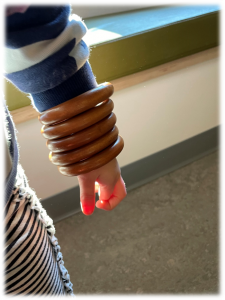
This thread of inquiry was born from a frustration in the ability to articulate what happens at Acorn Place. The pedagogy of care and the intricate relationality between caregiver and infant. The complexities of how a relationship can create affect within a human body, or within a physical space. At Acorn Place, it is through both grandest and subtlest of gestures that we are living well together; seemingly impossible to describe with words. How do we think with movement as a language? What complexities are unfolding through the movement’ing of the beings in our space—both human beings and more than human beings. What materials lend themselves to this particular form of movement languaging?

I am reminded of Angie’s thoughts on the intersection of dance and relationship in her role co-constructed as both early childhood educator and formally trained dancer, using her relationship with dance and movement to “commemorate the time it takes to learn and grow with more-than-human thinking.” (https://ecpn.ca/a-pedagogical-edge-to-dance-on/). What memories and narratives are we making and commemorating in our relationships with the children in our care?
How does our movement patterns communicate care and our commitments to it?

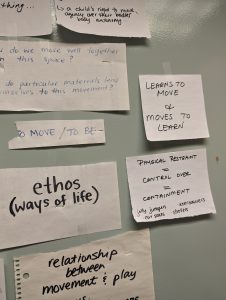
In the crafting of our ethos statement, there was (and continues to be) a lot of conversation about the “micro moments” at Acorn Place, and “attuning ourselves to the subtleties” that present themselves, and making the choice to “move [sic] with the rhythms, frictions and flows of the day” (Acorn Place ethos) in our explorations of what it means to live well together.
Developmentalism tells us that verbal language is supreme, valuing this method of communication over everything else. Body language is seemingly obliterated; with movement only being a form of measurement within a trajectory towards, or away from, the predetermined image of the ‘optimal child’. And yet, in pushing against this, this is where we find the magic at Acorn Place.

To move is to live, and to live is to be.

Cedar Place Ethos

We embrace a Pedagogy of Care as foundational in our approach to everyday practice with children and families.  We work in alignment with the BC Early Learning Framework to create a warm and nurturing environment to support all aspect of children’s growth. Understanding pedagogy as a collective, life-making project that responds to the conditions of our times (Vintimilla, 2020), we ask ourselves how thinking differently about children can open our eyes to new ways of being with children in everyday moments?

 Pedagogical decisions at Cedar Place are based on anti-colonial, anti-racist principles of inclusion that recognize all children as co-participants in shaping their world(s).  Our educational philosophy places great value on taking a gentle approach to care. We emphasize relationship building that honours children’s connections with families, educators, the environment, and more-than-human-others.
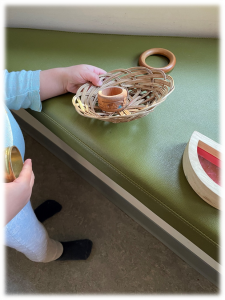
We make time for planned and spontaneous moments throughout the ebbs and flows of a Cedar Place day.  As we nurture space for subtle moments of experimentations, we are committed to thinking and being alongside children with their unique gifts and curiosities.  We create curriculum-making processes that involve time outdoors (with its offering of bigger spaces, weather and meeting with creatures and their families) and indoors (with the daily journey of meeting with children’s families, toilet learning, eating, sleeping and being together in the world with our bodies). In both indoors and outdoors we are committed to creating experiences that  help connect us to the territory of the lək̓ʷəŋən, Songhees, Esquimalt and WSÁNEĆ peoples. This includes engaging with gardening, stories/story-telling and dancing while always recognizing children as members of a family, culture and community with their own ways of doing and being in the world.

Integral to Cedar Place, we believe in reciprocity within communication and the exchange of ideas and experience between families, children and educators.

Hay’sxw’qa si’em!   (hy-sh-kwa sea-em)!

We say this in honour of now and future Songhees and Esquimalt peoples, for whom Hay’sxw’qa si’em (hy-sh-kwa sea-em)! means, “Thank you, respected or honourable one.”

2023-2024


Salal Place; traces

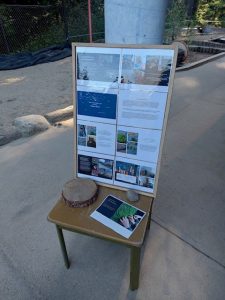
I’ve been having some conversations about how we can share our work with families outside of a newsletter, so I wanted to share what Salal Place has set up in their yard using the back of a white board.

What they are sharing now is the work they presented at our first Pedagogical Seminar night.

Salal Place: Slowing Down

__________________

Salal Place has been thinking with the question, What conditions
are needed to share perspective on matters of care, concern and curiosity
that demand otherwise of Salal Place? We considered resisting the push to
be somewhere else other than this time. How do we slow in this moment and
stay with the movements and relationships that are underway in Salal? What
happens when we see time as not something to be consumed, but as
something to stay with?

Thank you Salal Place educators!

Ethos (a la Deborah Bird Rose, 2022)

Hello everyone,

I came across a passage from Deborah Bird Rose (2022), in her last book Shimmer, that might be helpful as many of you continue to draft, refine, re-create ethos statements for your centres. Shimmer focuses on “the majestic worlds of flying fox bats (with wingspans of over 2 meters/6 feet wide!)” [who have persecuted and face extinction after being] declared enemies of settler expansion” in Australia. But the book is equally about love, care, ethics, connectivity, responsibilities, and interspecies mutualism that make life possible – many of the same considerations going into the crafting of your ethos statements.

Writing an ethos statement can be especially difficult if we lose sight of what the word ‘ethos’ means (specifically, within the context of UVic CCS:)). In the most basic of terms, writing an ethos statement involves writing a clear, concise statement about what you – as a team – stand for and what makes your room distinct (commitments, guiding philosophy, approach). It will not be perfect (nothing is). It does not have to encompass EVERYTHING. But it does have to be understandable. Something you can see yourselves in and be able to speak to with families and others who visit your space. Simply put, an ethos statement is ‘aspirational’, something to aspire and point to that describes the pedagogical approach taken within your rooms, as Nina said yesterday in conversation with Crystal in Willow Tree Place. Our ethos statement has to say: “Here we believe (or are committed to)  ______.  And this is how we do it.”

With a focus on bats, love, ethics, life, death, and multispecies worlding, Deborah Bird Rose defines the word ‘ethos’ below.

Ethos: In the context of care, I will be using the term ‘world’ while focusing primarily on individual flying-foxes. The idea that nothing comes without its world defines the term world as a lifeway drawn from the conjunction of body, self and environment, along with the subjectivity that holds it all together. When creatures share their type of body, mode of selfhood, environments and cultures patterns of a biocultural matrix. Such a matrix can be understood as an ‘ethos’ (plural éthea). (Rose, 2022, p. 9)

Bringing this back to what ‘ethos’ means within early childhood education at UVic CCS, we might say…

In the context of child care, we use the word ‘worlding’ while focusing on the way children meet with others (plants, animals, insects, weather, materials, technologies, land forms) within the broader question of what it means to learn to live well together, in each unique centre’s setting. The idea that ‘nothing comes without its world’ defines the term world as a lifeway created through the confluence (entanglement or interdepencies) of bodies, selves, environments, and subjects or citizens who are capable of holding it all together. When children learn to share space through their own types of bodies, modes of selfhood, family and cultural connections, environments – as part of a CCS centre – we can see patterns of each centre’s ‘biocultural matrix’ emerge. For example, “at Cedar Place we value _________, and because of that we do ________ in practice.” Such a matrix – or interweave between educators and children, pedagogy and practice – can be understood as a centre’s ‘ethos in action’.

The term (ethos) comes from old Greek, where it meant things like character or way of life, but also custom, and customary practices and places. Although not widely used today, the term retains a place in anthropology where the focus is on humans: ‘A people’s ethos is the tone, character, and quality of their life, its moral and aesthetic style and mood; it is the underlying attitude toward themselves and their world that life reflects. An ethos is what makes a group of ‘kind’ distinct, and this distinctiveness takes many different, but interwoven, bio-cultural forms…An ethos is an embodied way of life; a way of reproducing, of forming social groups. It is everything that together constitutes a distinctive ‘way of being’. (my emphasis, Rose, 2022, pp. 9-10)

Best,

Narda

ps

For those interested, here’s a link to short (17 min) podcast for those interested in hearing more on ‘shimmer’ and flying foxes…

Deborah Bird Rose, Shimmer:

https://soundcloud.com/user-965353504/shimmer

You just have to pay attention and then know that you are privileged to have a glimpse of something that takes you to the heart of reality. That’s what shimmer is. And that’s what I want to say multispecies relationships – in their mutualism, in their beauty, in their commitment, in their intergenerational work – offer us. These flashes, these glimpses into a shimmering world because power flows through it. Deborah Bird Rose (in conversation with Thom van Dooren, September 26, 2018 )

UVic ARC Land Acknowledgment

PEXSISEN – Moon of the Opening Hands, the Blossoming Out Moon (mid-March to mid-April)

Hi all!

Further to my email response, I thought some of you might be interested in checking the UVic Astronomy Research Centre’s (ARC) Land Acknowledgement that Kim shared.


It is simple, to the point, and interesting to note what gets signalled to readers within so few words. For those interested in checking ARC’s statement out, I invite you to think about:

-who is centred in ARC’s Land Acknowledgment, and

-how they weave specific responsibilities into it without eclipsing (pun totally intended;)) the point of  acknowledging land (and sky, in their case). As ARC reminds us:

A territory or land acknowledgement is a small but essential act of reconciliation.  It is a formal statement, often given at the beginning of ceremonies and events, which acknowledges and respects Indigenous Peoples as the traditional and enduring stewards of this land.  A land acknowledgement should encourage non-Indigenous individuals to ask questions, learn more about the history of the land, and to reconsider their relationship to the land.

I’m curious about their decision to not be more specific, in terms of naming Songhees, Esquimalt and W̱SÁNEĆ  peoples…perhaps because the sites within which they work span multiple terrestrial and cosmic territories? This reminds me of the specificity required to make such statements meaningful beyond ‘checking a box’, for those who write them. What would make your centre’s Land Acknowledgment meaningful for you?

At best, these statemements are imperfect and constantly evolving. They are also necessary part of an ongoing process that requires us to take our professional – and personal – responsibilities seriously in micro-moments of everyday practice with children and families on these lands. For me, this is also a reminder of the importance, as Dr. Rob Hancock told us at a previous Pro-D day, of avoiding getting stuck or paralyzed in guilt (which is useless). While the process of writing one requires slow, thoughtful consideration, we also need to avoid an impulse to make it ‘perfect’ because there is no such thing:).

Looking forward to reading your draft land acknowledgements and working with you to get them up in your centres soon!

Best, Narda

Nowrouz Mubarak! (Happy Persian New Year)

Nowrouz Mubarak!


we are going into the year 1403

Nowruz is a combination of Persian words نو now – meaning “new” – and روز ruz – meaning “day“.

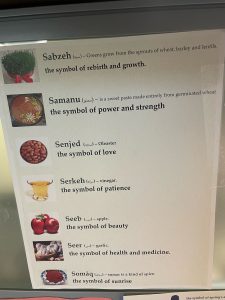
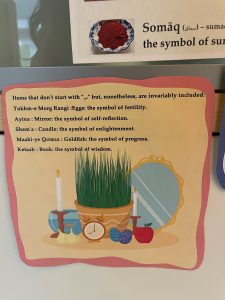
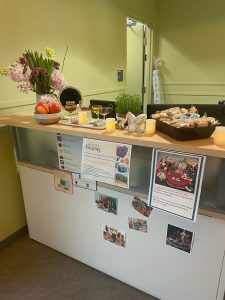
To celebrate the start of the solar new year family members gather around a ‘haft-sin’ which is a table consisting of seven symbolic things taken from nature and their names begin with the letter ‘S’ in Farsi!

The arrangement this year was put together by a family at Cedar Place with homemade sweets.

Rematriation as Resistance; Kelcie’s reflections

On January 26th I participated in one of UVIC’s Anti-Oppression workshops, “Strong Voice: Rematriation as Resistance.”  It was the first of a series of workshops that I highly encourage you to check out.  You do not need to take them in succession as each workshop is easy to follow as a stand-alone experience.

If you’re curious, Celine also attended the 2nd workshop, “Hear Someone’s Voice Before You See Them: Anti-Oppression Key Principles, Knowledges, and Equity-Focused Action-Based Frameworks.”

Info about the workshops can be found here:

https://www.uvic.ca/equity/education/anti-racism/index.php 

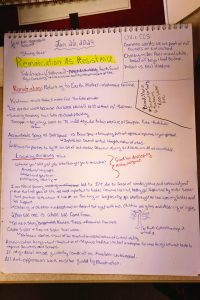
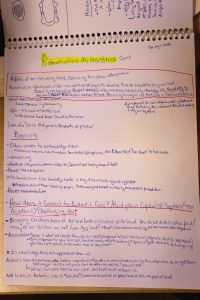
I hope to continue sharing and breaking down some of what was discussed in “Strong Voice” but here is a brief summary.

Yahlnaaw our facilitator from Tagu Consulting contends that rematriation is concerned with the stories and identities of objects and bodies, restoring ancestral and feminine values (like fertility, knowledge, nurturance), and protecting/maintaining those bodies’ and objects’ relation to one another and to their original land.

Where “repatriation” is the passive return of objects and bodies to their ancestral homes (often damaged, disrespected etc), rematriation ensures that objects, bodies, and the land are restored respectfully and that all intersecting relationships are considered.  Land back is not enough.  Restored liveable land back should be the norm.

All anti-oppression work must be guided by rematriation.  If “indigenization” and “decolonization” are not guided by this concept, they have been whitewashed.  How does this resonnate?

Such powerful things to think about.  I look forward to sharing more.