Feb. 15, 2023
I was given the gift of time to think with our ethos and Inquirey today! Thank you everyone.
I am sharing with you some of the trouble I got into 🙂
- While diving into thinking with, How to Language Dance within our Sitka Place Ethos?, I fell into a rabbit hole of reading Erin Mannings book, “Always More Than One * Individuation’s Dance”. In her book Erin Manning speaks about this video “In My Language” by Amanda Baggs (2007). This is a two part video at minute 3:12 there is a written “translation”. This video gives a movement languaging perspective within neuordivergence.
“In this two part video Baggs first creates a sound-sensing environment by moving through space while activating and being-activated by the welling enviro-mentality of the milieu. She moves slowly and carefully, touching, smelling, sounding the environment. Then in part two she challenges the notion that by “translating” this experience into spoken language she will make it more “complex” or “more real”.
”In my Language” does not reject language out right. What it does is use first movement and sensation and then language to inquire our tendency to place language as the determinant of experience. Why would we assume that language can touch every aspect of experience” – Manning
- During our last staff meeting we continued to think about our Inquiry and how to start our collective letter to request time with an Elder/Knowledge Keeper at The First Peoples House. I noticed myself feeling tensions and impatience with the feeling of not doing enough or being fast enough in my role as an educator working with the Early Learning Framework which asks “What can I do to ensure that the diversity of Indigenous cultures are recognized and reflected in my program?”. I also felt tension with wanting to recognize the importance of the labour and time it takes to maintain situated, careful, respectful, relationships of unlearning and stumbling together. How do I move away from deficit thinking to working with the idea of holding each other up? (Denis Hodgins) Can it be by moving together within action? I feel activated by the word ACTION. What will this co-labouring letter writing process activate?
“Being and worlding depend on the acitivity of reaching toward” Erin Manning
During our meeting, I was reminded of the Colloquium in London Ontario that I attended in 2020. One Key note speaker was Alexis Shotwell “Education without Extractivism”. Alexis Shotwell asks political, ethical questions about “intellectual extractivisms” and “How do we craft modes of being that do not extract Indigenous ways of thinking?”
Here is the link….. https://www.youtube.com/embed/KxbUjXS2E7M
These were my reflective notes back in 2020….feels like a lifetime ago!!
Reflection – The idea of “Intellectual Extractivism” created much curiosity within my practice. This helped me grapple with my privilege. I now wonder how, where and when do I extract knowledge? When is it my place? When is it not my place? How can I become more ethical within my relationships with others knowledges that is respectful of boundries? This allows me to be more comfortable in sitting with the uncomfort of not knowing. I now see how stealing and consumption of knowledge is just as damaging as stealing land, people and culture. How will I practice a new careful, respectful, reciprocal, responsible relationship with others knowledges as a white settler?
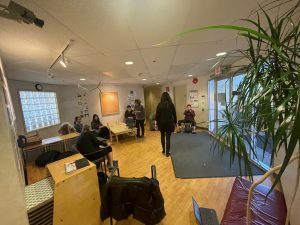
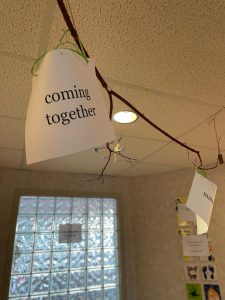
- Group Ethos Brainstorming from all of us during our last staff meeting in no particular order, Copied from our “Thinking” wall.
Sitka Place Pedagogical Commitments – Relationship (more than human, families, community, children team, self, uvic, other centres), TRC – Calls to Action, Belonging, Questioning with Curiosity, Being present, (micro) moment (s), De-Romantasize, Arts, Re-Active, Intention, Mindful, Activate Self-Worth-Value-Love, Reflective, Equity, Not child centred but still individuality respected, Knowledge of multiple concepts, improve vocabulary, learn from other professions, Open (ess), Horizontal Encounters, Political, Ethical, Listening, Communication (listening, verbal, non verbal, touch, movement), Welcoming, Boundries (consent, rights, A Practice, De-Centering(child,teacher,environment, more than human) Attunement, Collaborative, Connection, Respectful, Unlearning, EnJOYment, Emotion, Care-full, Inclusive, Images we hold.
- Adding more ideas towards beginning to compose our Ethos……
Working as a team we Question, What does it mean to live well, together within difference?
Inquiry, professional development
Materials
Most of our Program is outdoors ….speak to Weathering, Climate change, Movement, Walks to Campus, FPH, Water Fountain, Galleries in the Humanities Building, Haro Woods, Beach
How we work with art, clay, paint, sketching, dance studio, music, photography, the atrium space, thinking otherwise with children.
Dance Language – improvisational movement that is both spontaneous and intentional, embodiment, a coming to be, relational, collaborative, collective research-creation,
Working with taking care of , Stories, Thinking otherwise, in between, noticing/missing, sticky knots, slowing down, planting, cultivating plants, seeds, labouring, experimenting with time.
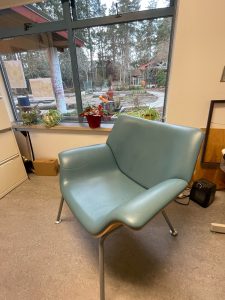
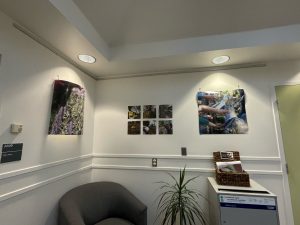
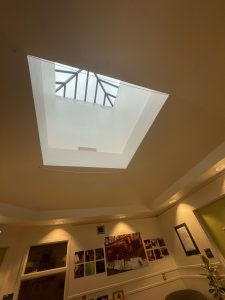
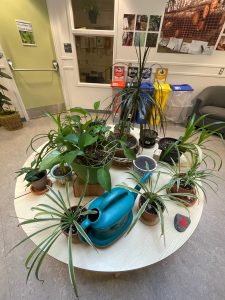

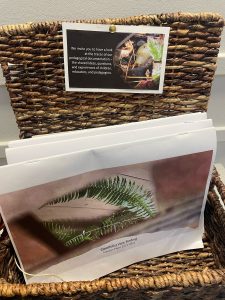 ~ Atrium Space ~