
Photo by Samantha Borges on Unsplash
Introduction
Hello all, very excited to have joined this class. My name is Mitsu Eisaki, and I am a fourth year Computer Science student.
Reflections
There aren’t many things I would highlight about my educational journey, but one of the things I become accustomed to in college is using YouTube as a learning tool, rather than as an entertainment. I used it a lot particularly in Math courses I was required to take that involved some abstract ideas, or theory heavy courses that had very little in terms of visual aid. Watching multiple videos on one topic, all from different perspectives, often helped me comprehend difficult concepts or topic better than lectures did.
Personalized Learning
Another significant influence on my educational journey has been online learning. Few years ago, when I enrolled at Camosun College, I was required to take preparatory Math courses before I could register for a transferable credit course. However, the school offered a math assessment test that could allow me to potentially bypass those requirement depending on the score achieved. So for the next few weeks before the start of the semester, I used Khan Academy to study every day and spend few hours going through its curriculum. While math was never my strongest subject in school, and still isn’t, the fact that I was in full control over what, when, and how long to study made the experience feel very enjoyable and manageable.
Compared to traditional classroom settings, online learning gave me greater sense of autonomy. I could always pause, rewind, or skip sections, allowing me to control the pace and focus on what I needed. After some time, I wrote the assessment test and passed with flying colors.
It was the first time I had used an online resource to study independently, and it left a strong impression on me: from the quality instruction provided by completely free platform, to the flexible roadmaps that I could follow at my own pace. It showed me how unique an online learning experience can be, as well as how it can offer a personalized experience that adapts to individuals needs.
Digital Identity and Online Presence
While not directly related to my educational journey, managing my online presence has become increasingly important. Few years ago, around the time GDPR was receiving global attention, I deleted or deactivated most of my social media accounts due to growing concerned about my privacy and data collection. I became more privacy conscious online, and made some changes by switching my browser to Firefox, removing google apps, and creating an email with separate provider. While most of these have stayed with me through the years, I eventually had to return to using social media. It used to be that they made things easier, but today I find it’s no longer an option, but a necessity; Instagram or Facebook are now needed to communicate with people, and UsedVictoria or even Craigslist seems to have been largely replaced by Marketplace, and LinkedIn feels like another page in a resume you have to submit. More and more, we’re putting personal information online, willingly or otherwise, for the entire world to see. What is more baffling is that even as people reveal their whole identity online, many still choose to engage in hostile, offensive arguments on a random Facebook video. It is strange that even as we lose layers of anonymity and reveal our real identity online, people still fail to recognize the person on the other end.
Interesting Data
| Year | All social media users |
| 2025(estimated) | 5.32 billion |
| 2024 | 5.16 billion |
| 2023 | 4.95 billion |
| 2022 | 4.59 billion |
| 2021 | 4.48 billion |
| 2020 | 3.96 billion |
| 2019 | 3.48 billion |
| 2018 | 3.19 billion |
| 2017 | 2.80 billion |
- 89 % of Canadians are concerned with information available to them online
- Platforms like Facebook, YouTube, and TikTok extensively track and share users’ personal data with third parties
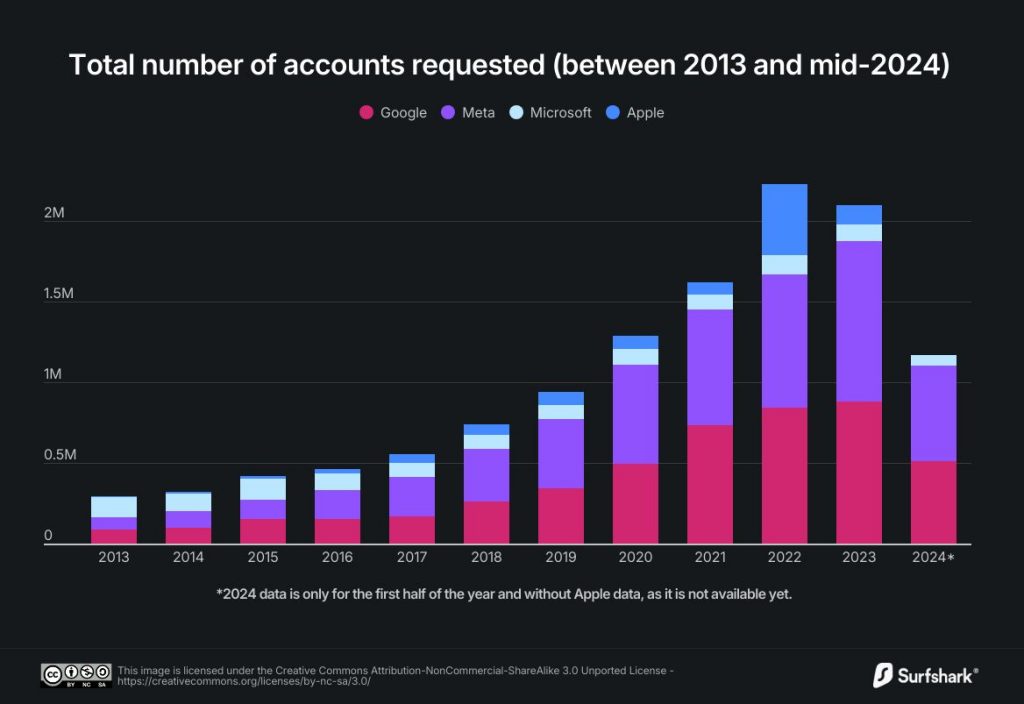
- Governments around the world sent more than 2.1 million requests for user data
Leave a Reply