Three-Dimensional Multiple Object Tracking and its effects on Functional, Cognitive, and Biological Outcomes in TBI Survivors: A Patient-Oriented Study

Isla Shill
This patient oriented study aims to understand if 5-weeks of cognitive training with NeuroTracker three-dimensional multiple-object tracking (3D-MOT) software can result in improvements in functional, cognitive, and biological outcomes in moderate to severe TBI survivors. TBI is a leading cause of disability worldwide, with an estimated 69 million individuals acquiring a TBI each year.
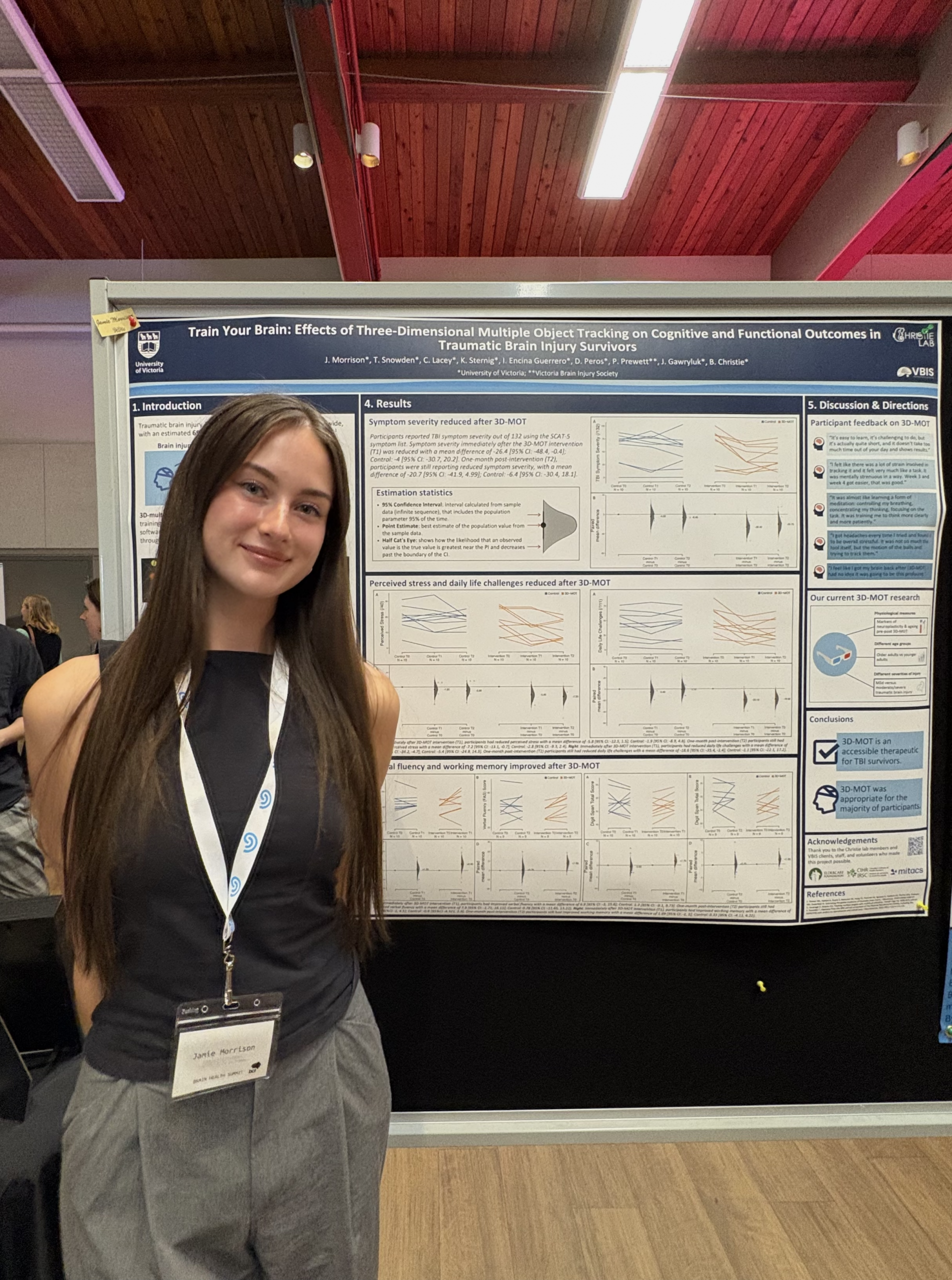


Despite this prevalence, there is a drastic lack of supports to help survivors manage their symptoms at chronic periods post-injury. Working with the Victoria Brain Injury Society as our patient partner, this study utilizes self-report questionnaires, cognitive assessments, and blood and saliva collection to better understand if 3D-MOT can be used and implemented as a therapeutic intervention for this population.
This research was supported by the Mitacs Accelerate Program, Canadian Institutes of Health Research, Eldercare Foundation, and Sara Spencer Foundation.
Researchers
Jamie Morrison, Katie Sternig, Ian Encina, Isla Shill
Location
Focus
Status
If you would like more information about the research, please contact brainlab@uvic.ca.