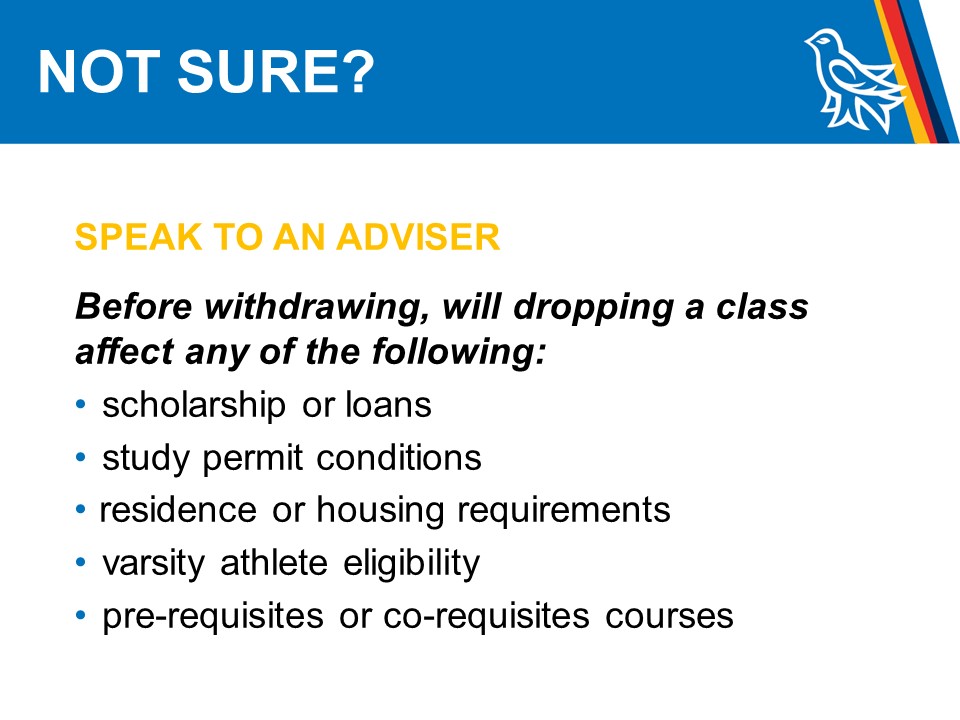

IRIC Student Recruitment Event – deadline extended
Following numerous requests, we are extending the deadline to apply in the 2022 IRIC student recruitment event to Monday, March 14, 2022, 10 a.m. (Montreal time).
Open to undergraduate and graduate students with strong interest in cancer research, this event offers a unique opportunity to discover the various opportunities offered by the researchers of our institute.
Being aware of your University’s great reputation and of the quality of your training programs, we would love to see some of your students participate in this exciting and personally enriching event.
Two new information sessions have also been scheduled for Tuesday, March 8, 2022:
- at 9:00 a.m. (Montreal time) in English
https://umontreal.zoom.us/j/82233421816?pwd=QUp0a2RPZm41UG5SNER0NmxUL2diQT09
- at 1 p.m. (Montreal time) in French
https://umontreal.zoom.us/j/86815030339?pwd=b2NGQUVUVldEQVIvWjUreEZ3S2Rydz09
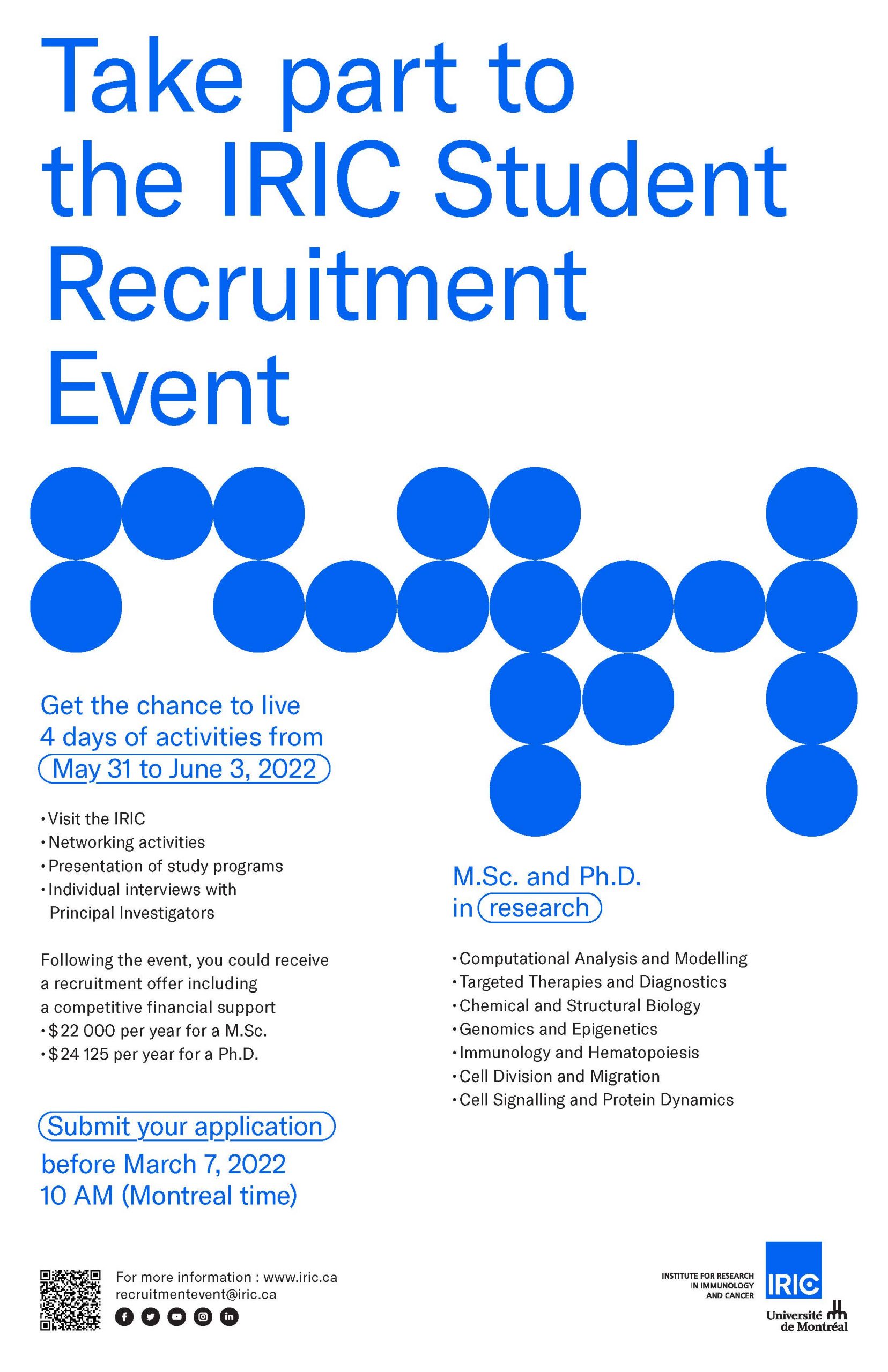
Chem EDI updated website
Based on your insightful feedback through the Equity Review (a huge thank you to those who participated), we now have a snazzy newly updated webpage for the Chem EDI committee: https://www.uvic.ca/science/chemistry/about/equity/index.php
On this page you can find information about our mandate (support, education and advocacy), how we can help if you have a concern related to EDI (advice and support to access UVic services), our timelines for response if you get in touch, and who is on the committee (including a short bio and why they joined the committee).
Chemistry seminar: Sherry Yennello, Texas A&M
The Chemistry Seminar Program brings visitors from across Canada and beyond to present seminars in their area of expertise. The seminars are open to everyone, including undergrad students.
Monday, February 28
11:30 a.m.
Engineering and Computer Science Building 116
Sherry Yennello
Professor, Texas A&M University
Director of Cyclotron Institute
https://cyclotron.tamu.edu/sjygroup/
“Diving deep on the periodic table to find a treatment for cancer”
Alpha emitting radionuclides with medically relevant half-lives are interesting for treatment of tumors and other diseases because they deposit large amounts of energy close to the location of the radioisotope. Researchers at the Cyclotron Institute at Texas A&M University are developing a program to produce 211At, an alpha emitter with a 7.2 h half-life. The properties of 211At make it a great candidate for targeted alpha therapy for cancer due to its short half-life and decay mechanism. Astatine-211 has now been produced multiple times and novel chemistry has been developed for the separation of the At from the Bi target.
View the full list of seminars at https://events.uvic.ca/chemistry/.
Job opportunities with Paraza Pharma

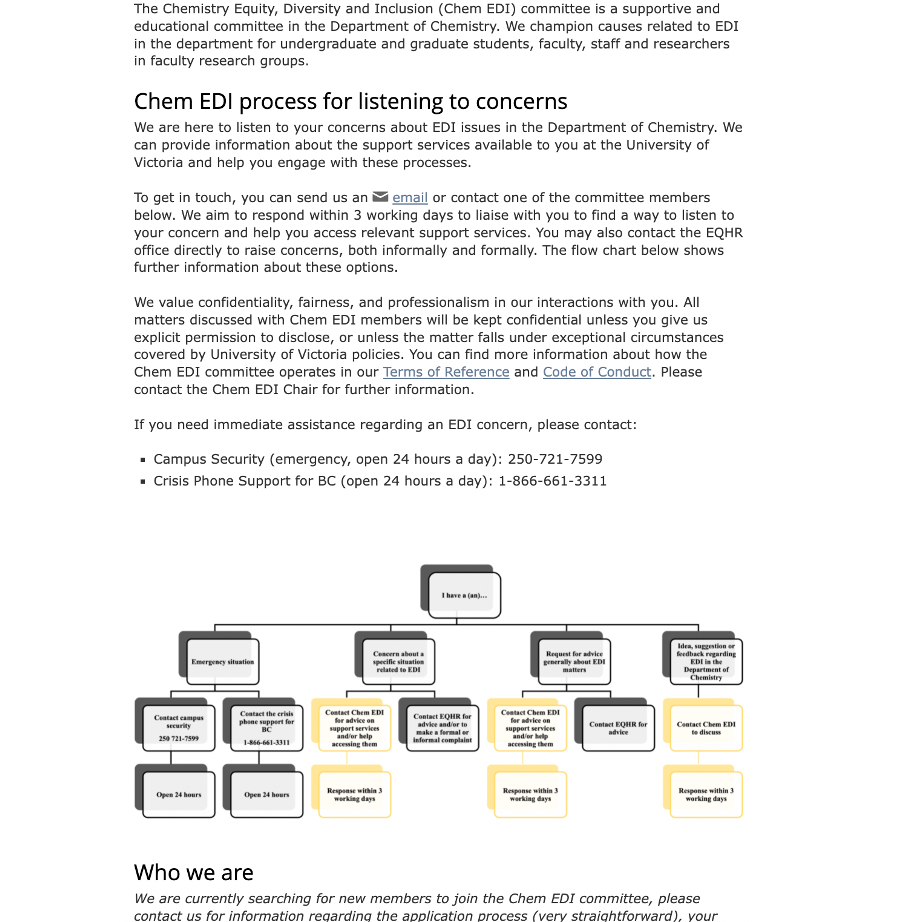
Wonder Women Networking Evening – March 9
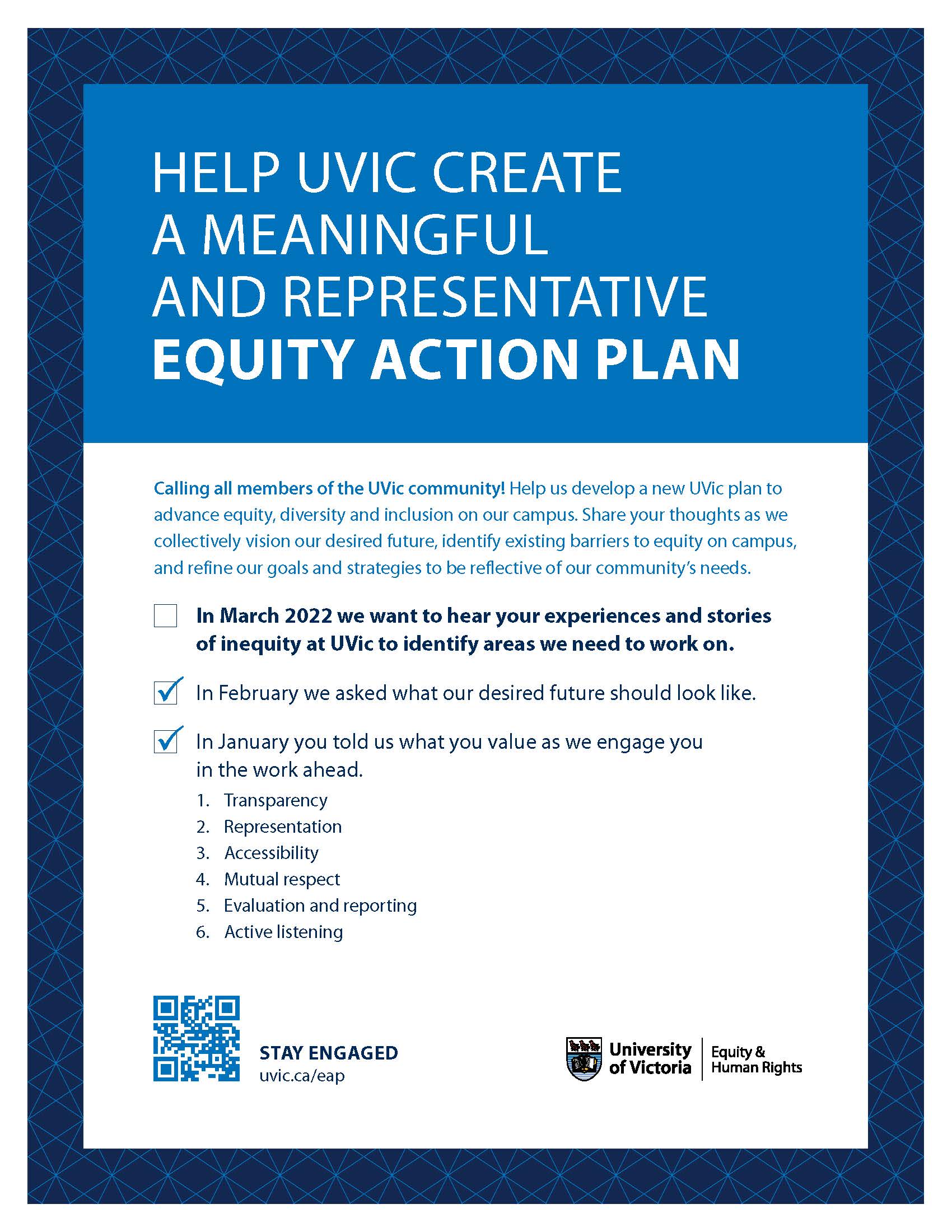
Equity Action Plan – share your experiences
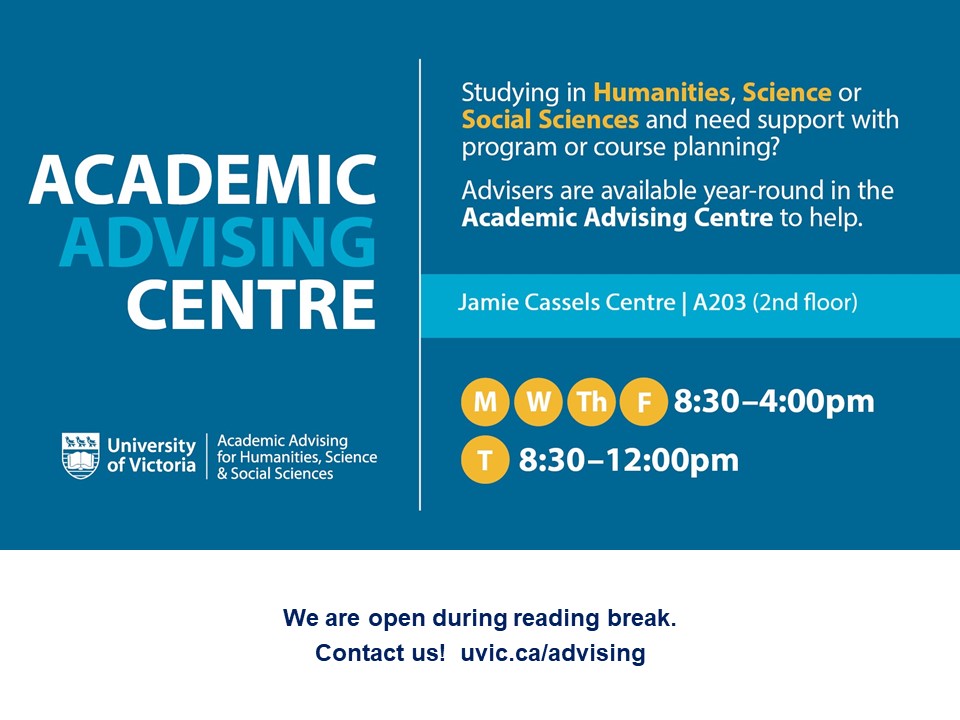
Academic Advising Hours
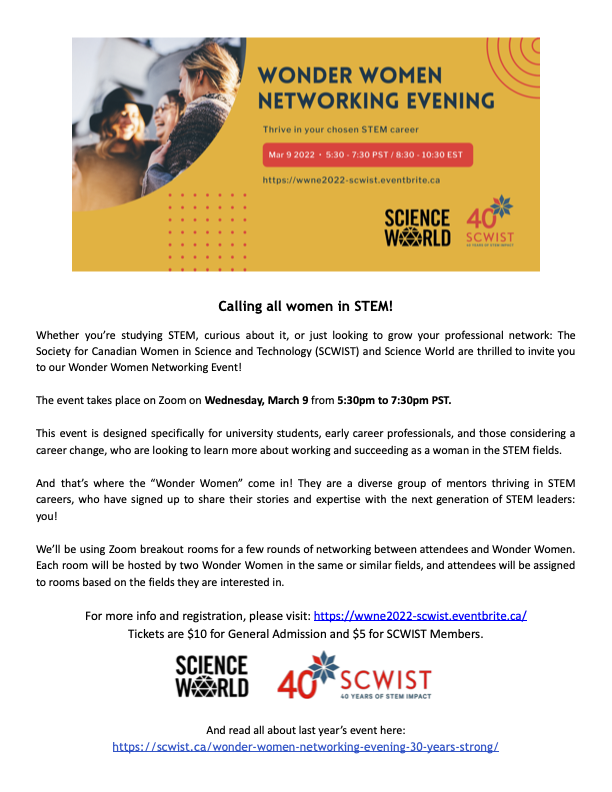
Last day for withdrawal in Spring term
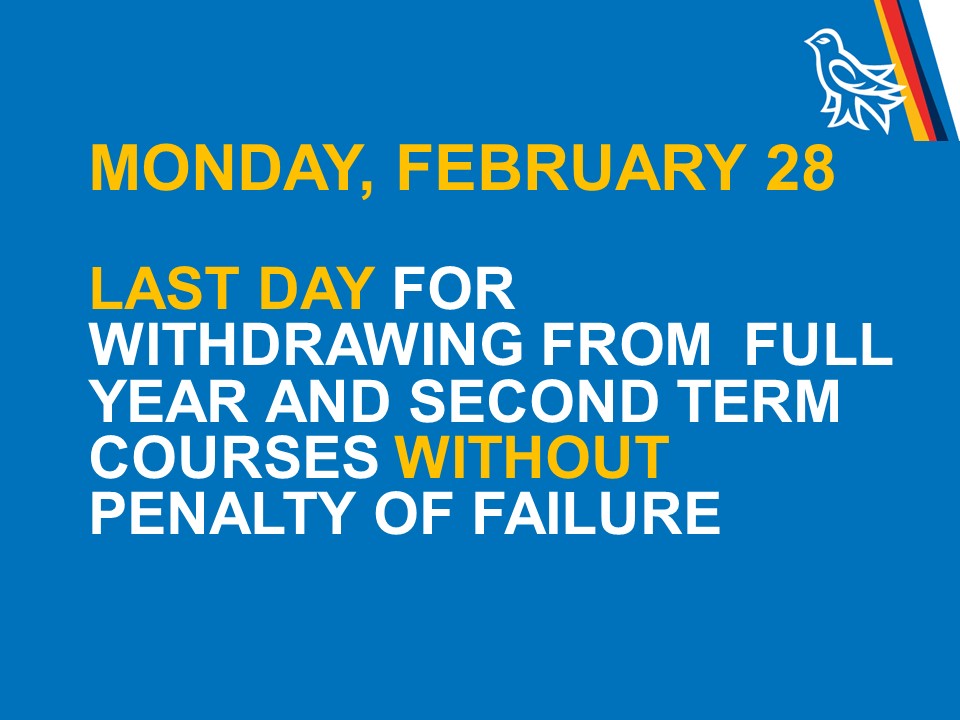
Withdrawing from a course