Seminar – Morris Bullock – Monday January 16

The Chemistry Seminar Program brings visitors from across Canada and beyond to present seminars in their area of expertise.  The seminars are open to everyone, including undergrad students.

Monday January 16
11:30 am
Engineering and Computer Science Bldg, Room 116

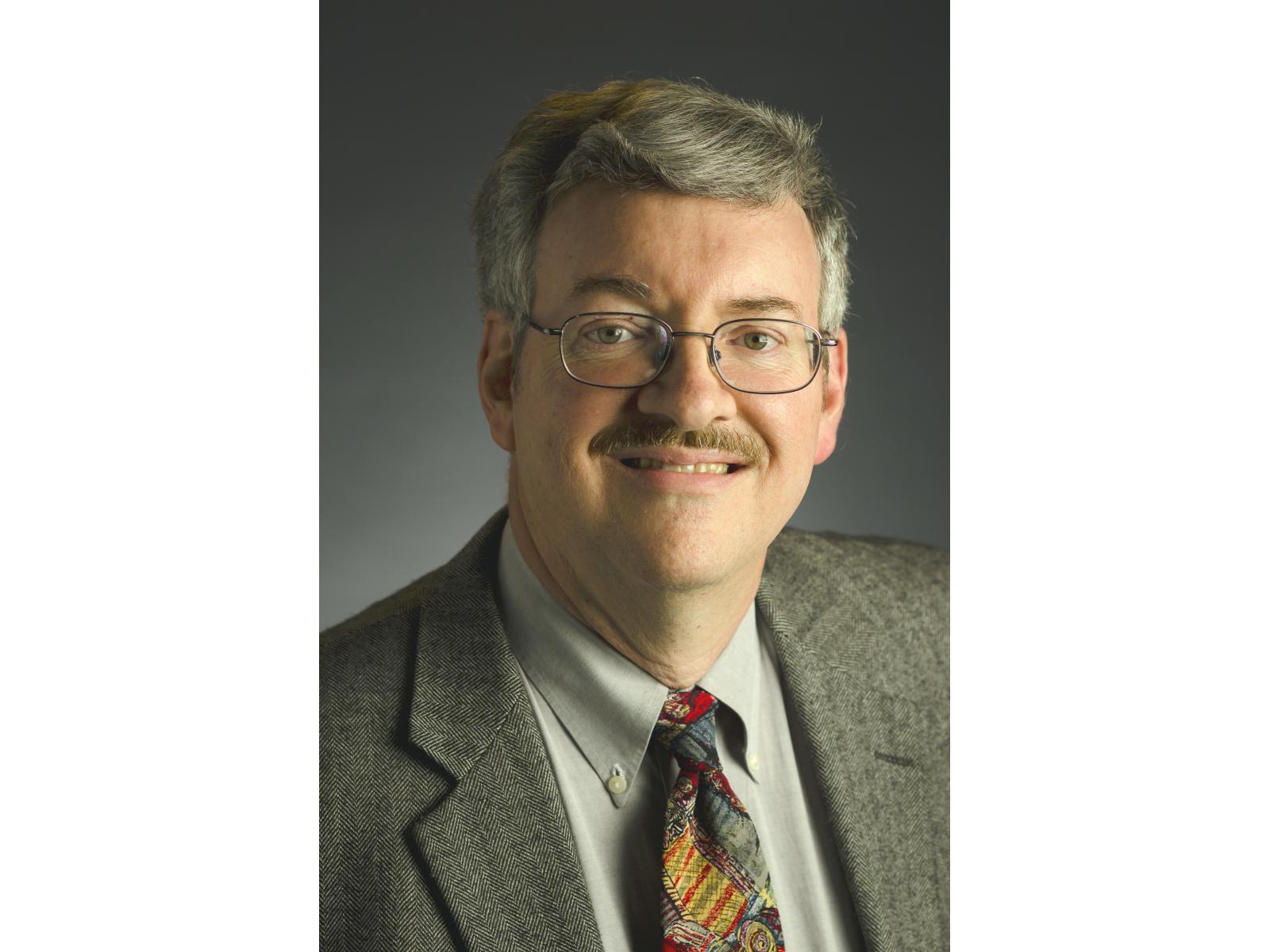
Morris Bullock
Pacific Northwest National Laboratory


Stalking and Capturing Elusive Monomeric Copper Hydrides

Copper hydrides were first reported in 1844; their value as catalysts for organic reactions has significantly expanded in the last two decades. Copper hydrides with NHC (NHC = N-heterocyclic carbene) ligands typically exist as dimers, [(NHC)Cu(m-H)]2. The kinetics of insertion of organic substrates into the Cu-H bond are determined by the electronic properties of the substrates. Conversion of the dimer to a monomeric species or insertion into the Cu-H bond can be rate-determining. Remote ligand modification can have a large effect on the dimer-monomer equilibrium, even when substituents are several bonds away from the copper. Destabilization of the [(NHC)Cu(m-H)]2 dimer relative to the (NHC)Cu-H monomer enables the isolation of rarely observed Cu-H monomers. These highly reactive monomeric complexes insert tri-substituted alkenes into the Cu-H bond.
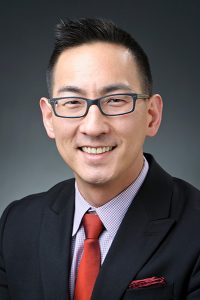
Seminar – Tehshik Yoon – Monday January 9, 2023

The Chemistry Seminar Program brings visitors from across Canada and beyond to present seminars in their area of expertise.  The seminars are open to everyone, including undergrad students.

Monday January 9
11:30 am
Engineering Computer Science Bldg, Room 116

Tehshik Yoon
University of Wisconsin-Madison

“Base Metals in Photoredox Oxidation Reactions”

Photocatalysis offers a uniquely facile strategy for the generation of a wide variety of open-shell intermediates, and the development of new photoredox transformations based upon their reactivity has been a major theme of research in the past decade. This broad effort has led to the development of a remarkable variety of net redox-neutral and, to a lesser extent, net-reductive transformations of significant synthetic utility. The development of net-oxidative photoredox transformations, in contrast, has been somewhat slower, due to the incompatibility of photoredox conditions with many of the terminal oxidants that are ideally suited to ground-state oxidative catalysis. We propose that simple base metal salts are inexpensive, earth-abundant, and environmentally benign terminal oxidants that readily support the one-electron oxidation state changes typical of photoredox reactions. Their incorporation into the design of photoredox reactions enable a broad range of useful net oxidative photochemical transformations.

Undergrad Research Awards for 2023 – applications welcome!

Applications are being accepted for the following awards to support a project in a Chemistry research group during the Summer 2023, Fall 2023 or Spring 2024 term.  Interested students must secure a supervisor before formally applying.  Research interests and contact information for our faculty members can be found on our website.

NSERC USRA (Undergraduate Student Research Award)
This award provides $6,000 from NSERC plus a top-up of $3,500 from the research supervisor.  Information and the application form are found on the NSERC website.  A copy of your unofficial transcript should be included with the application.

SURA (Science Undergraduate Research Award)
This award provides $4,000 from the Faculty of Science plus a top-up of $4,000 from the research supervisor.  The terms of reference and application form are found on the Faculty of Science website.

SERA (Science Emerging Researcher Award)
This award provides $5,500 from the Faculty of Science plus a top-up of $3,500 from the research supervisor.  The terms of reference and application form are found on the Faculty of Science website.

A student may apply for more than one of the awards.

Completed applications forms must be submitted to dsecchem@uvic.ca by the deadline of February 15.