Author Archives: Sandra Carlson

Undergrad Research Awards for 2023 – applications welcome!

Applications are being accepted for the following awards to support a project in a Chemistry research group during the Summer 2023, Fall 2023 or Spring 2024 term.  Interested students must secure a supervisor before formally applying.  Research interests and contact information for our faculty members can be found on our website.

NSERC USRA (Undergraduate Student Research Award)
This award provides $6,000 from NSERC plus a top-up of $3,500 from the research supervisor.  Information and the application form are found on the NSERC website.  A copy of your unofficial transcript should be included with the application.

SURA (Science Undergraduate Research Award)
This award provides $4,000 from the Faculty of Science plus a top-up of $4,000 from the research supervisor.  The terms of reference and application form are found on the Faculty of Science website.

SERA (Science Emerging Researcher Award)
This award provides $5,500 from the Faculty of Science plus a top-up of $3,500 from the research supervisor.  The terms of reference and application form are found on the Faculty of Science website.

A student may apply for more than one of the awards.

Completed applications forms must be submitted to dsecchem@uvic.ca by the deadline of February 15.

Canadian Association for Girls in Science (CAGIS) is recruiting volunteers in Victoria!

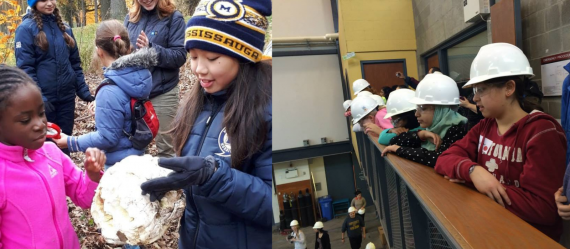
CAGIS is an award winning not-for-profit organization that supports interest in Science, Technology, Trades, Engineering, and Mathematics (STEM) among girls and gender nonconforming youth with local clubs that visit labs, workshops, and field sites to meet mentors and do fun, hands-on activities.

Volunteers help to plan, organize and assist at these local events, and act as role models and mentors to the youth participants.

Learn more and apply here to volunteer:  https://girlsinscience.ca/volunteer/

Please contact the local club at Victoria@GirlsInScience.ca with any questions, or check out our website for more details.

Canadian Association for Girls in Science (CAGIS)

Academic Integrity Week – Oct 17-21, 2022

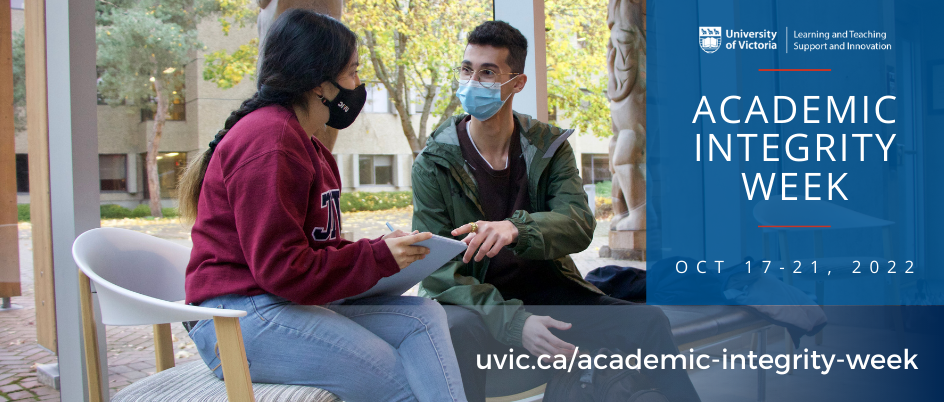
Join us for a week of events and initiatives involving students, instructors and staff, showcasing how UVic ensures academic integrity to protect your intellectual property. Events will include awareness building and prevention strategies.  Find a list of events for students here:
https://www.uvic.ca/learningandteaching/about/home/eventsworkshops/academic-integrity-week/index.php


What is Academic Integrity?

Academic integrity is foundational to scholarship within the post-secondary environment. It refers to a standard of commitment and behavior in accordance with the values of honesty, trust, fairness, respect, responsibility, and courage in learning, teaching and research (ICAI, 2014). As such, academic integrity is central to the mission of the university in developing new knowledge and in creating a strong academic environment that strengthens students’ intellectual and moral development. Beginning in first year, students are mentored into integrous processes to recognize and attribute the contributions of others as well as ways to assure the integrity of their own intellectual work.

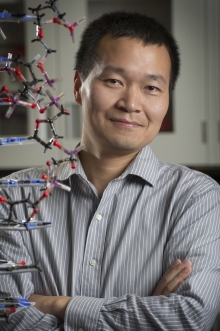
Seminar – Juewen Liu – Monday October 17, 11:30am

The Chemistry Seminar Program brings visitors from across Canada and beyond to present seminars in their area of expertise.  The seminars are open to everyone, including undergrad students.

Monday October 17
11:30 am
David Turpin Building A110

Juewen Liu
University of Waterloo
http://www.science.uwaterloo.ca/~liujw/index.html

“DNA adsorption on gold nanoparticles, graphene oxide and metal oxides”

Understanding and control of DNA adsorption on surfaces and nanoparticles is critical for biosensor development. This seminar covers detailed studies on three types of important nanomaterials. DNA adsorbs on gold nanoparticles via very strong base coordination. Such strong adsorption led to kinetic controlled processes. DNA as an interesting block copolymer with many negative charges has interesting self-assembly properties as a function of ionic strength, pH and temperature, all of which have been used to promote DNA adsorption to gold. Such understanding has led to not only better conjugation methods but also better biosensors. DNA adsorbed on graphene oxide via hydrogen bonding along with pi-pi stacking, while they adsorb to metal oxides via phosphate backbone binding along with some base interactions. Some literature reported sensors are reviewed and some sensing mechanisms were found to be incorrect due to a lack of attention to fundamental DNA adsorption mechanisms.