Author Archives: madelaineprince

CHBA Fall Meeting: Sector Priorities and Practical Realities

by Elisabeth Girgis-McEwen

Pictured: Event materials and the gathering space from the CHBA meetings in Ottawa.

The Canadian Home Builders Association Fall Meeting brought together industry leaders, provincial and local association representatives, federal partners and some researchers like us. Across the 4 full days the week of October 22nd, they discussed the current state of Canada’s housing system. The conversations focused on supply constraints, financing tools, regulatory processes, data transparency, and opportunities for cross-sector coordination.

Participants noted that affordable and market units generally cost the same to build. The main differences arise from financing structures, land values, and the impact of delays. Builders highlighted challenges with procurement processes, especially for non-profit providers who face higher upfront requirements and limited capacity. Several organizations referenced ongoing issues with regulatory complexity and the cumulative effect of approval timelines. These tensions were noted to cascade into difference in definition of productivity and concern with creation of housing units undesirable to home buyers.

Regional leads and participating federal policy practitioners from HICC, NRCan, CMHC, Accessibility Canada and NRC discussed options for improving coordination. Examples included exploring new borrowing authorities, reviewing planning workflows, and identifying shared decision rules to support more consistent practices. Local participants noted gaps in data systems and manual processes that contribute to inconsistent reporting. The 9th Edition Municipal Benchmarking Study, the Net-zero labelling program and the Reno-mark program were referenced as efforts to address these issues. Participants also referenced CSA-certified prefabricated units and opportunities for factory-built housing in different regions.

Financial tools were another focus area. Discussions with insurance and banking representatives ranges from performance bonds, co-funded risk products, mortgage insurance variations, and long-amortization models. An example of challenge in ensuring use of resiliency best practices in locations with increased climate risks was perceived responsibility for specifying in hail resilient cladding in rebuild situations : although insurance companies provided various incentives to build back better, builders could be perceived by the homeowners as upselling or unfair material mark-up. An opportunity was noted to better reflect actual construction risk and project timelines.

There was broad acknowledgement that different information is required by different audiences: builders, municipalities, non-profits, and regulators. Participants emphasized the importance of clarity, predictability, and consistent communication between sectors. The Women’s Council also shared an initiative to develop a children’s book highlighting the sector’s inclusive and diverse nature earlier.

These themes align with the ongoing work of the Best Practices in Building Systems (BPiBS) project. Over the past six months, the project has advanced tools and methods for mobilizing housing knowledge across sectors, including the CIV tool, the KIND methodology, and the development of robust data. This work supports clearer information pathways between industry, government, and educational partners.

The meeting highlighted several areas where improved coordination and shared tools may support future progress: aligning planning processes, greater transparency in municipal data, exploring new financing models, and expanding opportunities for peer learning among local leaders. With the next CHBA meeting scheduled for the spring in Quebec City, BPiBS will continue collaborating across sectors to mobilize best practices shared through these forums.

BPiBS attends joint workshop on accelerating housing supply through high-performance modular construction

By Madelaine Prince

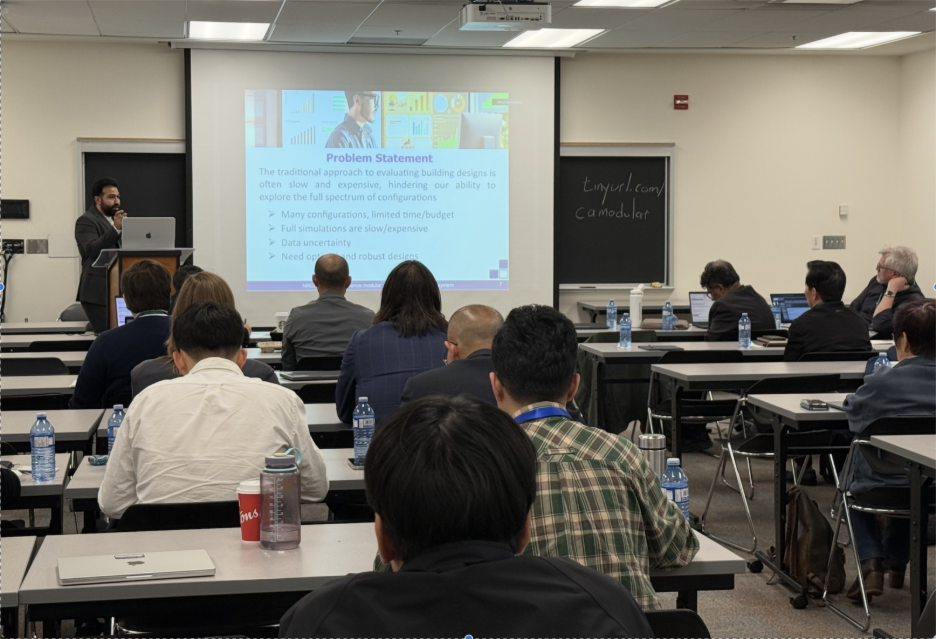
Pictured: PhD candidate Abdulrahman Sati presenting at the September 2025 symposium.

In late September, members of the BPiBS team participated in the High-Performance, Energy-Efficient, and Carbon-Neutral Modular Buildings Workshop hosted at the University of British Columbia (UBC). The initiative brings together experts across structural engineering, materials science, building science, mechanical and electrical engineering, and climate resilience to develop modular technologies that are faster to construct, lower in emissions, and more affordable, advancing both Canada’s housing and sustainability goals.  

The workshop is part of an $8.27 million national research initiative led by UBC’s Department of Civil Engineering, in partnership with the University of Victoria (UVic) and the University of New Brunswick (UNB). Supported by Natural Resources Canada (NRCan), the National Research Council (NRC), and a broad network of industry collaborators, the project is driving innovation in high-performance, low-carbon modular building systems to accelerate sustainable housing solutions across Canada. 

The research program is organized around four interconnected themes that bridge science, engineering, and practice: 

  • Theme 1: Development of high-performance, energy-efficient modular structural and non-structural components and systems. 
  • Theme 2: Quantification of energy use and greenhouse gas (GHG) emissions in modular buildings.
  • Theme 3: Operational monitoring and optimization of energy performance and carbon emissions.
  • Theme 4: Design, implementation, and knowledge mobilization for high-performance modular construction.  

From the UVic Department of Civil Engineering, Dr. Thomas Froese and Dr. Phalguni Mukhopadhyaya, both BPiBS project leads, are contributing to the initiative. Specifically, Dr. Froese is supervising research to develop a tool to optimize the energy efficiency, cost, and GHG emissions of building systems, conducted by PhD student Abdulrahman Sati. Dr. Mukhopadhyaya is supervising research on super insulations in modular constructions, conducted by PhD student Meysam Khatibi. 

For the BPiBS team, the workshop offered valuable insights into the opportunities for modular building in Canada and how these connect with broader system transformation efforts across the country’s building sector. A key takeaway was the need for stronger cross-sector collaboration and shared understanding between disciplines. Developing common language, improving coordination, and investing in the “soft skills” that enable effective collaboration were identified as some of the most challenging, but also most essential, factors for advancing successful project outcomes. These reflections closely align with and validate patterns emerging from BPiBS’s ongoing research, which similarly emphasizes the importance of integration, communication, and collective capacity-building across the home building ecosystem. 

The project will culminate in a full-scale prototype modular building and a comprehensive design guide, resources that will help builders, policymakers, and communities adopt sustainable modular solutions more widely across Canada. 

What we Heard: Voices from Municipal and Regional Governments in B.C.

By Madelaine Prince and Makenzie Pratt

As part of our team’s ongoing commitment to learning from the diverse experiences and perspectives of those involved in the housing and building system, we are conducting sector-wide engagement. This includes a series of virtual listening sessions, informal conversation-style gatherings that create space for open dialogue, mutual learning, and reflection. These sessions bring together professionals and practitioners from across the housing and building sectors, including industry, regulatory, research, and community spheres, to share insights, challenges, and ideas in an open and collaborative environment. 

Through this engagement, we are gathering perspectives on current challenges, emerging needs, and opportunities in the home building system. We are analyzing these insights to identify themes and scan for early signals and trends shaping futures of building systems. This work is informing pilot projects to integrate knowledge into the graph database (see Alex’s blog post) and guiding the development of future scenarios to support cross-sector strategy-building toward more resilient, sustainable, and desirable outcomes. As we expand pilots and grow the knowledge repository, we will continue to explore applications that bring together diverse ways of knowing across multiple knowledge systems and ontologies.

This first listening session was held in February 2025 with representatives from municipal and regional governments across British Columbia. Participants were asked the following five questions to guide the conversation: 

  • What comes to mind when you think about existing building and housing systems in your city? 
  • Given the project’s focus on cross sectoral alignment, what do you see as the potential for this initiative towards addressing housing and building system challenges? 
  • What might you consider to be the most critical areas needed to be address to meet Canada’s housing needs? 
  • Beyond building infrastructure, what are some community or societal elements that might be considered essential when addressing future of housing in Canada? 
  • How do you and your team stay informed on existing and emerging practices related to housing and building systems? 

While many listening sessions and interviews will continue to be hosted, we are sharing the key takeaways and themes from individual sessions to highlight the contributions and insights across different participant groups as they inform our findings. As the project evolves and we continue to learn, we will adapt and refine our approaches to best support meaningful outcomes and impacts (see Elisabeth’s blog post on learning KPIs).

What follows is a summary of the key themes that emerged from the first listening session: 

Continue reading