
by Rakesh Kumar
As we move further into the 21st century, the importance of sustainable living has become increasingly evident. Urban landscapes are evolving in response to population growth, and the pressure on natural resources is intensifying, particularly in terms of municipal water use and waste generation. In British Columbia, the challenges are especially noticeable. Despite the region’s abundant water resources, the province is facing high per capita water consumption rates compared to other regions and countries. As reported in 2021, British Columbians used an average of 286 litres of water per day, far exceeding the Canadian average of 223 litres and significantly higher than the European average of 144 litres. British Columbia’s higher water consumption is linked to its lower water prices, suggesting that water is undervalued. However, with population growth and declining freshwater supplies, water costs are likely to rise, leading to growing concerns about water scarcity. This poses significant questions about how we manage our water resources. With population growth and water scarcity looming on the horizon, now is the time to rethink our approaches to water use in British Columbia and Canada.
On the other hand, waste refers to materials produced by human activities that are no longer needed, existing in various forms, including solid, liquid, and gaseous. It can be categorized based on its source, such as residential (which includes single-family homes, multi-family units, and high- and low-rise buildings), commercial, institutional, or industrial, as well as by its composition, which includes organic matter, paper, glass, metal, and plastic. Municipalities and some private organizations are responsible for collecting, diverting, and disposing of both residential and non-residential solid waste. In 2022, the average amount of municipal solid waste generated per person in Canada was 684 kilograms, with British Columbia reporting a notably lower figure of 479 kilograms per person, a 5% decrease from 2021. In comparison, the European Union averaged around 513 kilograms per person, while the United States produced approximately 951 kilograms per person annually, illustrating regional disparities in waste generation.
Sustainable Water Management: The good news is that numerous sustainable water practices are available for implementation. Rainwater harvesting, greywater reuse, and smart water-saving technologies are just a few methods that can significantly reduce our reliance on traditional potable water supplies. For instance, rainwater harvesting allows homes to collect and store rainfall for non-potable uses like irrigation, thereby easing demand on municipal systems. Similarly, greywater reuse systems can recycle water from sinks, showers, and washing machines for landscape irrigation or toilet flushing. By integrating these practices into residential building designs, we can help not only to reduce operating costs but also to enhance the resilience of our buildings against climate-related challenges such as flooding and droughts.
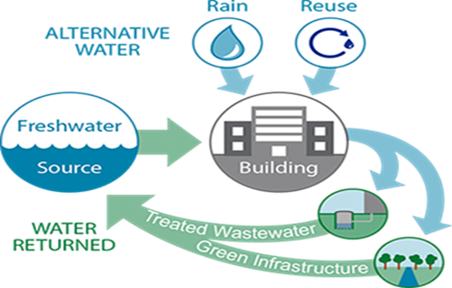
Water conservation and protection in buildings
Sustainable Waste Management: Sustainable waste management based on circular economy principles goes beyond traditional recycling; it encompasses a holistic approach that encourages a recycle and the material efficiency. We need strategies like source reduction, composting, and recycling that diminish our reliance on landfills, reclaim value from waste materials, and minimize greenhouse gas emissions. Incorporating these practices ensures that communities can manage waste effectively while also supporting new circular economic models. For example, composting organic waste not only diverts material from landfills but also enriches the soil, fostering healthier ecosystems.

Canadian Municipal Solid Waste: A Breakdown by Source and Diversion Method
Bridging the Gap: All the stated technologies and practices hold promise, but achieving widespread adoption is not without its challenges. Financial costs, regulatory inconsistencies, and a lack of public awareness often hinder progress. Education is paramount. By informing communities about the benefits of sustainable water and waste systems, we can drive a cultural shift that encourages the adoption of these practices. It’s also vital to ensure that social and cultural dimensions are incorporated into designs for these systems. All members of the community, especially marginalized groups, should have equitable access to water and waste services that respect traditional practices and values.
Future Direction: To build a sustainable future, we must adopt a comprehensive approach that combines technological innovation, robust public policy, and active community involvement. This strategy is crucial for designing eco-friendly buildings that are well-equipped to withstand the pressures of climate change and urban growth. The integration of sustainable water and waste systems is a necessity for a resilient and equitable future. By rethinking how we use our resources, we can pave the way for a more sustainable, prosperous tomorrow. After all, our health, environment, and future generations depend on the choices we make today. As we look ahead, let’s commit to building resilient communities that value sustainability and equity in every drop of water and every piece of waste. Together, we can create a brighter, more sustainable future.
A contribution by Rakesh Kumar
Leave a Reply