OzTREKK invites you to a live virtual visit to Australia’s famous Lone Pine Koala Sanctuary — home to koalas, kangaroos, wallabies, dingoes, and crocodiles.
Join us for an Australian Wildlife Experience and go behind the scenes with sanctuary experts to learn what it really takes to care for Australia’s most iconic animals.
You’ll discover: 🐨 How wildlife experts care for exotic animals 🦘 The sanctuary’s conservation and rehabilitation work 🐊 What it’s like working with animals in Australia 🎤 Live Q&A with Lone Pine veterinarian Galit Tzipori
Whether you’re pre-vet, passionate about wildlife conservation, or just love animals, this is a rare chance to see one of Australia’s top wildlife sanctuaries up close.
In this course and research apprenticeship, we use university research vessels to examine patterns, interactions, and linkages in the marine ecosystem and investigate how oceanographic processes shape the spatial and temporal patterns of open water biological communities, including pelagic fishes. Our goal is to gather and analyze data to document ecosystem drivers and trends, teach methods and skills, and provide training applicable to a career in marine science. The core of this program is an independent but integrated research project, which we will help you design and implement.
Our apprenticeship features formal instruction, independent fieldwork, and a collaborative learning environment. For the first two weeks, the instructors provide an overview of basic concepts and field and laboratory techniques. Throughout the rest of the quarter, you will have the opportunity to work with other students and collect and analyze field and laboratory data towards the development of an independent research project with supervision and support from a faculty mentor. You will learn statistical and analytic approaches to interpreting data. You will also gain valuable experience reporting your findings in a professional manner, through oral presentations and in a written scientific paper.
This apprenticeship is a unique opportunity to spend a quarter conducting meaningful field research in a stimulating and supportive environment.
SUMMER 3-CREDIT FIELD COURSES IN THE CARIBBEAN & COLORADO! with Ecosystem Field Studies www.ecofs.org
An opportunity to apply your classroom & textbook education while immersed in a spectacular & transformative environmental academic setting!
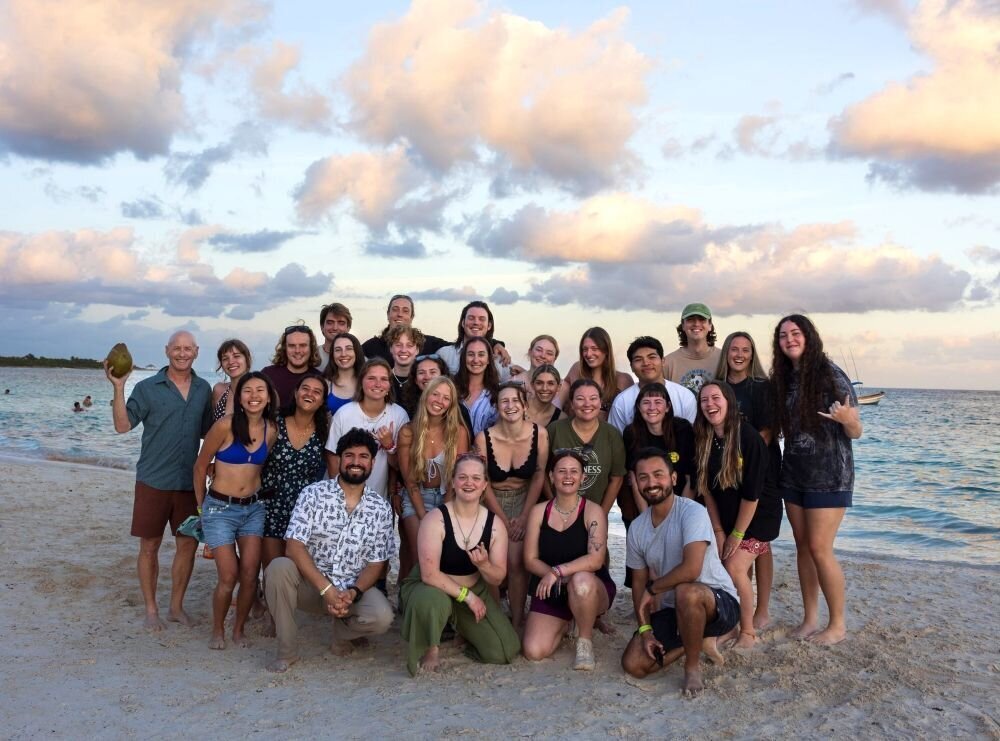
Caribbean Ecosystem Field Studies * Study, SCUBA, & Snorkel on the Caribbean coast of Mexico May 20- June 9, 2026
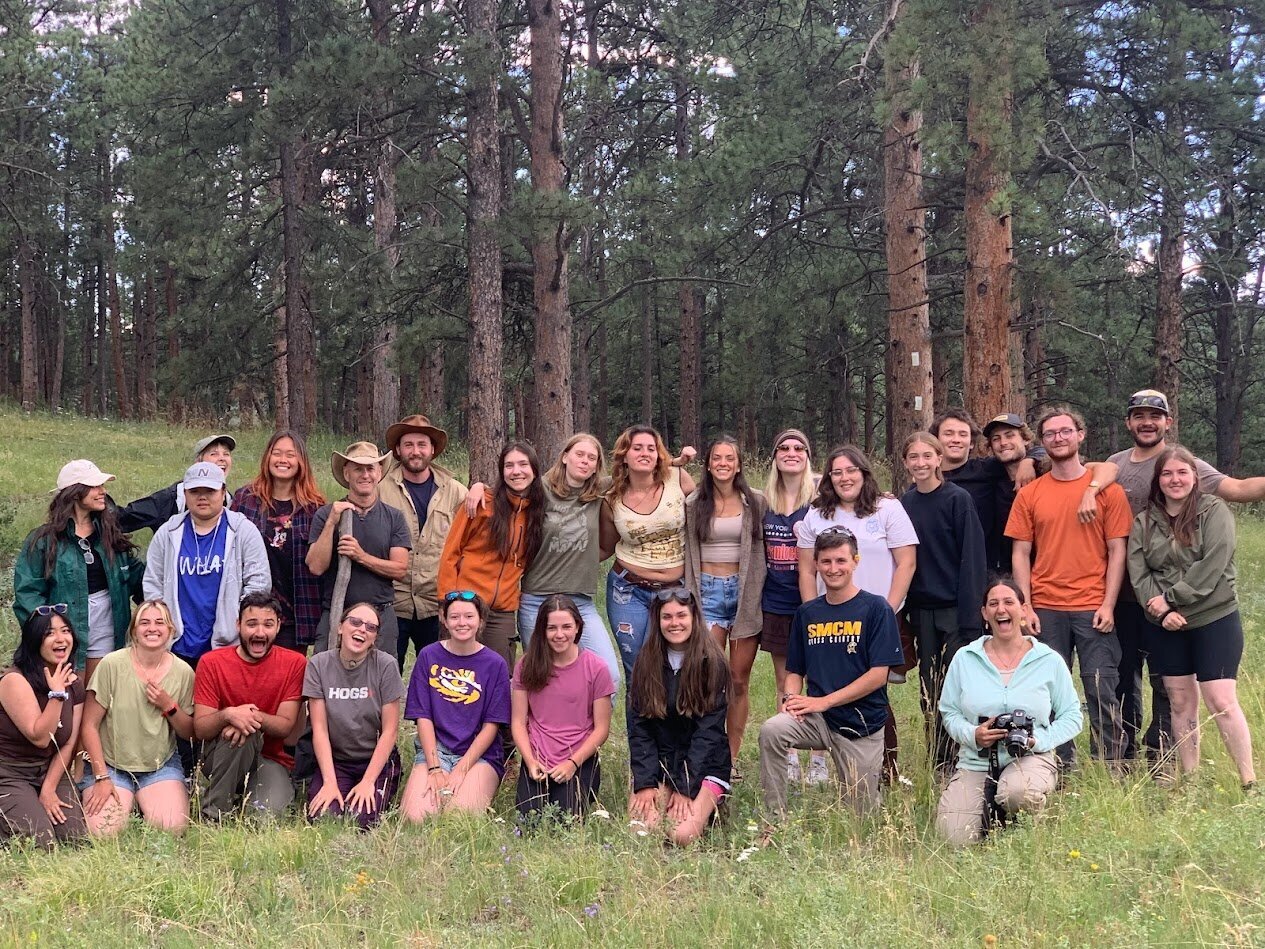
Colorado Ecosystem Field Studies * Study, camp, & hike in the Rocky Mountains of Colorado * June 19 – July 7 or July 17- August 6, 2026
Earn 3 undergraduate college transfer credits in these exciting 3-week, hands-on field study courses.
Learn practical, career-based scientific research skills & methods through active investigations and expert staff.
Engage & connect with a dynamic & diverse group of student peers from throughout the US and beyond.
Open to students from all universities & majors | Accredited by the University of Montana at Missoula, Environmental Studies Program: ENST 391- for 3 undergraduate semester transfer credits.
Applications are FREE and there is no set deadline to apply.
Direct questions to Professor Steve Johnson, EcoFS Director at steve@ecofs.org
Public Lecture: Solutionscapes for sustainable food, water, energy, and climate futures
Wednesday, March 11th at 7:15pm in ECS 124
The pressures on our water systems are growing, shaped not only by climate extremes but also by how we grow food, generate energy, and use land. Around the world, there is unprecedented momentum to address climate change, biodiversity loss, and water insecurity. Importantly, many of the tools we need already exist, from sustainable farming practices and wetland restoration to circular waste management systems. The challenge is not inventing new solutions, but connecting the ones we have. When implemented in isolation, even well-intentioned interventions can create unintended trade-offs or shift problems elsewhere. This lecture introduces Solutionscapes, a way of reimagining landscapes as coordinated systems rather than disconnected efforts. Can we design landscape-scale strategies that reduce pressure on our water systems, sustain livelihoods, and advance a more just and resilient future?
Technical Seminar: From Pollution to Restoration: Warming Winters, Algal Blooms, and Pathways to Resilience
Friday, March 13th at 12:30pm in ECS 124
Excess nitrogen and phosphorus from agricultural and urban landscapes continue to drive harmful algal blooms in freshwater systems. Despite reductions in nutrient inputs in some regions, recovery has been slower and more variable than expected. Climate change aggravates the challenge, as warmer winters are increasing nutrient release from soils. In this seminar, I examine how nutrient dynamics and climate variability interact to shape water quality trajectories. Using large-scale datasets and emerging analytical approaches, I identify the controls on nutrient persistence and bloom formation, and evaluate landscape-scale interventions, including wetland restoration, that can improve water quality and provide viable pathways to resilience in a warming world.
Dr. Basu is the Tier 1 Canada Research Chair in Global Water Sustainability and Ecohydrology, and she is a Professor in the Departments of Civil and Environmental Engineering and Earth and Environmental Sciences at the University of Waterloo. Dr. Basu is internationally renowned in the fields of water sustainability and ecohydrology, where her team has laid critical groundwork to address both fundamental science and applied management questions on nutrient pollution in anthropogenic landscapes. She is a Fellow of the American Geophysical Union, Former Editor-in-Chief of the Journal of Hydrology, and Member of the Royal Society College of New Scholars, Artists, and Scientists.
We are working to improve our services, collections, and spaces at UVic Libraries. We want to know what you need from the library and how we have been doing so far. This survey is open to all UVic students, faculty and lecturers, researchers, and support staff.
It should take about 10 to 15 minutes to answer our questions. Participation is completely voluntary, and you can exit the survey at any time. Your responses are confidential.
At the end of the survey, you will be able to enter a random draw for one of twenty $50 VISA gift cards. Your contact information will be kept separate from your survey responses.
The survey will close on April 11, 2026.
If you have trouble with the survey, please contact web_ux@uvic.ca
Pearson College UWC is seeking an outstanding Marine Science Assistant & Race Rocks Student Program Facilitator to join their Faculty team.
Reporting to: Deputy Head of College, Academics
Position Summary: The Marine Science Assistant & Race Rocks Student Program Facilitator plays a crucial role in facilitating the Colleges’ Marine Science programs and the Race Rocks experiential learning activities.
MOLECULAR BIOLOGY WORKSHOP 2026 Summer Session University of British Columbia,Vancouver, Canada.
ONE WEEK VERSION – MOLECULAR BIOLOGY WORKSHOP June 8th to 12th, 2026 (CAN$1575 – includes GST)
DESCRIPTION:This intense 5 day workshop will focus on a myriad of different techniques used in the molecular manipu-lation of DNA, RNA and protein. Primarily aimed at researchers who are new to the area, familiar but require a quick updating, or would like more practical bench training.
Hands on techniques covered include: Various nucleic acid purification methodologies (silica bead, organic, and/or SPRI size exclusion), restriction digests, ligations, dephosphorylation assays, agarose gel electrophoresis, transformation (including electropora-tion), PCR, reverse transcriptase assay, qPCR, SDS-PAGE,Western blot analysis, Isoelectric focusing strips, and 2D protein gels. This also includes theorectical and practical work on Next Gen Sequencing (using Nanopore MinION set up).
To register or inquire about the workshop, please contact Dr. David Ng at db@mail.ubc.ca or 604-822-6264. More infor-mation and registration link can be found at bioteach.ubc.ca/portfolio/professional-courses/
REVIEWS FROM OUR LAST WORKSHOP: (DECEMBER 2025)
“This course was excellently laid out to provide an abundance of practical knowledge and hands-on skills that are often missing in other courses… I feel confident now to continue my learning journey and to incorporate some of these skills in my workplace. I feel like I have the vernacular now to talk with colleagues and to encourage future collaborations.” Amanda Garner, NFI Laboratory Coordinator, Canadian Forest Services, Pacific Forestry Centre, National Resources Canada
“Thanks for the great workshop – I’ve learnt so much! Very accessible and well-paced. Plenty for both the complete novice and people with some background in the subject already.” Ben Ashby, Professor, Dept. of Mathematics, Scientific Director, Pacific Institute on Pathogens, Pandemics, and Society, Simon Fraser University.
Boston University would like to introduce you to it’s Master of Science in Biomedical Research Technologies ((https://www.bumc.bu.edu/gms/brt/). Applications are now being accepted for the Fall 2026 semester.
“We welcome students interested in improving their academic credentials and/or enhancing technical research skills with hands on laboratory training and an eye towards pursuing an advanced degree or working as researchers in Biotech or academia.
We provide all students with individualized academic advising, professional development, and one-on-one academic support. With more than 90% of our program graduates being accepted to research positions or to graduate, dental or medical school programs, we are committed to providing a high level of support as they navigate the process. We accept students from across the country and internationally, from different backgrounds, experiences, and insights to help promote diversity of thought and experience on their educational and professional journey.“