
Medical Terminology GRS 250

Image: Blue breasted bee eater, Northern Ethiopia, photo by Dr. Neville Winchester

For more information, please visit their website at www.ancientdna.com or email paleodna@lakeheadu.ca.
Help spread the love of STEM with the local community on May 9! Volunteer at Science Rendezvous, UVic’s annual one-day STEM festival and help introduce K-12 students and other community members to science, technology, engineering and math. We’re looking for volunteers to help faculty members run hands-on activities and to assist with general event day logistics. Shifts are available between 9 a.m. and 4 p.m. Sign up by April 24!


Our Immigration practitioners (Immigration Specialists and International Student Advisers) can assist with new applications and extension of Study Permit, Post-Graduate Work Permits, and Co-op Work Permits, as well as confirming work eligibility.
Our Settlement advisers provide information and support for international students adjusting to life in Victoria and Canada. They can advise students on housing, healthcare, family resources, banking and more. They also support students in navigating the transition to UVic and by facilitating connections to resources on campus and in the community.
How to access drop-in advising
Students meet with an adviser on a first-come, first-served basis via Microsoft Teams, phone or in person. To meet with an immigration practitioner or settlement adviser for a short, same-day appointment, students can:
On behalf of the Division of Student Affairs, we are excited to announce the application for the Black Student Leadership Award is now open. One or more awards of $7,500 each will be given to undergraduate students continuing at UVic who self-identify as Black and who have demonstrated outstanding leadership qualities and extracurricular activities that strengthen the student experience at UVic.
The Black Student Leadership Award is being offered to students continuing their studies at UVic in September 2026. Students can nominate themselves or be nominated by a member of the campus community. Successful recipients will be recommended by a selection committee comprised of representatives from Student Affairs and the UVic Scarborough Charter Steering Committee.
If you are a student and wish to nominate yourself for the award, please send a letter (maximum 300 words) outlining your contributions to the UVic community to In-course Scholarship Officer Francisco Canjura at fcanjura@uvic.ca by April 30th. Please ensure that your full name and student ID are included in the letter.
If you would like to nominate a student, please send a letter (maximum 300 words) outlining their contributions to the UVic community to In-course Scholarship Officer Francisco Canjura at fcanjura@uvic.ca by April 30th. Please ensure the student’s full name and student ID are included in the letter.
Volunteer with the UVic Global Community! The UVic Global Community is looking for Undergraduate and Graduate Conversation Partners and Mentors for the 2026-2027 Academic Year (September 2026 – April 2027) who want to help build an inclusive, globally-minded campus and support international students with their social and academic transition to UVic. Global Community Volunteers are matched with up to three students and meet with their student(s) for a minimum of 1 hour every week throughout the term to encourage students to get involved in the UVic community and build confidence in conversational English, all while making connections with people from around the world. Our Spring Application Deadline is March 25th , 2026. Visit our website for more information and complete the application form to apply now!


The summer school is meant for graduate students and postdocs who would like to learn more about the mathematics of human-environmental systems and climate change impacts. It is also suitable for undergraduate students who are currently completing their final level year of studies. Please see the web site for further details. The application deadline is May 1, 2026.

We are excited to invite you to the Water and Environment Student Talks (WEST) 2026 conference “Flowing Forward: Shaping Water’s Next Chapter”, happening June 10th (online) and June 11th (in-person) at the University of British Columbia, Vancouver campus.
The WEST Conference is organized by a committee of graduate students from the University of British Columbia and the University of Victoria. We aim to create a platform that brings together water and environmental researchers from diverse disciplines, providing a space for learning and fostering collaboration. This annual event is known for its inclusive atmosphere, encouraging innovation, and the exchange of ideas between students across the Pacific Northwest and internationally.
We are inviting both attendees and student presenters to join us for this exciting event! This is an incredible opportunity to be part of an interdisciplinary and international forum. Secure your spot today and contribute to shaping the future of water research! Students can benefit from presentation sessions, keynote speakers, industry night networking, and panelist conversations. Registration is FREE for all.
Register today via THIS LINK
Additionally, the call for abstracts is now open! Student presenters have the opportunity to win cash prizes in each presentation category. Submit your abstract via the registration link. We are accepting abstract submissions in the following session categories (detailed descriptions are available within the registration form):
Conference Format & Venue:
Important Dates & Registration:
Further details about conference events including keynote speakers and panel discussions will be released soon on our official conference website.
If you have any questions, please don’t hesitate to reach out to info@west-conference.ubc.ca. We look forward to hearing from you and learning about your research!

WRIT 109: Climate Catastrophes will explore the storytelling of the climate crisis through film and documentary. Class focus is not limited to environmental issues and climate impacts, but will also examine how human response, as well as pro-environment behaviour, may be influenced by the stories told to us. Through guided discussion, the class examines how visual narratives shape understanding, emotion, and communication about climate change in contemporary culture and society.

Are you interested in spending some time at the Bamfield Sciences and Marine center this summer? Check out WRIT 321: Science Communications and Media!
For more information on how to apply visit https://bamfieldmsc.com/education/how-to-apply/
Effective science communication is a crucial bridge between science and society, helping the public understand the role of science in their lives. It is not only a means of sharing wonder, amusement, and excitement but also a tool for innovation and informed decision-making by citizens, policymakers, and funders. Science communication helps us grasp the challenges facing humanity and our planet while guiding us toward solutions.
Communication is also a critical part of the craft of science itself. Scientists need to be able to explain and justify what they do, both to their peers and bosses and to the general public. In an era where the validity of science is often questioned, scientists must learn to tell the story of their work—engaging, clear, and compelling narratives that resonate with the public and reinforce the importance of evidence-based decision-making.
This course will explore the many ways scientific information reaches the public, whether communicated by scientists themselves or by journalists, press officers, social media influencers and other intermediaries. To be impactful communicators, we must consider accuracy, medium of delivery, creativity, audience, and where we can make a difference. Students will learn about different communication channels, their strengths and weaknesses, and what makes science newsworthy.
This is a dynamic course requiring enthusiastic in-class participation. Through hands-on assignments, students will develop their own work in different media styles while critiquing the work of their peers and professionals. They will gain insight into the practices and goals of good science communication, including identifying audiences, communicating science in communities and developing key messages. They will also better understand how journalism works, including deadlines, journalistic balance, accuracy, and the use of quotes. Participating in interviews—both as subjects and as interviewers—will help students better understand what journalists need from scientists and how they approach their craft.

OzTREKK invites you to a live virtual visit to Australia’s famous Lone Pine Koala Sanctuary — home to koalas, kangaroos, wallabies, dingoes, and crocodiles.
Join us for an Australian Wildlife Experience and go behind the scenes with sanctuary experts to learn what it really takes to care for Australia’s most iconic animals.
You’ll discover:
🐨 How wildlife experts care for exotic animals
🦘 The sanctuary’s conservation and rehabilitation work
🐊 What it’s like working with animals in Australia
🎤 Live Q&A with Lone Pine veterinarian Galit Tzipori
Whether you’re pre-vet, passionate about wildlife conservation, or just love animals, this is a rare chance to see one of Australia’s top wildlife sanctuaries up close.
Australian Wildlife Experience: Live from Lone Pine
🗓 March 25, 2026
⏰ 6 p.m. MT / 5 p.m. PT
💻 Register here: https://us06web.zoom.us/webinar/register/5417726380690/WN_I1EJGlsRQ5qfvAg-xEdnFw
Come meet the animals — and the experts who care for them!
In this course and research apprenticeship, we use university research vessels to examine patterns, interactions, and linkages in the marine ecosystem and investigate how oceanographic processes shape the spatial and temporal patterns of open water biological communities, including pelagic fishes. Our goal is to gather and analyze data to document ecosystem drivers and trends, teach methods and skills, and provide training applicable to a career in marine science. The core of this program is an independent but integrated research project, which we will help you design and implement.
Our apprenticeship features formal instruction, independent fieldwork, and a collaborative learning environment. For the first two weeks, the instructors provide an overview of basic concepts and field and laboratory techniques. Throughout the rest of the quarter, you will have the opportunity to work with other students and collect and analyze field and laboratory data towards the development of an independent research project with supervision and support from a faculty mentor. You will learn statistical and analytic approaches to interpreting data. You will also gain valuable experience reporting your findings in a professional manner, through oral presentations and in a written scientific paper.
This apprenticeship is a unique opportunity to spend a quarter conducting meaningful field research in a stimulating and supportive environment.
Contact FHL Academic Services Maia Kreis for more information: maiafhl@uw.edu / fhlstudents@uw.edu

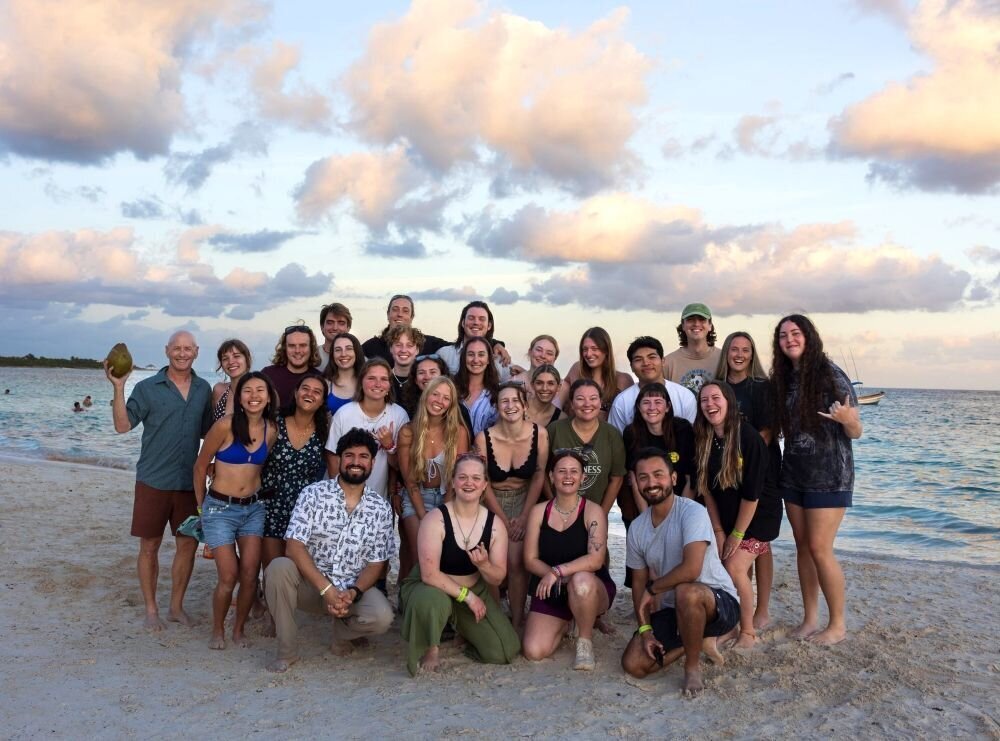
Caribbean Ecosystem Field Studies
May 20 – June 9
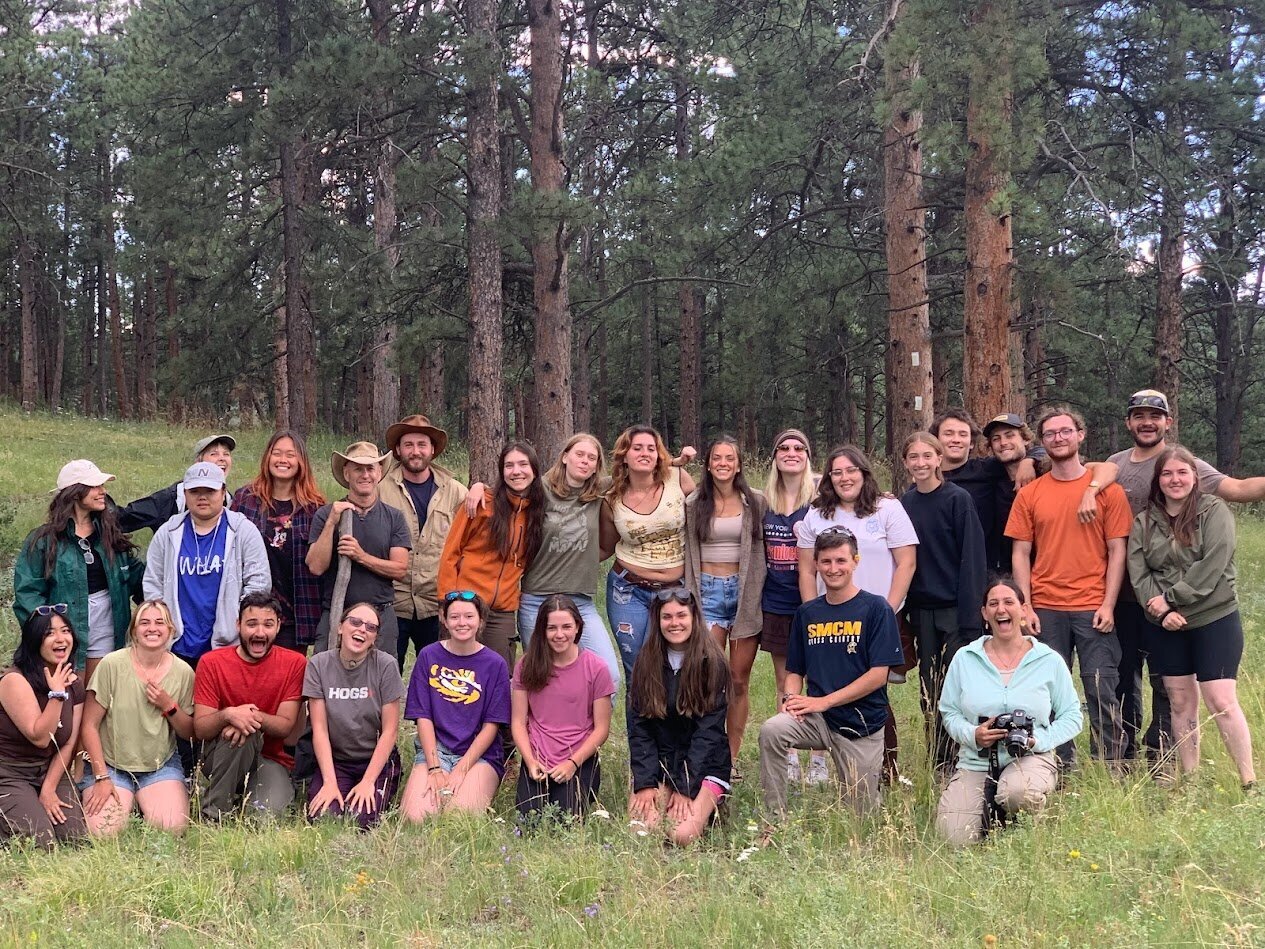
Colorado Ecosystem Field Studies
June 19 – July 9 or July 17 – August 6
SUMMER 3-CREDIT FIELD COURSES IN THE CARIBBEAN & COLORADO!
with Ecosystem Field Studies www.ecofs.org
An opportunity to apply your classroom & textbook education while immersed in a spectacular & transformative environmental academic setting!
Caribbean Ecosystem Field Studies
* Study, SCUBA, & Snorkel on the Caribbean coast of Mexico
May 20- June 9, 2026
Colorado Ecosystem Field Studies
* Study, camp, & hike in the Rocky Mountains of Colorado *
June 19 – July 7 or July 17- August 6, 2026
Open to students from all universities & majors | Accredited by the University of Montana at Missoula, Environmental Studies Program: ENST 391- for 3 undergraduate semester transfer credits.
Applications are FREE and there is no set deadline to apply.
Direct questions to Professor Steve Johnson, EcoFS Director at steve@ecofs.org

Visit www.ecofs.org for all info

Public Lecture: Solutionscapes for sustainable food, water, energy, and climate futures
Wednesday, March 11th at 7:15pm in ECS 124
The pressures on our water systems are growing, shaped not only by climate extremes but also by how we grow food, generate energy, and use land. Around the world, there is unprecedented momentum to address climate change, biodiversity loss, and water insecurity. Importantly, many of the tools we need already exist, from sustainable farming practices and wetland restoration to circular waste management systems. The challenge is not inventing new solutions, but connecting the ones we have. When implemented in isolation, even well-intentioned interventions can create unintended trade-offs or shift problems elsewhere. This lecture introduces Solutionscapes, a way of reimagining landscapes as coordinated systems rather than disconnected efforts. Can we design landscape-scale strategies that reduce pressure on our water systems, sustain livelihoods, and advance a more just and resilient future?
Technical Seminar: From Pollution to Restoration: Warming Winters, Algal Blooms, and Pathways to Resilience
Friday, March 13th at 12:30pm in ECS 124
Excess nitrogen and phosphorus from agricultural and urban landscapes continue to drive harmful algal blooms in freshwater systems. Despite reductions in nutrient inputs in some regions, recovery has been slower and more variable than expected. Climate change aggravates the challenge, as warmer winters are increasing nutrient release from soils. In this seminar, I examine how nutrient dynamics and climate variability interact to shape water quality trajectories. Using large-scale datasets and emerging analytical approaches, I identify the controls on nutrient persistence and bloom formation, and evaluate landscape-scale interventions, including wetland restoration, that can improve water quality and provide viable pathways to resilience in a warming world.
Dr. Basu is the Tier 1 Canada Research Chair in Global Water Sustainability and Ecohydrology, and she is a Professor in the Departments of Civil and Environmental Engineering and Earth and Environmental Sciences at the University of Waterloo. Dr. Basu is internationally renowned in the fields of water sustainability and ecohydrology, where her team has laid critical groundwork to address both fundamental science and applied management questions on nutrient pollution in anthropogenic landscapes. She is a Fellow of the American Geophysical Union, Former Editor-in-Chief of the Journal of Hydrology, and Member of the Royal Society College of New Scholars, Artists, and Scientists.

