Short Description:
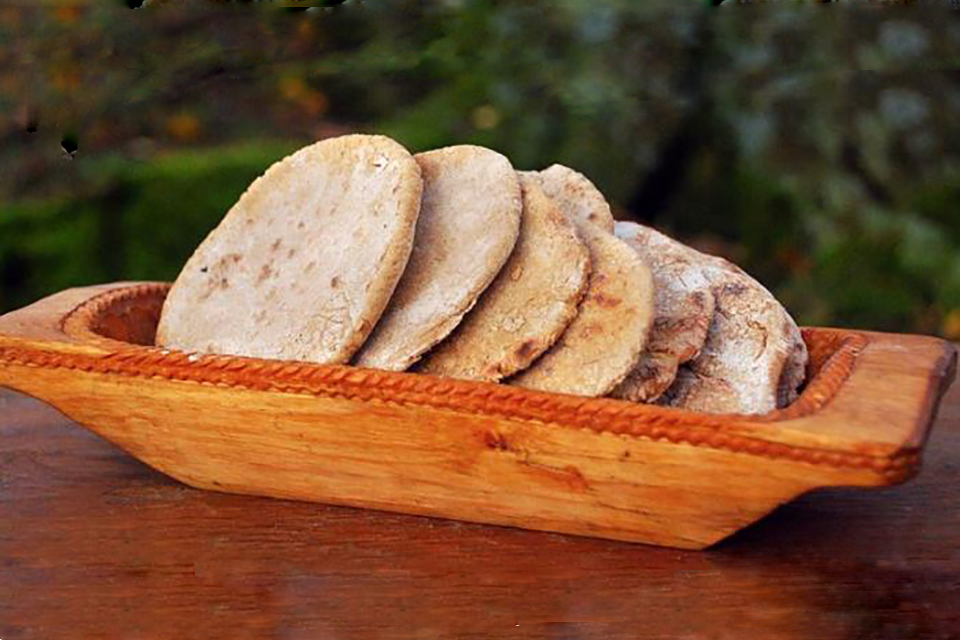
Our project aims to recreate medieval bread making processes. Bread was an important staple in medieval life as it was accessible and could be made from a wide variety of grain. In the Middle Ages, bread differed depending on region, and different types of bread carried specific class implications. Our project goal is to select two to three types of bread associated with regions, and to gain experiential knowledge from baking them. We hope to understand not only how the processes differ, but what can be inferred from the results and how they may be influenced by who would have been consuming them. This could include but is not limited to: nutrition value, availability of ingredients, ease of baking, and taste and texture.
Research Questions:
Methods and Materials:
As we are attempting to bake two types of bread for our ExArc project, each one representing a different social class, we have included both recipes in our materials list. From some preliminary research, we should be able to find most of the materials for this recipe at local chain grocery stores, but we have outlined specific stores below if needed. Similarly the cost of most of our materials should be reasonable as they are mainly household items. However, we as a group are prepared to spend a little extra on specialized ingredients if the need arises. At this stage of the process our methodology is not entirely decided. However, we are aiming to produce our bread as accurately to the original recipes as possible – this includes ingredients as well as the baking itself.
Recipe #1:
Recipe #2
Bibliography
Albala, K. (2023, June 8). Reconstructing medieval bread. Getty News. https://www.getty.edu/news/reconstructing-medieval-bread/
This article gives a step by step reconstruction of how to produce Medieval bread from scratch, including everything from growing wheat to baking methods. This is an extreme example of an experiential archaeology project around bread then we will be attempting however, parts of it could be relevant to our project. Particularly the section around baking methods could give us some helpful insight into what conditions we should aim to recreate in the baking of our bread.
Dyer, C. (2023). A simple food with many meanings: bread in late medieval England. Journal of Medieval History. https://doi.org/10.1080/03044181.2023.2250947
This article is a particularly relevant source for understanding the central role that bread played in the medieval diet, both in the context of nutrition as well as economically. Furthermore, it provides a comprehensive exploration of the larger process of breadmaking itself – such as the farming, acquisition, and milling of grain. There is a continual emphasis on class and how social and financial status affected the accessibility of bread in addition to its overall quality – examples include highly sought-after wheat grain and white bread being largely consumed in wealthier households, while those with less means were often confined to breads made from barley, rye, or maslin. This will prove to be useful in our experimental archaeology project where we are aiming to explore various bread recipes intended for different social classes. This source is a great ressource for further contextualizing the role of bread in the medieval period. I believe it will be helpful to approach our project with the understanding that bread in the medieval diet was more than just a means of obtaining calories – it was a central aspect of medieval life that held political, religious, and economic importance.
Kuropatnicki, A. K.(n.d). ENGLISH NOBLEMAN” S BREAD. BREAD IN LATER MEDIEVAL, AND TUDOR ENGLAND. https://www.researchgate.net/publication/257835535_A_K_Kuropatnicki_English_Nobleman’s_Bread_Bread_in_Later_Medieval_and_Tudor_England_w_Studies_in_Foreign_Language_Education_G_Loyova_M_Kostelnikova_ed_Comenius_University_Bratislava_2009_49-73
This source offers information about the difference in bread consumption among the different social classes present in England during the medieval period. It discusses the various types of bread that would have been preferred by the upper class nobility, since the type of bread consumed was a clear reflection of the social hierarchies in society. The text also discusses the differences in ingredients used in bread baked for the higher class compared to the one made by the lower class. For example, bread made from wheat was reserved for wealthier groups, while the lower class had to use alternative flours such as barley. It helps us gain a better understanding of how the bread one was consuming during this period was directly linked to power.
Montanari, M., & Brombert, B. A. (2015). Medieval Near, Medieval Far. Medieval Tastes . Columbia University Press. https://doi.org/10.7312/mont16786-001
This source explores the modern-day trend of recreating medieval dishes, what obstacles one might face, and how to best approach the practice. It details the sources that we can turn to in order to further examine medieval gastronomic culture, other than cookbooks; manuscripts on the topic of medicine, etiquette, agriculture, and hygiene can also prove useful. This is something I believe will be very valuable to our group as we aim to consult not only academic, but primary sources. The article also examines the difficulties of contemporary medieval cooking reproductions: modern ingredients, kitchen techniques, and conceptions of flavor make it near impossible to recreate a dish that is completely faithful to its medieval origins. This source will act as a good reference when analyzing how we want to approach our experiment with the most accuracy possible.
Samuel, D. (2002). Bread in archaeology. Civilisations. Revue internationale d’anthropologie et de sciences humaines, (49), 27-36. https://journals.openedition.org/civilisations/1353
The author of this text discusses the cultural and social relevance of bread in the context of archaeology. This article describes the methods used by archaeologists to investigate the presence and significance of bread in medieval society, including the examination of food remnants and the study of baking tools. The article also provides valuable knowledge on the evolution of eating practices and culinary traditions in human societies, as well as the sociological outcomes of bread production and consumption across the middle ages.
Serra, D., & Tunberg, H. (2013). An early meal: A viking age cookbook & culinary odyssey. ChronoCopia Publishing.
This cookbook provides a variety of Viking age recipes including a few recipes on bread. Particularly relevant to our project is the recipe for Rye Bread and Smoked Barley, it seems very achievable for our group to attempt for our experiential project. The recipe gives a clear list of ingredients and instructions to make the bread and gives a variety of baking options. Also helpful about this source is the inclusion of an index with definitions for various references to Viking cooking techniques and ingredients.
Ziegler, V. L. (n.d.). The Flower of Wheat: Bread in the Middle Ages and Colonial Era. Medieval technology and American history – in-depth articles – the flower of wheat: Bread in the middle and colonial ages. https://www.engr.psu.edu/mtah/articles/flower_of_wheat.htm
This source discusses the different types of bread associated with medieval times, their baking methods, and their production. Perhaps most importantly and most relevantly, the author discusses the different grains used and variation in baking methods that vary between classes. This is useful to our research in that we are attempting to recreate a selected sample of breads from different medieval classes. This article provides helpful knowledge on how these bread might have been made, and what sociocultural dynamics existed at the time.
Hello!
We are a group of Anth 361 students at UVic working on an Experiential Archeology Project around Medieval bread making. Our aim is to gain knowledge about the differences between types of Medieval bread from different classes and regions by testing recipes.