At the core of the Dementia Action Co-Lab is a simple but powerful principle: the perspectives and priorities of people with lived experience guide everything we do. Co-creation and co-leadership are not optional—they are essential to shaping meaningful research and community initiatives. After all, those who live with dementia hold the deepest insight into what truly works for them. In this section, our colleagues with lived experience share why their involvement matters and highlight the ongoing work required to advance a more equitable and inclusive society for all.
Lynn Jackson
“Advocacy work has brought purpose to my life. I think everybody needs a purpose, a goal they can achieve.”
Lynn Jackson Shares her Perspective
Lynn Jackson was born in Vancouver, B.C. and is a proud member of the Saulteaux or Plains Ojibwe, sometimes referred to as the Anishanaabe. Since being diagnosed with Frontotemporal Dementia in the 90’s, she has participated in numerous Alzheimer’s Disease International working groups and became a founding member of Dementia Advocacy and Support Network International, the world’s very first internet-based organization by and for people diagnosed with early-stage dementia. She’s currently involved in a variety of action groups and research projects working to reduce the stigma around dementia and make communities more inclusive.
Dementia Action Co-Lab advocate Lynn Jackson served as co-lead on the “Dementia Friendly Communities for People Living Alone” project, which explored what people living independently with a dementia diagnosis need to be able to live well.
“It was a really good experience getting to know these people and how they lived alone,” said Jackson. “I jumped in a lot whenever people didn’t know what to say.” Her experience working on these kinds of collaborative projects helped the others who were newer to the process.
“They know that people who aren’t diagnosed don’t really know what it feels like to live with the diagnosis and to get along every day with it, manage our symptoms and our lives,” said Jackson. “So, I’ve seen over the years how much people appreciate being able to talk to someone with the same problem.”
On living alone with a dementia:
“We have to be willing to ask for help when we need it. Some people aren’t used to asking for help, so we have to be willing to learn that. We always have to be on guard, looking out for our safety, trying to be at our best. It’s important to have a network of people you can count on and trust, and to know they’re just a phone call away.”
An example of building that network:
“This summer, flying to London, [my friends and I] arranged it so we’d all arrive within two hours of each other and fly into the same terminal. Our friend Nina came to meet us and take us back into town on the train. They did this in large part to make sure I was okay.” Lynn has travelled all over the world, and hasn’t let this diagnosis stop her from exploring more.
Her sense of purpose:
“Advocacy work has brought purpose to my life. I think everybody needs a purpose, a goal they can achieve. All the projects I’ve done over the years, meeting people, talking to them, preparing presentations, keeping my brain active, the travel that’s been involved with it, it’s been really important. And the feeling of helping other people is so heartwarming. Helping them has helped me.”
Dr. Jim Mann
“My perspective is different than so many others’ perspectives, and I like to think I get people thinking.”
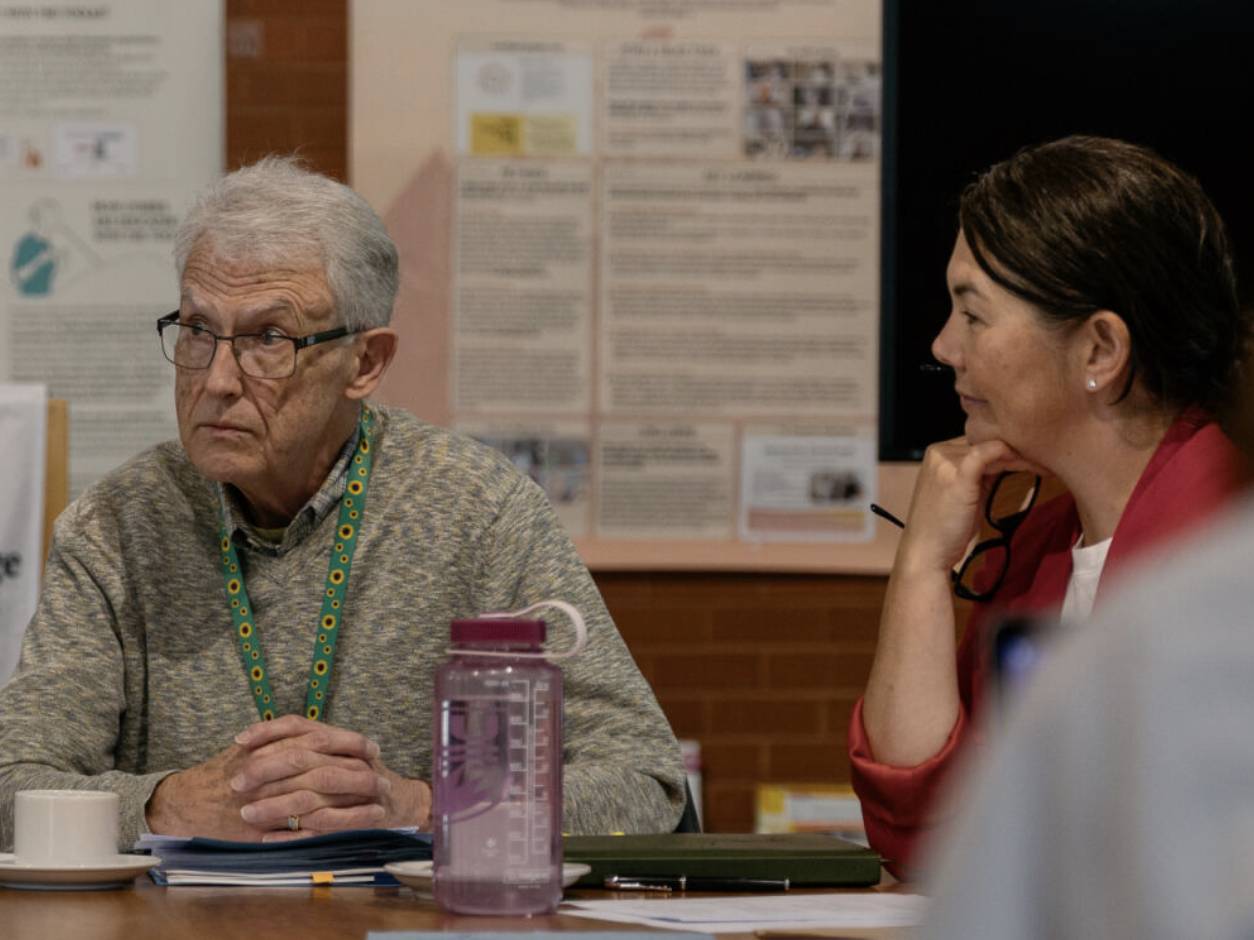
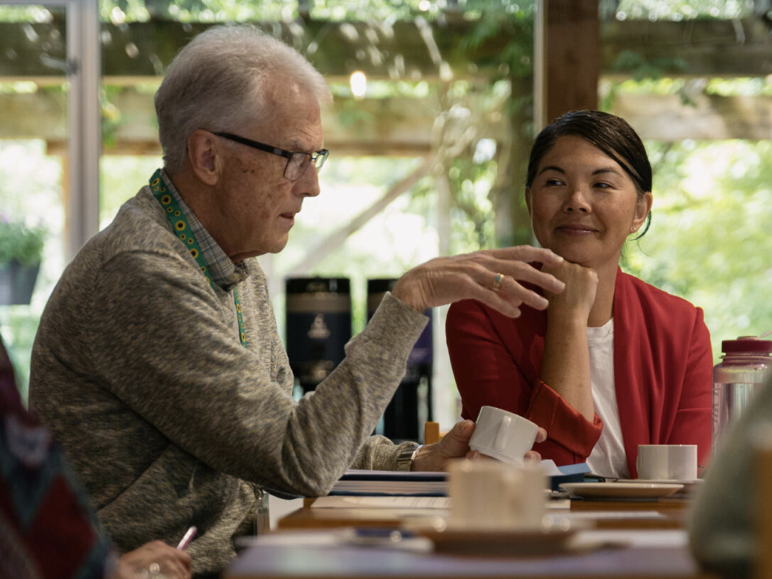
Jim has served the community as a researcher and advocate for people with lived experience of dementia ever since he was diagnosed with Alzheimer’s disease in 2007. His advocacy work focuses on the meaningful and ethical engagement of people with dementia, actively raising awareness and reducing the stigma associated with it in partnership with a variety of community groups and research initiatives. He’s a member of the Federal Ministerial Advisory Board on Dementia who developed Canada’s National Dementia Strategy, and he served as research co-lead on the Flipping Stigma On Its Ear Toolkit project, which has now been recognized by the World Health Organization’s Global Dementia Observatory Knowledge Exchange Platform as one of the world’s top ten awareness and inclusion interventions. He is currently co-leading the transformation of the toolkit for the Chinese community. Jim is a mentor to many and received an honorary Doctor of Laws degree for his contributions from UBC in 2020.
Jim’s thoughts on hearing directly from people living with dementia:
“My wife and I have been together over 50 years, including the last 18 or so years I’ve had Alzheimer’s. Yet, when you ask her, she’ll say she still doesn’t know what it’s like to LIVE with the disease. There’s a big difference. She knows it from her vantage point, but not from the vantage point of actually living with it. It’s like that old saying, “if you haven’t been in my shoes, don’t try and tell me how to tie my shoelaces.”
Society’s perception of someone living with a dementia:
“A Vancouver Sun reporter who came to interview me one time commented, ‘you know, you’d never know you had Alzheimer’s.’ And I told him, ‘yeah, but you’re it for the day. What you don’t see is what you’re leaving behind when you walk out the door. The extreme fatigue because I tried to be the best I could be.”
“I’ve taken to saying I’m a bit of an actor, actually. Because when I’m being interviewed or when I’m in a meeting, I am acting to the best of my ability to repeat the lines, gesture the way the director wants me to. And as soon as they say ‘cut’ or the meeting ends, I go back to being Jim with the Alzheimer’s.”
What this work brings to Jim’s life:
“A student once asked me, ‘what keeps you going?’ and I like to think about the answer to that question in two ways:
“In 2008 I was asked by the Alzheimer Society of Canada to be their representative on a newly formed Canadian Dementia Knowledge Translation Network. So I went to Halifax, contributed what I could to the discussion, had dinner with everyone, and flew home the next day. A few years ago, one of the researchers who had attended told me: until that meeting where she saw me walk in and participate, she didn’t know a person with dementia could do that.
“So, a lot of change still needs to happen.
“As for what advocacy brings me, when I have a lot of downtime, several days in a row with no meetings or whatever, my Alzheimer’s starts to show more. So, part of why I do what I do is that I really don’t like that. I’ve made it this far because of what I’ve done, and so to get depressed or throw up my hands at this stage and say, “well I’ve done all I can do,” is not going to help me at all. It won’t help anybody. My perspective is different than so many others’ perspectives, and I like to think I get people thinking.
Misconceptions:
“The other common stereotype of dementia is the idea that you go from diagnosis immediately into long-term care. That assumption of incapability drives me insane. I met a fellow years ago in one of our focus groups who was a long-time member at a golf club. He was a font of knowledge—the guy everyone turned to for information about club rules and events, always organizing men’s nights, arranging tickets and logistics, and answering questions.
The very day after members learned of his Alzheimer’s diagnosis, all those questions stopped immediately. Someone else took over organizing men’s night, all of it. If they had really sat back and thought about it, they would have realized how ridiculous it was. On Tuesday, he was good, but on Wednesday no one talks to him? Wow. There’s just so much stigma. And stigma is so isolating.
“People don’t want to talk about dementia at all. When I was on the Alzheimer’s Society of Canada’s board, they hired a public affairs company to do polling. The senior partner reported how fascinating it was that people would freely talk about cancer around the water cooler. But after they learned this campaign was about dementia, they would enter his office, shut the door, walk over, pull the chair closer, lean in and whisper. That’s how different the feeling is in the community.
That’s why, because of my background in marketing and communications and being a lobbyist, I’m comfortable being an advocate. It’s why I wear a lanyard everywhere. Because if you don’t want to talk to me, fine. But I’ll be damned if I’m not going to let you know I have dementia and get people thinking about it and talking about it. Otherwise, we’re not going to achieve anything.




Leave a Reply